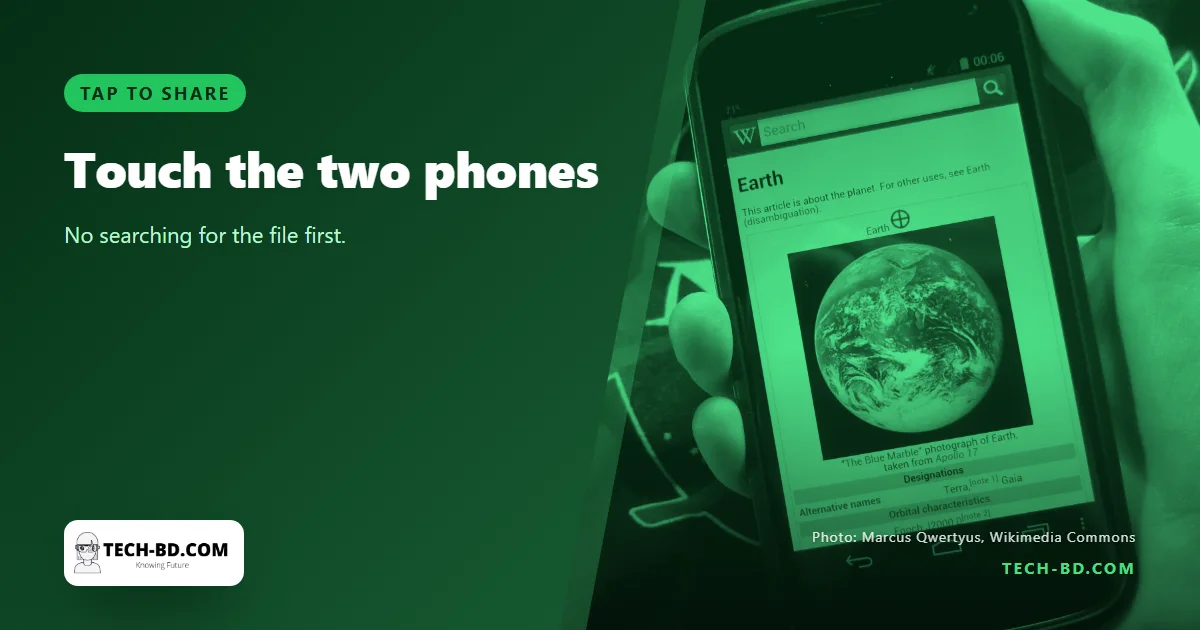
Like AirDrop on the iPhone, Android phones will now be able to exchange photos, contact details and files by bringing two devices side by side and touching them together.
Google is introducing the feature, called "Tap to Share". With it, there is no need to separately find a file and send it — bringing the two phones together is enough to start the exchange.
What this is built on
Android has had Quick Share for file transfers for some time. It works much like Apple's AirDrop, and Tap to Share is being added to it rather than replacing it.
With Tap to Share, two supported Android phones brought close and touched together will begin transferring.
Initially the feature is being rolled out on Google Pixel 6 and later models.
The difference is smaller than it sounds, and it still matters
It is worth being accurate about what is actually new, because the capability is not.
Quick Share already moved files between Android phones. What changes is the number of steps. Previously: open the file, tap share, wait for the other device to appear in a list, pick the right one from several similarly named phones. Now: touch the phones together.
That sounds trivial written down. In practice the list step is where this always went wrong — two people standing together, one of them scrolling past half a dozen device names trying to work out which is the other person's.
Why the AirDrop comparison is the honest one
Apple shipped AirDrop years ago, and it became one of the quiet reasons people stayed with the iPhone in groups where everyone else had one. Sharing a photo across the two systems has long meant falling back to a messaging app and losing image quality.
Tap to Share does not fix the gap between Android and iPhone — it is Android to Android. What it fixes is the gap within Android, where the experience has lagged behind despite the feature existing.
What to check
Two practical points before expecting this to work.
Your phone needs to be supported. The rollout starts with Pixel 6 and later. Phones from other manufacturers will follow on their own schedules, which in practice means it may arrive months apart on two phones bought the same year.
Both phones need it. Tapping a supported phone against an unsupported one does nothing. Quick Share still works as before in that situation, so the old route does not disappear.
For anyone who regularly passes photos between phones in person — at a wedding, after a match, in an office — this removes the step that most often fails. That is a small improvement that happens many times a day.
Why this matters more here than in the US
Android's share of the phone market in Bangladesh is overwhelming, and that changes what this feature is worth.
In countries where iPhones dominate, AirDrop already covers most in-person sharing and Tap to Share closes a gap that few people meet. Here, almost every transfer between two people standing together is Android to Android — which is precisely the case this improves.
The practical caveat is the rollout. Starting on Pixel, a phone barely sold in this market, means the feature will reach Bangladeshi users whenever Samsung, Xiaomi, Realme and the rest ship it in their own Android updates. That is usually months rather than weeks, and on budget handsets it is sometimes never.