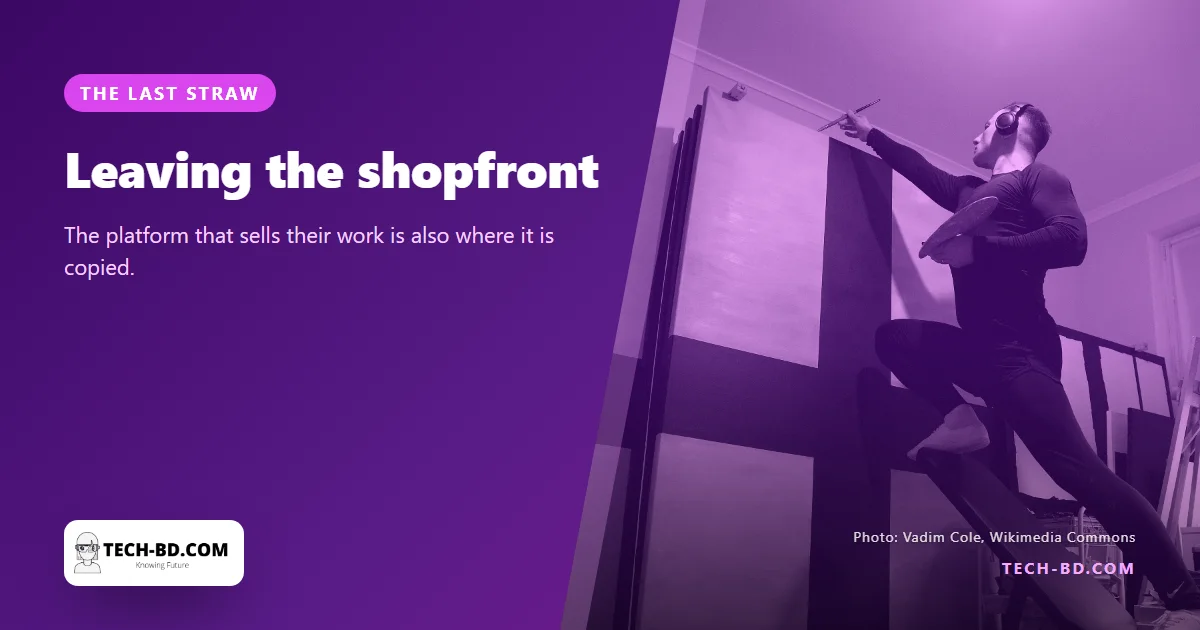
Matty Burnham paints in watercolour. In 2024 he found a Pinterest account that had taken his illustrations, generated machine-made versions of them, and listed those versions for sale through fake profiles on Shopify, Facebook and Instagram.
He traced the account as far as Ho Chi Minh City and no further. He still does not know who was behind it.
What the artists are describing
CNN spoke to more than a dozen artists about the same pattern. It is not one forger working alone. It is a steady supply of AI-generated artwork on Meta-owned platforms, posted by accounts that look like working artists and are not.
"They have hundreds of thousands of followers who believe these fake profiles are genuine artists," Burnham said, and those followers are pushed on to shops and adverts elsewhere.
The loss is not only the image. It is the audience. An illustrator's Instagram following is their shopfront, their portfolio and their client list in one, and a convincing imitation sitting next to the original splits all three.
The terms of service that have not arrived
Running underneath this is a change Meta proposed to its terms. Under the updated wording, automated software could scrape external websites and pull large amounts of data without the permission of business account owners — personal portfolios, online stores, and anything linked from a Facebook, Instagram, WhatsApp or Threads business account.
The terms were first due on 30 October, then pushed to 20 November. On 5 November the company said they were delayed indefinitely.
"We're pausing the changes as we continue to engage with stakeholders and take our time to get this right," a Meta spokesperson told CNN. "In the meantime, our existing terms remain in effect."
A pause is not a withdrawal, and artists are reading it that way
The delay has not stopped people leaving. Samantha Waldron, who co-owns a photography business in Madison, Wisconsin, deleted the firm's Facebook pages, turned its Instagram business accounts into personal ones, removed most of its posts and stripped the website links out of the bios.
"It was the last straw that was a long time coming," she said. "I'm frankly relieved not to have to worry about keeping up on social media moving forward."
Others have paused posting, or moved to Patreon and Substack, where the relationship with the audience is a list rather than a feed.
What the artists are asking for
Tim O'Brien, a board member at the Society of Illustrators, put it as three things: meaningful consent, fair compensation, and a usable way to challenge work that has been exploited without permission.
"For many artists, this is not merely a legal dispute," he said. "It is a question of livelihood, creative ownership, consent and basic fairness."
Why leaving costs more than it looks
The thing that makes this difficult is that the exit is expensive. A painter with thirty thousand Instagram followers did not buy that audience; they built it over years of posting, and it does not transfer. Patreon and Substack are better places to be paid, and far worse places to be found. Deleting the account protects the work and removes the discovery that made the work sell.
That is the trade every artist in this story is making, and it explains why the decision keeps arriving as a "last straw" rather than a plan. Nobody leaves a shopfront over a principle alone. They leave when the shopfront starts selling a counterfeit of what is inside.