Bangladesh will take part in the 28th International Robot Olympiad (IRO) in Vienna, Austria, from 12 to 16 January.
The announcement came in a press release on Wednesday from the Bangladesh Open Source Network (BdOSN).
How the team was chosen
Eight students were selected from among the winners of the national round of Bangladesh Open 2026, the competition BdOSN organised in September.
They will compete in the final round with support from the government's ICT Division and the Department of ICT. Advanced training is under way now.
The named team members are:
Zubaidah Zafrin and Nafia Basar of Mohammadpur Preparatory School and College; Mohammad Zarif Bin Salek and Muaz Ibne Bashar of Dhaka Residential Model College; Nusaiba Tazrin of Birshreshtha Nur Mohammad Public College; and Raiyana Rufaida of Viqarunnisa Noon School and College.
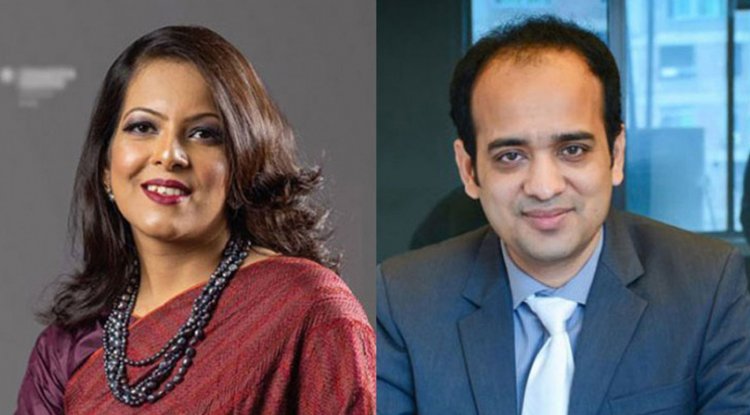
Professor Lafifa Jamal of the Department of Robotics and Mechatronics Engineering at the University of Dhaka will also attend, as a member of the committee.
The number that deserves the headline
Bangladesh has competed at the International Robot Olympiad every year since 2018.
Over those eight years the country has won 94 medals, including 15 golds.
That is the figure worth sitting with. Ninety-four medals is not a run of lucky years or one exceptional cohort — it is roughly a dozen medals a year, sustained across eight years and many changes of team. A pipeline that keeps producing at that rate is doing something structural, not something lucky.
Why this is a different competition from the last one
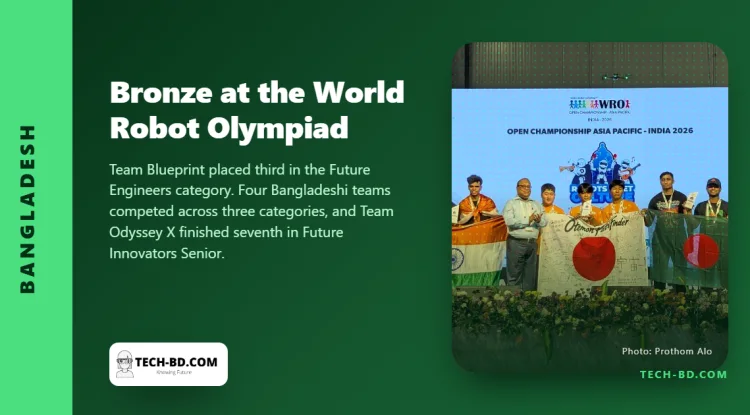
Worth separating clearly, because the names are similar. Back in September this site covered a Hyderabad result, where three students from Bangladesh finished third in the Asia-Pacific championship of the World Robot Olympiad — a separate contest, with a separate team.
The International Robot Olympiad is the one Bangladesh has been attending since 2018, and Vienna in January is its 28th edition.
Both exist, both send Bangladeshi students abroad, and conflating them undersells how much of this is going on at once.
The part worth noticing about the names
Four of the six named students are girls, from Mohammadpur Preparatory, Birshreshtha Nur Mohammad Public College and Viqarunnisa Noon.
That is not a token detail in a robotics squad. It is also consistent with the leadership — Professor Lafifa Jamal has been one of the more visible figures in Bangladeshi computing education for years, and she is travelling with them.
How the pipeline actually works
The selection route is the part that explains the medal count, and it is worth setting out plainly.
The team is not picked from a shortlist of known schools. It comes out of Bangladesh Open, a national competition run in September, whose winners form the pool the eight are drawn from. That means the entry point is a public contest rather than an invitation, and a student at a school nobody has heard of can enter it.
Behind that sit two things most countries' hobby robotics scenes lack: a continuing organiser in BdOSN that runs the national round every year, and government backing through the ICT Division and the Department of ICT that pays for the team to actually travel.
Enthusiasm produces one good year. A yearly qualifier plus funded travel produces eight.
What happens between now and January
The students have roughly three months of advanced training between selection and Vienna, which is under way now.
That gap matters more than it sounds. In robotics competitions the build is rarely the hard part — the hard part is making a machine behave reliably on an unfamiliar table, under competition lighting, after a long flight, when it worked perfectly at home. Three months is enough time to find the failures that only appear under those conditions.
On the record of the last eight years, the reasonable expectation is that they come back with something.