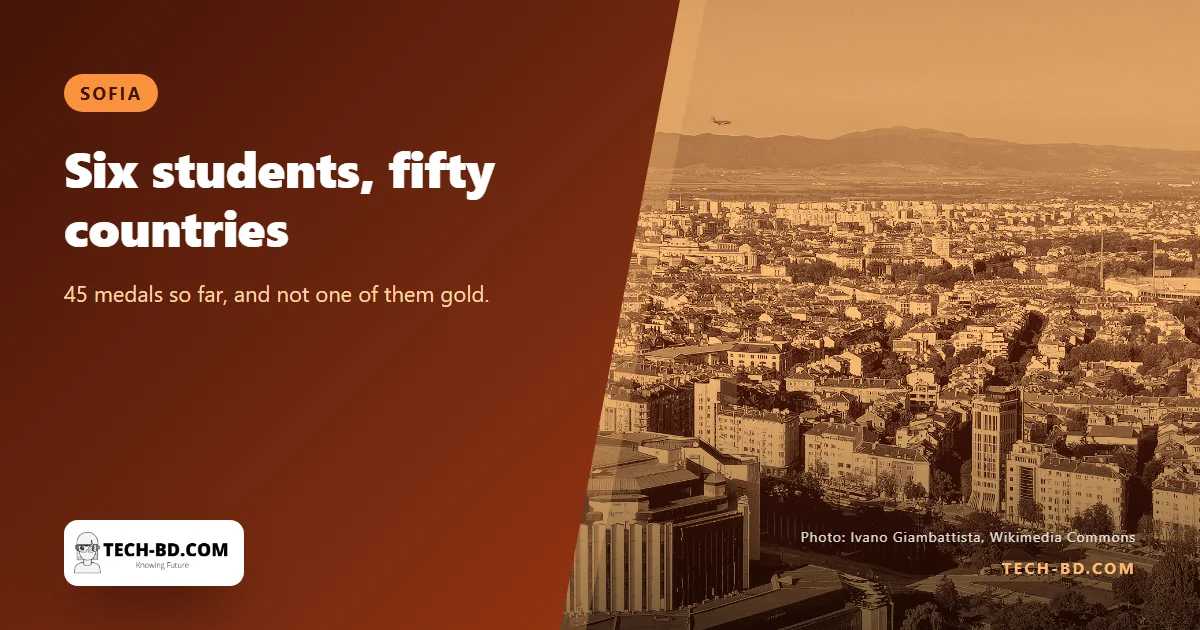
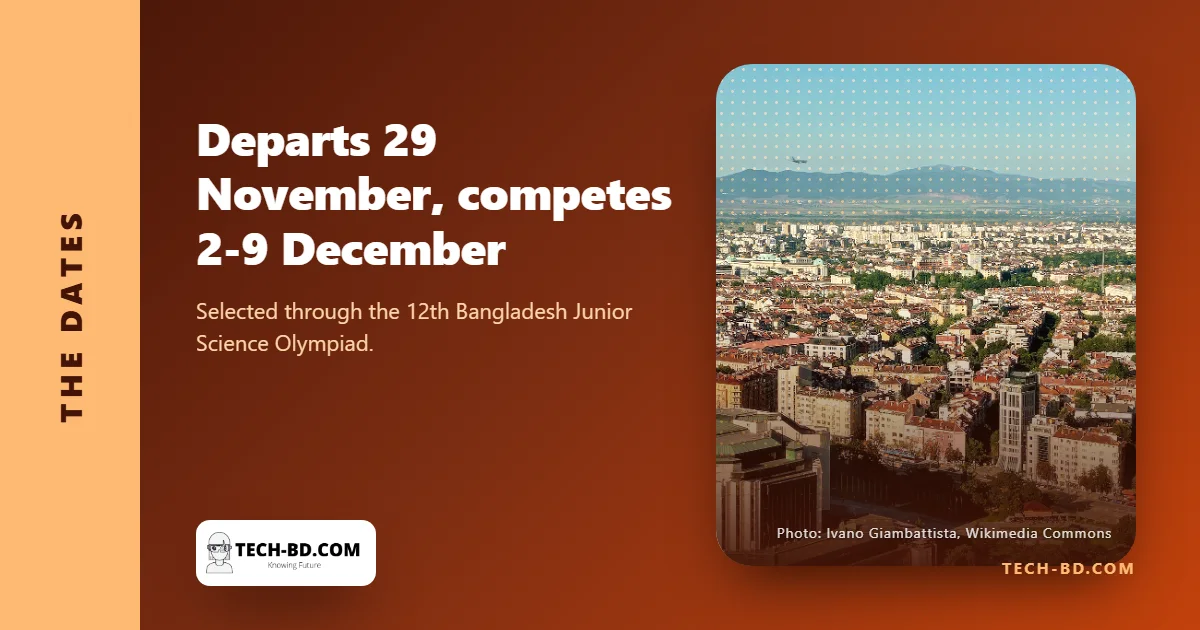
A six-member Bangladesh team is travelling to Bulgaria for the 23rd International Junior Science Olympiad (IJSO 2026), held in the capital, Sofia, from 2 to 9 December. Students under 16 from around 50 countries will compete.
The team
The six are Abrar Jahin, class nine, Daffodil International School; Ahmed Saad and Mohammad Saifan Haider, class nine, St Joseph International School; Kazi Sunerah Islam and Marzana Manha, class nine, SFX Greenherald International School; and Nashwan Haque, class ten, Dhaka Residential Model College.
They were selected through the 12th Bangladesh Junior Science Olympiad (BdJSO 2026), run jointly by the Bangladesh Science Popularization Society (SPSB) and the Bangladesh Freedom Foundation (BFF). The team was introduced at a press conference on Thursday at Bishwa Sahitya Kendra in Dhaka by SPSB president Munir Hasan.
Who is going with them
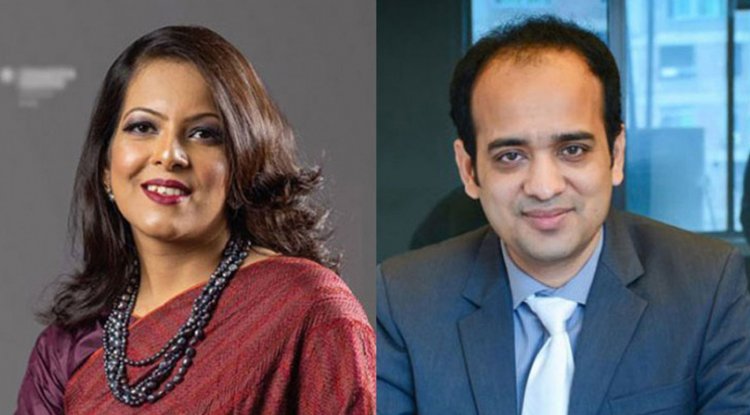
The team leader is Farseem Mannan Mohammedy, professor in the Department of Electrical and Electronic Engineering at the Bangladesh University of Engineering and Technology (BUET) and general secretary of SPSB. The deputy leaders are Md Rezaul Islam, coordinator of the Bangladesh Junior Science Olympiad, and academic coordinator Farzana Akhter.
The team departs for Bulgaria on 29 November.
The medal that is missing
"We have won 45 medals at IJSO so far, silver and bronze combined," Munir Hasan said at the press conference. "But we have not yet won a gold. I hope our team gets a gold this time."
Forty-five medals and no gold is an unusual record, and it says something specific. A country that never medals has no pipeline. A country that medals consistently at silver and bronze has a pipeline that works — selection, coaching, preparation — and is being beaten at the top by programmes that start earlier and train harder.
Why this is worth printing
IJSO is for under-16s, which means these six are in class nine and ten. They will finish school around 2028 and university around 2032, and the country's technology sector is currently arguing about where its engineers will come from.
They come from here. The route runs through school olympiads, a handful of volunteer-run organisations, and teachers who put in the hours. SPSB and BFF are not government bodies; the structure that produced these six is a civil-society one, and it has produced 45 medals.
It is also worth noticing who is on the list. Four of the six are from English-medium international schools in Dhaka, one is from Dhaka Residential Model College, and all six are from the capital. That is not a criticism of the selection, which runs on who enters and who scores; it is a description of where the pipeline currently reaches. Two of the six are girls, which is a better ratio than many national teams manage at this level and worth saying plainly rather than leaving to be inferred from the names.
Whether the gold arrives this year is a matter of a week in Sofia. Whether there is a team to send in 2031 is a matter of whether that structure is still funded, and whether it reaches past Dhaka. Those are the parts worth paying attention to.