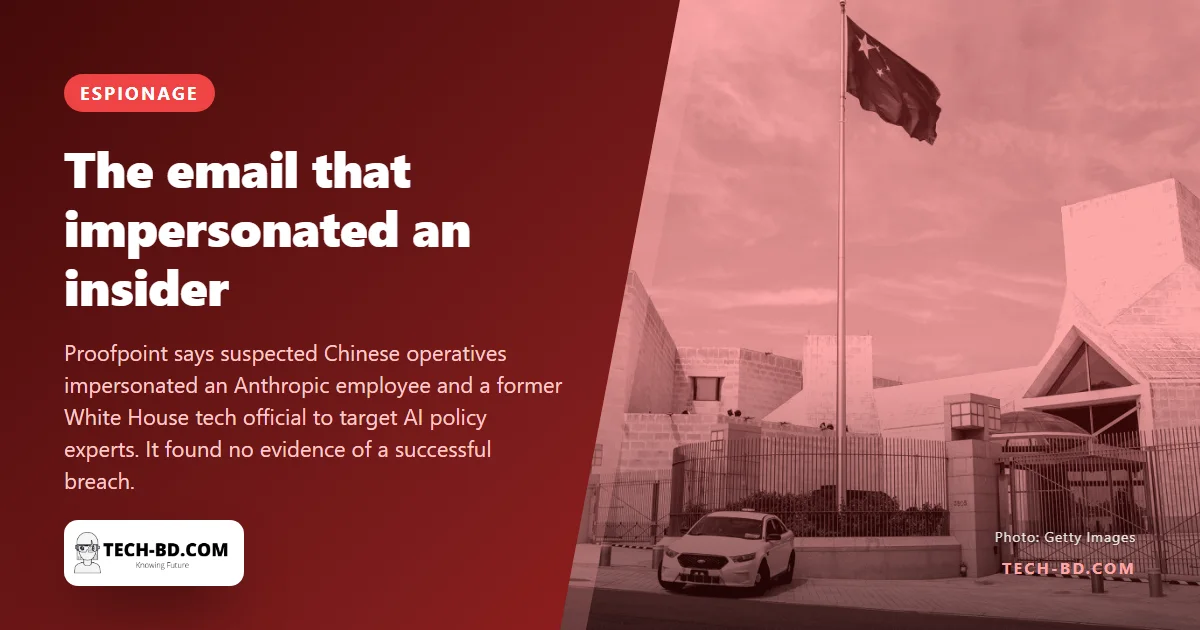
Suspected Chinese hackers impersonated an Anthropic employee and former US officials in an espionage campaign aimed at understanding American AI developments, the cybersecurity firm Proofpoint said.
How the campaign worked
The hackers targeted the email accounts of experts in AI export controls and the military applications of AI at US universities, think tanks and law firms.
In one case they impersonated Lynne Parker, a senior White House technology official under two presidents, emailing someone at a law firm to invite them onto an "AI policy advisory committee" — then following up with a malware-laced document about the fictitious committee.
In another, on 26 February, they wrote to an AI policy analyst at a think tank in the name of a senior Anthropic employee. The subject line read "Request for Feedback on Military Integration of Claude". The aim, Proofpoint says, was to steal the analyst's email credentials.
Proofpoint found no evidence of a successful breach, though it notes it may have seen only part of the activity. Researcher Mark Kelly said the firm is confident the group is Chinese-government-aligned. Beijing routinely denies US hacking allegations.
The real Parker said colleagues began contacting her about suspicious emails. "My first concern was for the colleagues who might receive the impersonated email," she said.
What it means in Bangladesh
The craft here is worth studying closely, because it is cheap, repeatable and already in use against Bangladeshi targets.
Notice what the attackers did not do. No software vulnerability was exploited and no system was broken into. They chose two names whose authority the recipient would recognise, wrote a subject line that was exactly plausible for that person to send, and let professional courtesy do the work. The "advisory committee" invitation is the oldest trick in the book because flattery remains the most reliable payload ever written.
Bangladesh's exposure to this specific pattern is higher than its AI involvement suggests. The people who would be targeted here are not AI researchers; they are the officials, consultants and journalists who sit near decisions about procurement, licensing, spectrum, ports and energy. All of them receive unsolicited invitations to advisory panels, conferences and consultations as a normal part of the job, and almost none of them have a way to verify that an email is from the person it claims.
The defence is unglamorous and it is the same one every time. Verify out of band. An invitation that arrives by email gets confirmed by a phone call to a number you already had, not a number in the email. A document from a new correspondent gets opened in a browser-based viewer, not downloaded. And an organisation that handles anything sensitive turns on hardware or app-based two-factor authentication, which defeats a stolen password outright.
One detail deserves stating plainly: the attackers impersonated an employee of the company whose model they named. Nothing about Anthropic was breached. A trusted name is the attack surface.
The company's own internal argument over information handling is in the OpenAI dismissals.