Microsoft spent Thursday struggling to fix a major global outage reportedly affecting tens of thousands of users.
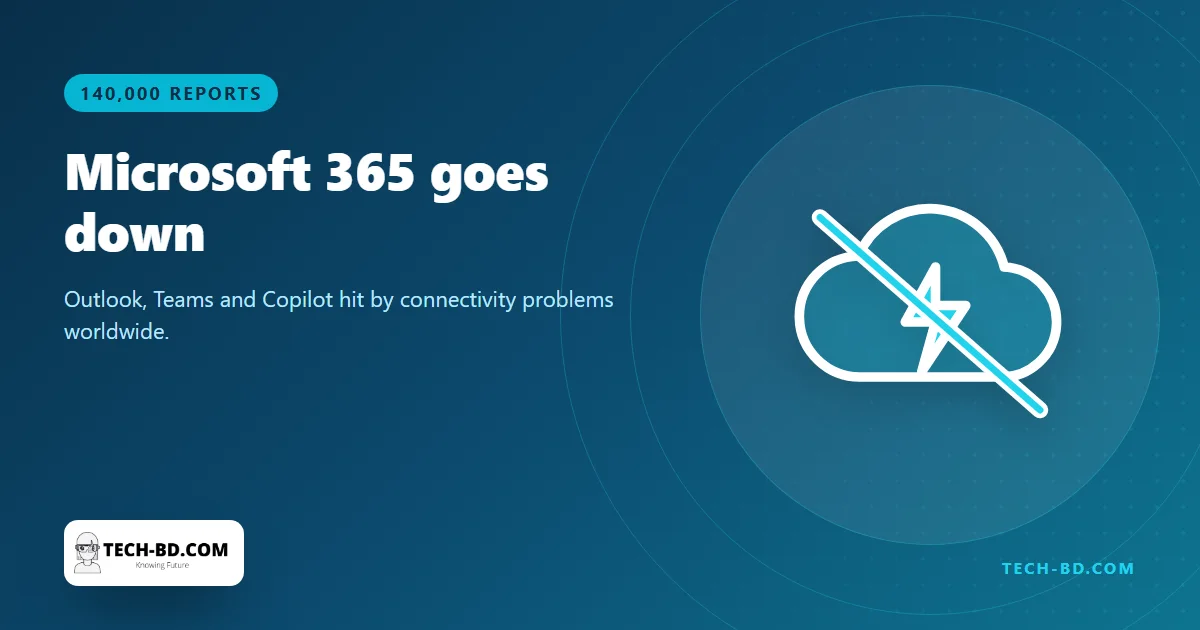
Services including Teams, Outlook and the company's AI assistant Copilot were hit by what Microsoft described as "connectivity problems".
What broke
Microsoft said the outage was caused by servers unexpectedly becoming unavailable, which then strained other systems.
That second clause is the important one. A handful of servers dropping out is routine and invisible; the damage comes when their traffic is redistributed onto neighbours that were not sized for it, and those in turn start failing. It is the standard shape of a large cloud outage, and it is why these events spread rather than staying contained.
The company posted a series of updates on X saying it was seeing "positive results" from its restoration efforts and was rushing to fix the problem.
How big it was
Reports of problems with Outlook peaked globally at nearly 140,000 around 18:00 GMT on Thursday, according to the monitoring site Downdetector.
The BBC understands there is no indication the outage was caused by a cyber-attack.
Worth keeping in mind: Downdetector counts people who bothered to report a problem. The real number affected is far larger, and the peak tells you when frustration crested, not when the fault began.
What users actually saw
The disruption hit programs that are part of Microsoft 365 — the subscription bundle that gives organisations Outlook, Teams and OneDrive. For international organisations it is the thing that connects colleagues across countries.
Among the specific symptoms, Microsoft said users might be unable to view certain files or see details in their calendar apps, and that Copilot might not work properly. Messaging and online meetings were largely functional, the company added.
That is a telling split: the real-time services survived while the ones that depend on reading stored data did not.
The lesson is not "avoid the cloud"
For Bangladeshi organisations the useful response is not to abandon hosted email, which is almost always more reliable than running your own. It is to notice which single failure takes everything down at once.
If your email, your file storage, your chat and your meetings are all one vendor, a bad afternoon at that vendor is a bad afternoon for your whole organisation, with no way to tell staff what is happening — because the tool you would use to tell them is also down.
The cheap mitigation is a second, independent channel that nobody uses day to day: a WhatsApp or SMS group for staff, and one person whose job during an outage is to post status updates to it. It costs nothing and it is the difference between a quiet afternoon and an unmanaged one.
Why "no cyber-attack" is a meaningful statement
It is worth noting what Microsoft ruled out early, because it shapes everything that follows. An outage caused by capacity and failover behaviour is an engineering problem with a known shape: it is fixed, reviewed, and the capacity assumptions are changed. An attack is a security incident, which brings disclosure duties, regulators, and questions about what else was reached while systems were degraded. The two produce very different follow-ups, and saying so on the day is how a vendor stops the second story from starting.