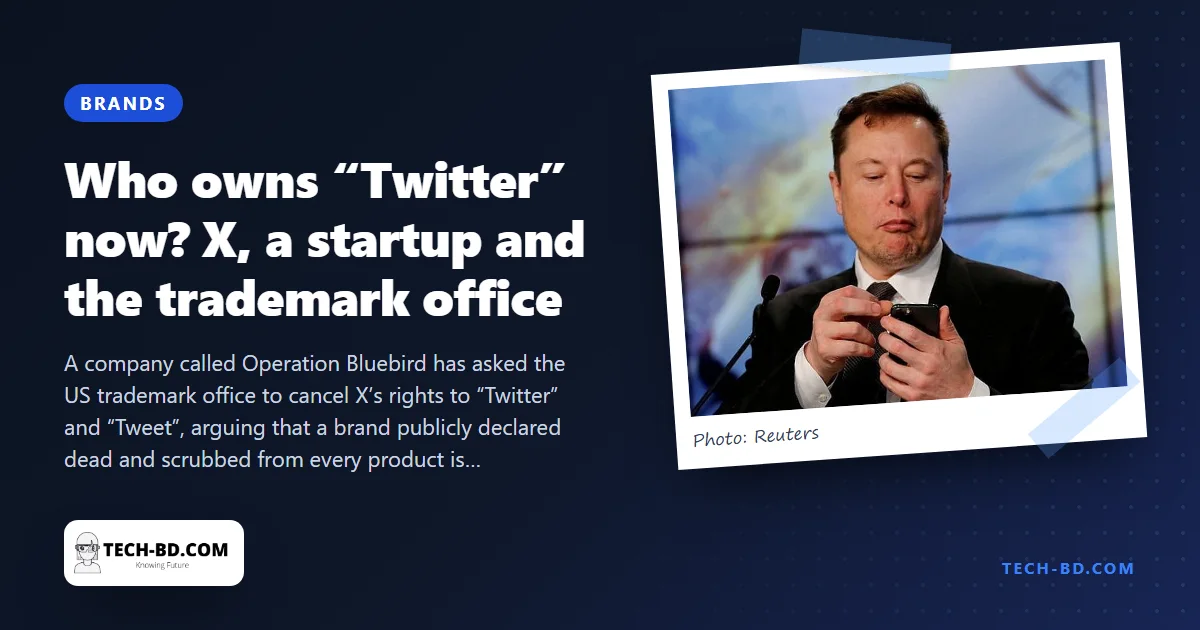
A Virginia startup called Operation Bluebird, Inc. petitioned the US Patent and Trademark Office to cancel X Corp's rights to the TWITTER and TWEET marks, on the grounds that they have been abandoned. It intends to launch a social network at twitter.new using them.
X Corp sued in Delaware federal court for trademark infringement, calling it an unlawful attempt to claim one of the world's most recognisable brands.
The reflexive reaction is that the startup is opportunistic. That is probably true and is not the same as being wrong.
What abandonment actually requires
US trademark law does not protect a name because you own it. It protects a name because you use it in commerce to identify your goods. Stop using it, with no intention to resume, and the right lapses — the mark returns to the pool for someone else to claim.
That rule exists to stop companies warehousing vocabulary they have no use for. Without it, a firm could register every plausible name in its sector and sit on them indefinitely.
So the question before the USPTO is narrow and factual: has X stopped using TWITTER as a source identifier, and does it intend to resume? Not whether the public remembers the name, and not whether the startup's motives are pure.
The case for abandonment
Operation Bluebird's general counsel, Stephen Coates, was previously a trademark lawyer at Twitter — which means the petition was drafted by someone who knows exactly how the company's marks were maintained, and that is not a trivial detail.
The argument is that X removed the brand from its products, services and marketing. The app is X. The logo is X. The company is X Corp. Posts are posts. The deliberate and thorough erasure of the old brand, which was presented at the time as decisiveness, is now the evidence.
The case against
X's position is that "a rebrand is not an abandonment of trademark rights", supported by three specific points:
- twitter.com still works and millions reach the platform through it, which is use of the mark in commerce.
- People and businesses still call it Twitter, so the mark continues to identify the service in the public mind.
- X maintains and enforces the registrations, which is evidence of intent to retain rather than relinquish.
The first is the strongest. A redirect that millions of people use is a live commercial use, and it is hard to call a name abandoned while it is still routing traffic to the service.
Why this is worth following
Not for the outcome, which will probably be a settlement, but for the question it forces.
Corporate rebrands are now frequent and aggressive — Meta, Alphabet, X, Block. The retired names are enormously valuable and entirely unused in the marketplace. Nothing has tested what happens when a third party tries to pick one up, and a clear ruling either way would reshape how companies retire brands.
If a rebrand risks losing the old mark, companies will keep token products alive purely to maintain use. If it does not, the abandonment doctrine develops a hole big enough for any well-advised company to park a trademark indefinitely.
What it is not
It is not a route to getting Twitter back. Even a successful cancellation would transfer a name, not a service, a userbase or an archive. A new network at twitter.new would be a startup with a famous word and none of what made the word mean anything — which is the part of the plan that invites the most scepticism, and the part the trademark office has no reason to consider.
Sources: Operation Bluebird's USPTO petition; X Corp's complaint in the District of Delaware; Mondaq; Mandour & Associates' analysis; Storyboard18; and Prothom Alo's original report.