In Jhanjhania, Rampal, Bagerhat, the Amader Gram Cancer Care and Research Centre (AGCRC) is working with one of the world's leading medical research institutions on how health information actually reaches people.
The partner is the Mayo Clinic, through its Florida-based ETCH research lab — Empowering Translational Communication in Healthcare — together with the Mayo Foundation for Medical Education and Research. Mayo was ranked first in Newsweek's World's Best Hospitals 2026.
The gap this sits in
The divide between urban and rural healthcare in Bangladesh is long-standing. Specialist treatment, modern diagnostics and research infrastructure are concentrated in the big cities. The health experiences of rural people — their social realities and local knowledge — rarely carry weight in research or policymaking.
AGCRC was set up to bring care, education and research together for a rural population. The work runs through the Amader Gram IT for Development project.
What they are actually building
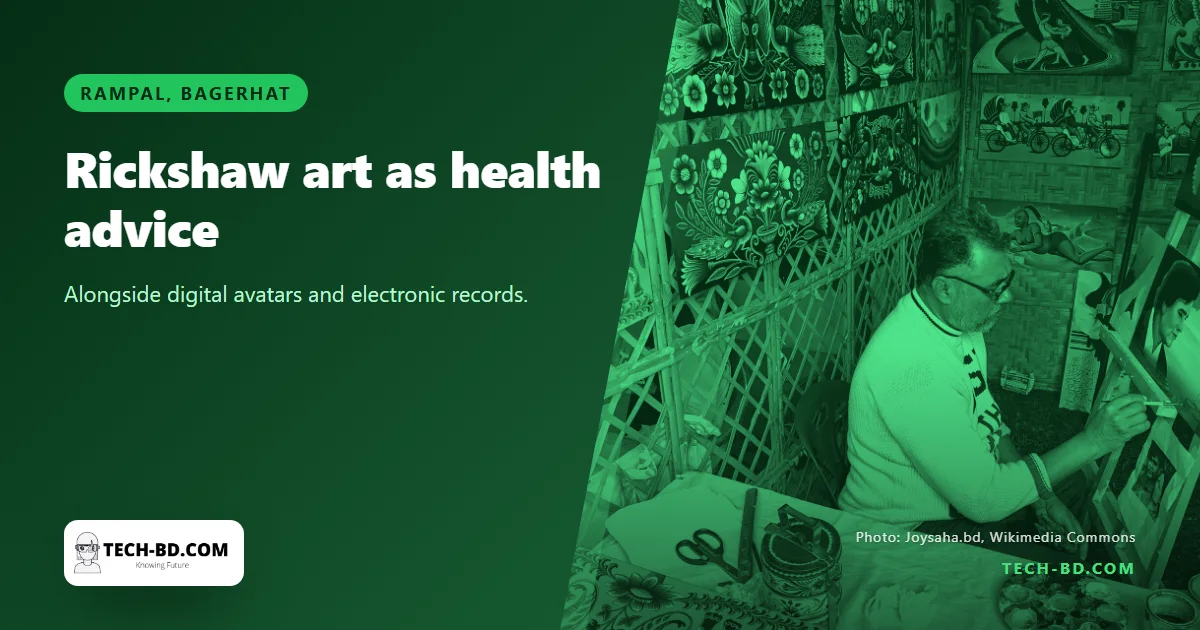
Three things, combined: human-like digital avatars for health communication, the use of rickshaw art, and electronic medical records.
The rickshaw art is the element most likely to be dismissed as decoration, and it is the one that shows the method. ETCH, led by Prof Janice Krieger, studies how scientific health information can be delivered so that it is effective, trustworthy and culturally acceptable. That work treats the audience's language, beliefs, social position and behavioural response as part of the problem — not just the scientific accuracy of the message.
A health message painted in the visual idiom people already look at every day is not a gimmick in that framing. It is the delivery mechanism being matched to the audience.
Who is studying whom
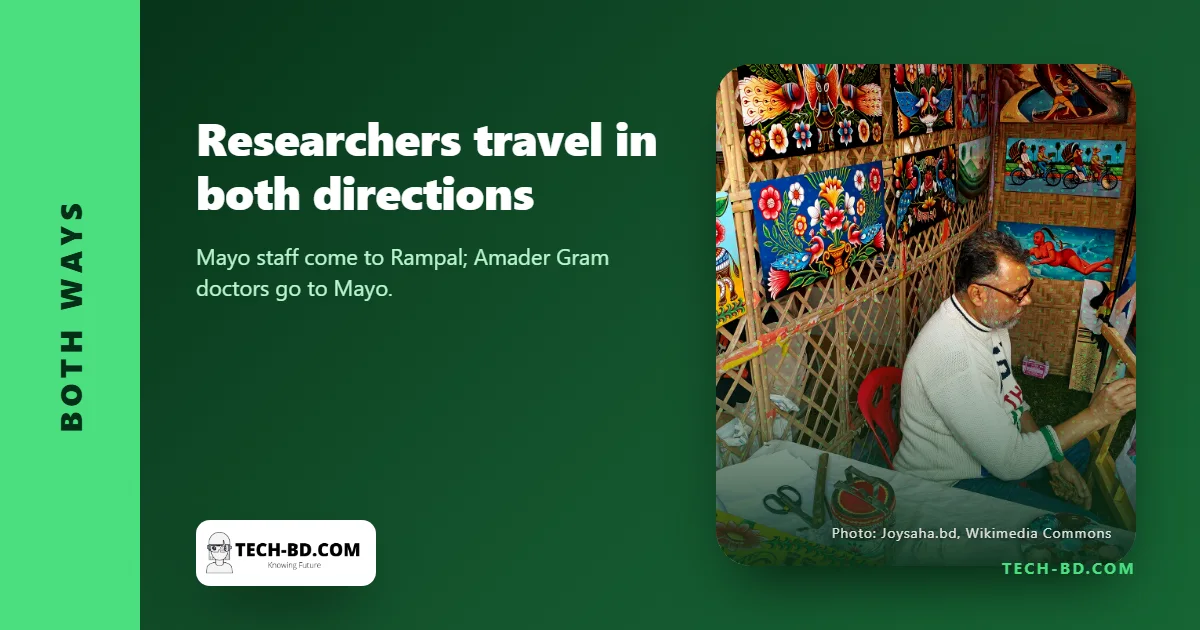
The arrangement runs both ways. ETCH researchers and staff travel to Bangladesh to visit AGCRC; doctors from the Amader Gram project visit Mayo at its invitation.
And in the Rampal collaboration, the rural population are not only the beneficiaries of the research. Their opinions and experience feed into how the research is planned and how the technology is adapted locally.
That is the part worth separating from the headline. Plenty of institutions in rich countries run studies in villages in poorer ones. Far fewer treat the villagers as people who should shape the study.
Why it matters beyond one centre
If it works, the model has three audiences in Bangladesh: public health, IT education and research, and national health policy. A centre that can show rural health communication being designed with its audience — and recorded well enough to be studied — becomes an argument that can be made to a ministry, not just a good local service.
There is a second, quieter benefit. A centre that keeps electronic medical records in a rural population is building something Bangladesh has very little of: longitudinal health data from outside the cities. Policy about rural cancer care is currently made largely without it.
The honest caveat is that a research collaboration is not treatment capacity. Nothing here shortens the journey to Dhaka for someone who needs an oncologist. What it can change is whether the next national programme is designed around how people in Jhanjhania actually receive information, or around how someone in a city assumed they do.