SohozMobile has signed a credit agreement with Almar to expand financing for smartphone purchases by people in Bangladesh who are outside the formal financial system.
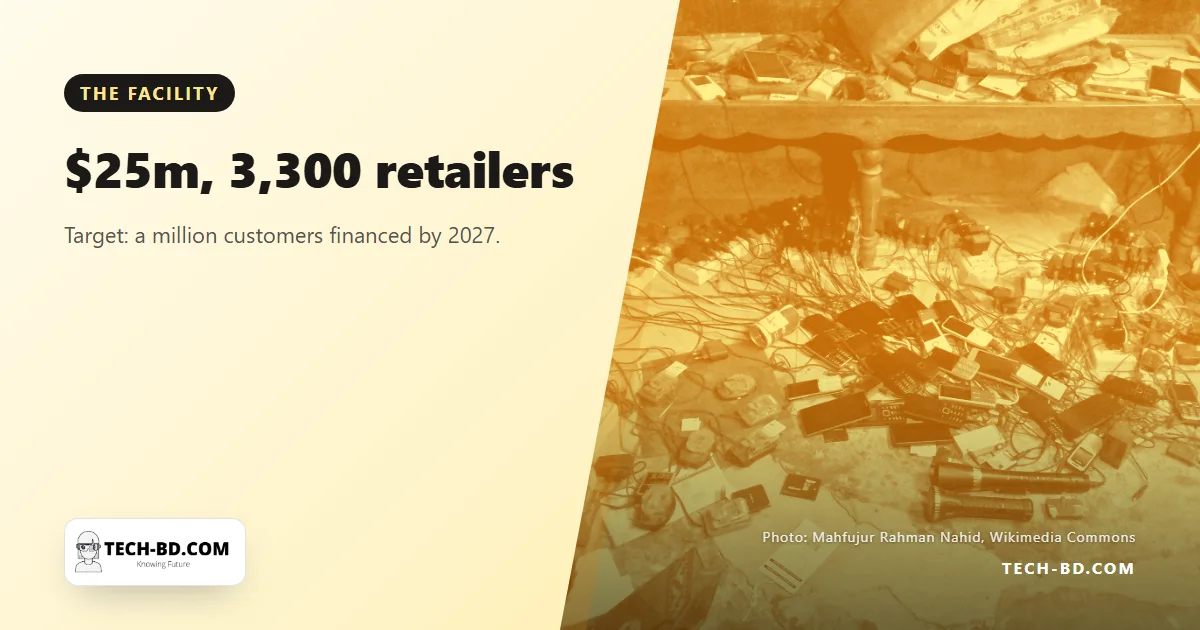
Under it, the company can draw a total of $25m through the US holding company HR Consortia USA. The facility is led by Beacon Peak Partners, and SohozMobile will use it to offer credit for handset purchases. The company announced it in a press release.
What it already runs
Since starting operations in 2024, SohozMobile has let hundreds of thousands of customers buy smartphones in instalments through more than 3,300 retail partner outlets.
Using its own technology, experience in international credit management and its local operation, the company has set a target of financing one million customers by 2027. It says it particularly wants to increase digital connectivity and financial inclusion among women and rural populations.
The gap it is pointing at
Bangladesh still has large shortfalls in both access to credit and digital connectivity, and the two reinforce each other. A person without a credit record cannot borrow; a person without a smartphone has no way to build the digital footprint that increasingly substitutes for one.
Founder and chief executive Rafsan Foyez frames it as a market opportunity, saying there is enormous potential in the region's credit market.
Read it against the duty
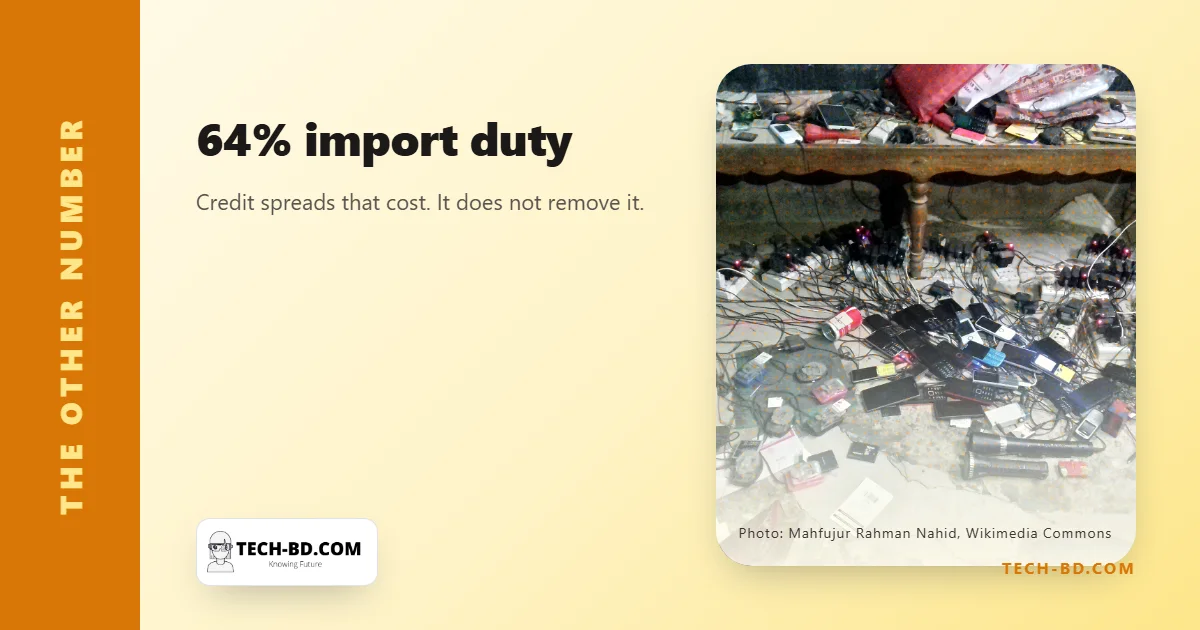
This story is more interesting placed next to one we ran on 20 November: smartphones in Bangladesh carry an effective import duty of about 64%, classified alongside luxury goods, while PC penetration sits at 11.7%.
Instalment credit does not reduce that price. It redistributes it across months, and adds a financing cost on top. For a buyer with no savings and no bank, that can still be the difference between owning a phone and not — but it is worth being precise that this is a workaround for a tax position, not a correction of it.
The policy lever and the market lever are pointing in opposite directions on the same device.
What to watch
Three things will show whether this works as described rather than as announced.
The first is the default rate, which nobody publishes early. Lending small amounts to customers with no credit history is exactly the segment where a bad month in the wider economy shows up first.
The second is what happens on a missed payment. Handset financing in several markets has involved software that locks the phone remotely until the instalment is paid. Whether that is used here, and how it is disclosed at the point of sale, is a consumer protection question worth asking now rather than after the first complaint.
A fourth, quieter one: whether the handsets financed are new or refurbished, and what warranty comes with them. A cheap phone bought on credit that fails in month four leaves the buyer paying instalments on a dead device, which is how this model has gone wrong elsewhere.
The third is whether the women and rural buyers named in the target actually appear in the numbers. A million customers reached through 3,300 retailers could be a genuine widening of access, or it could be the same urban buyers taking credit they would have found anyway. The company has set itself a measurable goal, which makes it fair to check.