OryLab, a Japanese robotics company, builds machines that let people with limited mobility take part in the world outside their homes — by piloting a robot that is physically there while they are not.
Its newest venture is tourism. An OriHime robot attaches to a backpack-style stand weighing under 9 pounds, which a tourist carries on a small platform resting on the shoulder. From that vantage point the pilot looks around and gives commentary on the places being visited.
Where it came from
The founder, roboticist Kentaro "Ory" Yoshifuji, was homebound for more than three years as a child. Severe social anxiety produced physical symptoms that kept him in hospital for months at a time, where he daydreamed about having "a second body to use while mine was in 'maintenance'".
At university he decided attending class over Skype was not enough — his classmates and professors would not interact with a screen. So in 2010 he built a small robot version of himself, a bunshin or clone. "My friends would carry me around, put me in the first row. I could nod and listen along in class, raise my hand, leave the class with them and hang out together. My professors were first hostile about it, but they eventually gave me my attendance points," because they recognised him as a real participant.
OryLab was founded in 2012 by Yoshifuji, Aki Yuki and Yoshifumi Shiiba.
The machines
OriHime is a 9-inch, 1.4-pound upper-body robot with an HD camera, speaker, microphone and movable arms and head. OriHime-D is 47 inches tall and on wheels, for tasks involving physical work — customer service, guiding visitors, waiting tables.
Both are piloted from tablets, computers and smartphones. But those need a hand that can tap and swipe, so the company also developed OriHime eye, for people who rely on their eyes and fingertips, which lets them communicate, draw and pilot the other robots.
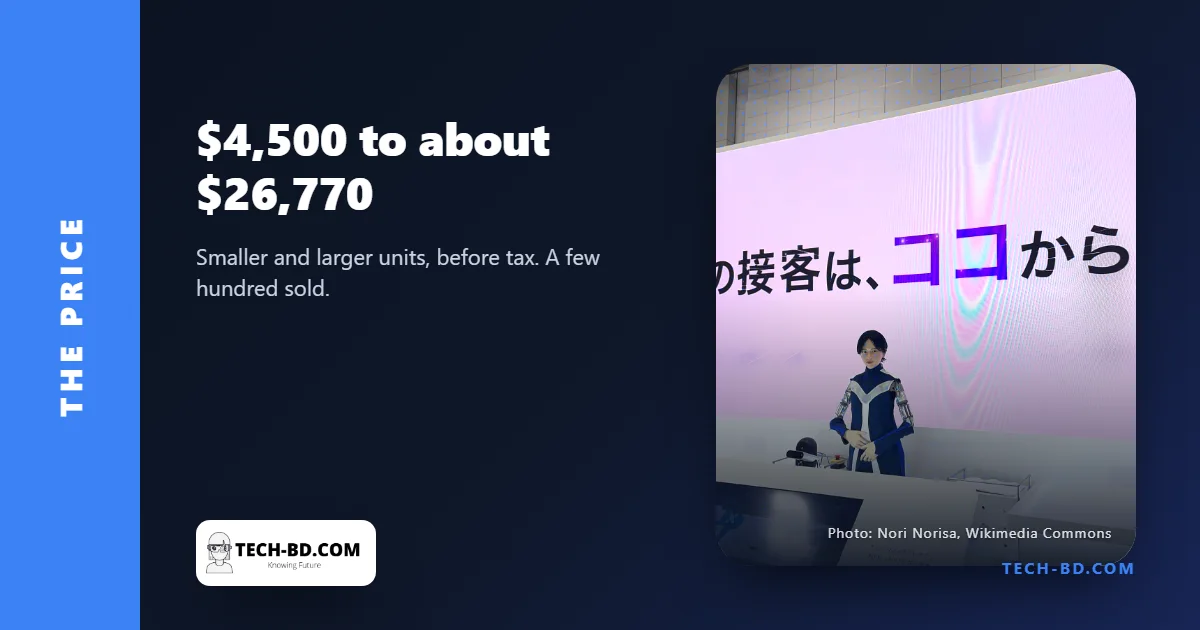
A couple of hundred units have been sold — around $4,500 for the smaller ones and about €20,000 (roughly $26,770) before tax for the larger.
Why they opened a café
Yoshifuji decided the best way to show what the robots could do was to build places where they are used. Avatar Robot Café DAWN ver.β started as a pop-up in 2018 and opened as a 70-seat restaurant in Chuo, Tokyo, in 2021, after raising more than $400,000 through crowdfunding.
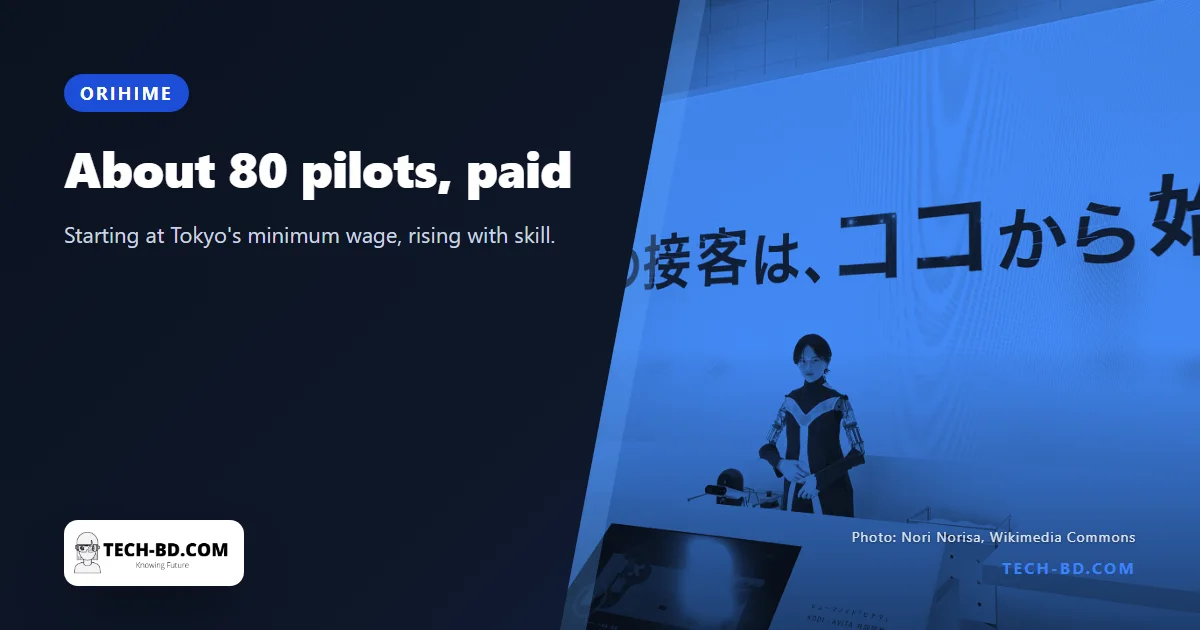
It now employs around 80 people as OriHime pilots, with pay starting at Tokyo's minimum wage and rising with skills and duties. "We don't like to brag, but it became the best-rated café in the neighborhood on Tripadvisor," Yoshifuji said. The café is self-running and profitable, a second is planned, and the space doubles as a research and testing site.
One pilot
Kaji was an energy-sector researcher whose world shrank until the job became unsustainable and she quit. Without a salary she relied on savings and government disability support, which did not cover her medical costs. She heard about OryLab in 2024.
"I love talking to new people; I really enjoy being social," she said. "When I discovered the company and its cute robots, I knew it was the perfect job for me." She joined after five months of training, and is now one of 10 pilots qualified to guide tours.
"I love taking this walk with people, even virtually, and interacting with everyone in real life, both in Japanese and English," she said — adding that some foreign tourists told her it was the longest they had spoken with a local Japanese person on their trip. "But it's also a way for me to prove to others that I can work and grow within a company and still gain new skills."
She is careful about what it has and has not changed: "In total, I work around 20 hours per week. I'm not economically independent yet; I still need my disability support."
The Japanese government estimated about 9.2% of the population had a disability as of 2023, a figure expected to rise by the end of the decade. Yoshifuji says he wants human connection and hospitality at the centre of technology, rather than convenience.