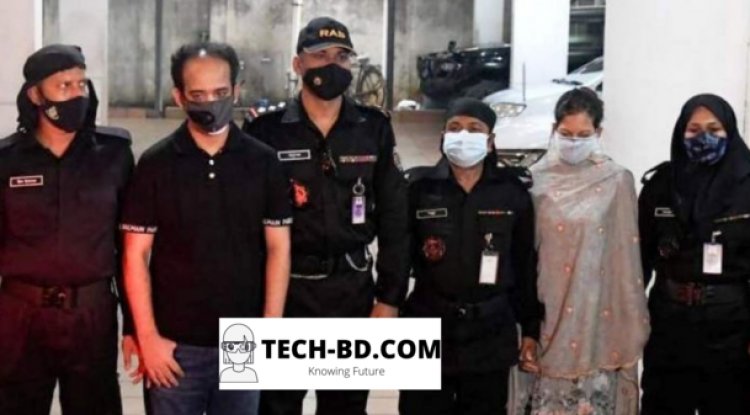
Update, October 2026 — Cases like this one did reach judgment, and the convictions followed. What they did not do is return anyone’s money, for reasons built into the kind of remedy a criminal case provides. How the litigation ended is below the original article.
A customer, Rakib Dewan filed the case with the Chief Metropolitan Magistrate Court on Thursday.
According to the case statement, Rakib ordered two motorcycles from Evaly and made advance payments of Tk 1,33,978 on 16 January.
Evaly failed to make the delivery of the motorcycles that were schedule to be delivered within 45 days.
Later, Evaly provided a cheque of Tk 230,000 following the market price of the motorbikes to Rakib which was later rejected by the bank as the account was already closed.
On 16 September, another consumer Arif Baker filed a case over money embezzlement against Rassel and Nasrin with Gulshan Police Station.
On 14 September, the commerce ministry decided to request the home ministry to take legal actions against Evaly for violations of laws and deceiving customers.

"Evaly violated many provisions of the Penal Code 1860, Digital Security Act and Consumer Rights Protection Act," said Hafizur Rahman, additional secretary of the commerce ministry, in a press briefing on the day.
Earlier, in two different submissions to the Commerce Ministry, Evaly informed that they owe Tk311 crore to customers and Tk206 crore to the merchants.
Evaly got the money in advance payments by luring people with heavy discounts on products on its site and promising delivery in 7-45 days. Buyers, however, are yet to receive the items they ordered.

And the refund cheques given to customers have bounced because of an insufficient fund in Evaly's bank account.
Meanwhile, the Anti-Corruption Commission (ACC) has written to several government organisations seeking related documents on Evaly.
Besides, a Dhaka court also imposed a travel ban on Mohammad Rassel and his wife Shamima Nasrin from travelling abroad amid an ongoing probe into charges of embezzlement against the e-commerce company.
What happened next
Updated September 2026. Rakib Dewan's case was one of dozens. Through late 2021 and 2022 customers and merchants filed cheque-dishonour and fraud cases against Rassel and Shamima Nasrin in Dhaka, Chattogram and other districts, most of them over motorcycles, phones and refrigerators sold far below market price on advance payment. The commerce ministry's request to the home ministry, mentioned above, was followed in October 2021 by a High Court order replacing Evaly's board with one led by former justice AHM Shamsuddin Chowdhury Manik. Nasrin was bailed in April 2022 and relaunched the company on a cash-on-delivery basis; Rassel was released from jail in December 2023 after obtaining bail in the last of the cases. Customers who paid in advance in 2021 have largely not been repaid. The lasting change is regulatory: advance payments for online orders now stay in escrow until delivery, under the Digital Commerce Operation Guidelines 2021.
How the litigation ended
Individual complaints of this kind produced the convictions. Evaly's managing director Mohammad Rassel and chairperson Shamima Nasrin were sentenced across four separate prosecutions — five years and three years in fraud cases, two years in a third, and one year from a Chattogram court over a dishonoured cheque, each carrying a fine. Both are recorded as absconding, with conviction and arrest warrants issued.
The underlying facts in these cases were deliberately simple. Money paid, goods not delivered inside the promised window, complaint filed at a local police station. No forensic accounting was required to prove any of it, which is why these were the cases that moved.
Why winning did not mean recovering
Anyone in a similar position should understand this before filing.
A criminal fraud case asks the state to punish an offender. It does not, by itself, locate assets, freeze them or transfer them to the complainant. The fine attached to a conviction is paid to the state, not to the person who lost the money, and a default term in prison substitutes for payment — which means the sentence can be served without anyone being compensated.
Recovery requires something else entirely: identifying assets, obtaining attachment orders, and selling what is found. In this instance the arithmetic ruled it out before the process began. Liabilities to customers and merchants stood at Tk403.80 crore against Tk65.17 crore of current assets, so even perfect recovery of everything available would have returned a fraction of claims — and a substantial portion had already left the country through hundi, which leaves no account to attach.
What that implies for anyone in this position
Three things follow, and they generalise past this case.
File early, for a different reason than you think. The first complaints matter not because they recover more, but because they trigger the investigation and the account freezes that preserve whatever is left for everyone.
Expect the criminal case and the money to be separate questions. A conviction is a public finding of wrongdoing. Treating it as a route to repayment leads to years of waiting for something the process was never built to produce.
Collective claims beat individual ones where the pool is short. When liabilities exceed assets several times over, the real contest is between claimants. An organised group of creditors has standing in insolvency proceedings that a sequence of individual complaints does not — and in this episode no such mechanism was available, which is part of why refunds stalled when the state eventually tried to arrange them.