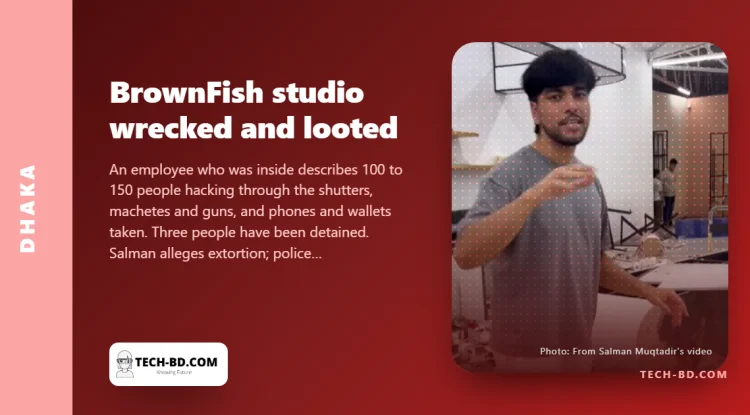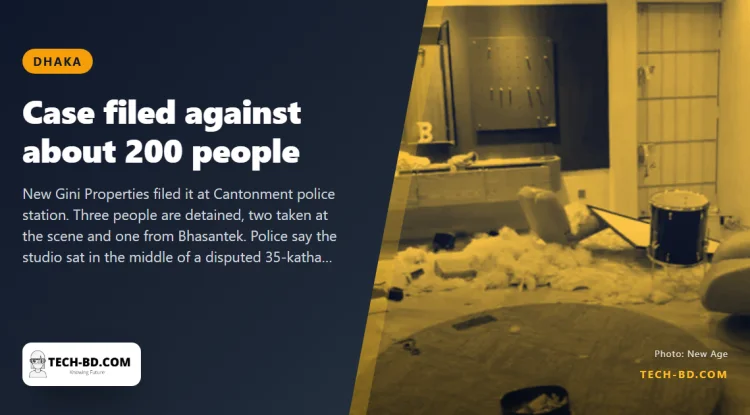
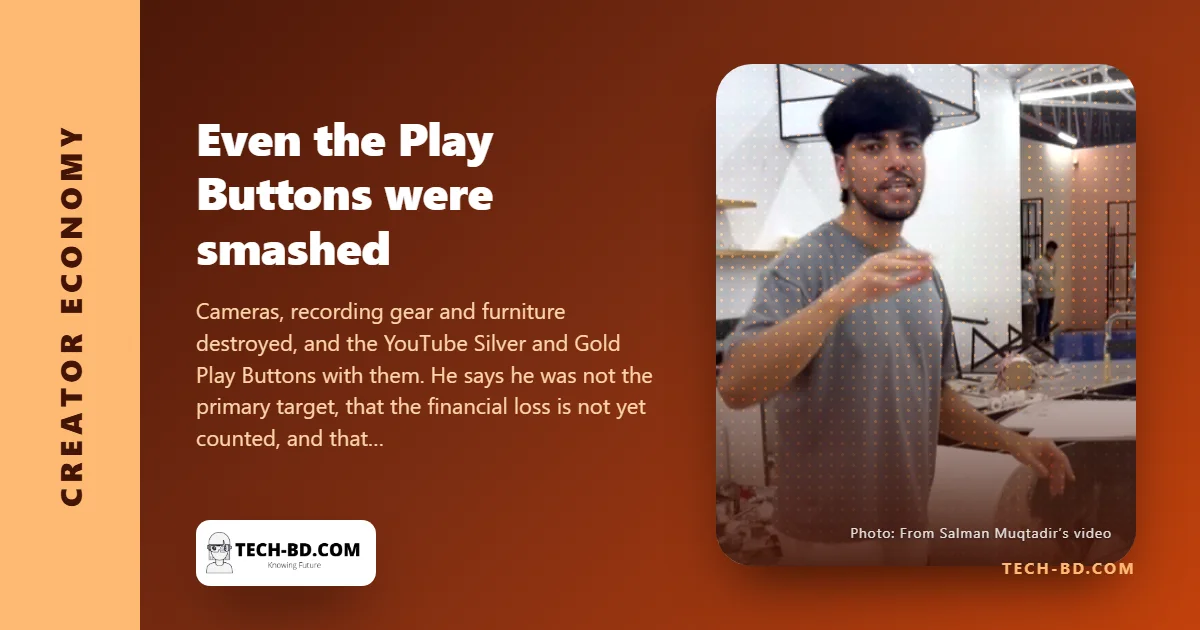
Among the things destroyed at BrownFish were two objects with no resale value at all: Salman Muqtadir's YouTube Silver and Gold Play Buttons, the plaques YouTube sends at one hundred thousand and one million subscribers. They were reportedly damaged along with everything else.
That detail is worth pausing on, because it is the clearest illustration of what this kind of loss actually is. A camera can be replaced with money. A Play Button marks a moment that already happened.
What he said at the scene
Speaking to reporters at the studio, Salman said he was not the primary target of the attack, and that he believed it was connected to a dispute between the attackers and the property owners — an account that matches what police have since said.
On the damage, he said BrownFish had hosted shoots for numerous clients and carried substantial investment in equipment and production. The financial losses, he said, had not yet been assessed.
What he kept returning to was not the money. He described the damage to his creative work as the part that concerned him more — an attack, in his words, on his dream and his passion. In the video he posted on the night, with staff visible crying behind him, he said the entire studio had been destroyed. He has also said he intends to carry on: "I will do something bigger than this."
At the home ministry's briefing on Sunday, it was acknowledged that the content creator had been victimised in the incident, and that a fuller investigation was still required.
Why the sentence about clients matters
"Shoots for numerous clients" is the line that turns this from a story about one person's bad night into a business story. A studio that takes client work is holding other people's projects: footage shot but not delivered, campaigns with air dates, deposits already taken against work now impossible to finish on time.
It also means the people affected are not only the owner. Editors, camera operators, production assistants and managers are paid out of a schedule that has just stopped. In Bangladesh's creator economy those are ordinary jobs held by ordinary people, and almost none of them come with the protections an equivalent job in a factory or an office would carry.
The loss that cannot be bought back
Equipment is the visible cost and the recoverable one. The footage is neither. Raw takes, unfinished edits, project files and archive from shoots that cannot be staged again do not appear on an insurance schedule and cannot be replaced at any price — and if they lived on machines and drives inside the room, they went with the room.
This is why the single most useful thing any studio in Dhaka can do this week costs almost nothing: get a copy of the work out of the building. We set out that argument, along with why creator equipment here is effectively uninsurable and what a studio can do about the tenancy and the paperwork, in what a wrecked studio actually costs a creator. The formal case, filed against 13 named and up to 200 unnamed people, is covered in our report on the complaint.