From voice notes and photographs to saved messages and AI recreations, technology has created new ways for bereaved people to maintain a connection with those they have lost.
But while digital memories can offer consolation, some experts say they can also make grieving more complicated — particularly when reminders resurface without warning.
The same thing, two opposite effects
Karen Sutton, a widow coach based in Cheltenham who supports bereaved people, puts it in a single sentence worth sitting with:
"There can come a point when things that once brought us comfort can actually be holding us back."
Grieving is unique to each person, she says, so there is no universal formula. "For some people, being able to access voice messages, having reminders on their phone or photos pop up will feel like a connection to their person. They might even see them as signs, but for others, it might feel like torment."
Her practical advice
Sutton's guidance is unusually concrete for this subject, and it avoids telling anyone what they should feel.
She says it is important to "check in with yourself" as grief evolves, and to make whatever changes are needed to move forward "without attaching too much meaning to things" — cancelling an anniversary reminder, for instance, or deleting a voicemail.
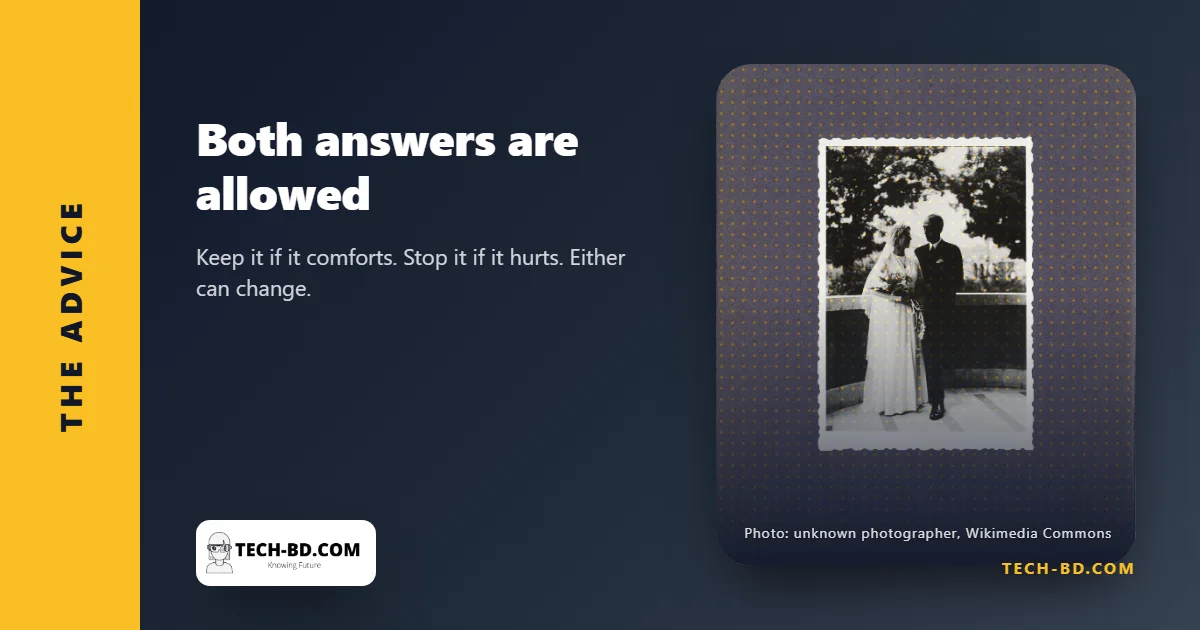
"If you find it comforting, then absolutely access it, use it, leave it as it is. But if it's something that is impacting your pain in some way, find a way to stop that thing from happening."
The important part is that both answers are allowed, and that the right answer can change. A photo reminder that helped in March may not help in November, and nothing has gone wrong if it stops helping.
Where AI makes it different
Sutton's specific concern is with AI-generated content, and her reasoning is worth following carefully.
She worries about people using it to fabricate "new memories" of someone who has died, and says it could hinder healing.
"When somebody dies, your brain has to learn that your person no longer exists in this reality, and that takes a lot," she says.
That is the distinction between a photograph and a generated video. A photograph is a record of something that happened. A generated video is a new event that did not happen, produced on demand, and it arrives while the mind is still doing the work of accepting an absence.
The question underneath
With people we have lost now preserved digitally — their likeness accessible at any moment — the BBC asks whether modern technology has permanently altered the process of saying goodbye.
Nobody in the piece claims to know, which is the honest position. Previous generations had a handful of photographs and, if they were fortunate, a recording of a voice. A person who died this year leaves thousands of images, years of messages, and a voice that any phone can play back on request.
That is not obviously worse. It is simply new, and the people working with the bereaved are discovering what it does at the same time as everyone else.