Google Maps appears to be preparing a feature for travellers arriving in an unfamiliar city. After you land, the app would send a welcome message with key places, how to reach the city centre, and nearby restaurants and local events.
Google has not announced it. The report comes from Android Authority, which examined version 26.45 of the Maps Android app.
How it would work
On reaching an airport in another city, the app would suggest using Ask Maps, Google's conversational search inside Maps. Ask Maps lets you describe what you want in ordinary language rather than guessing keywords or working through filters.
Google has reportedly prepared a set of tappable questions to start the conversation, so you are not facing an empty box after a long flight.
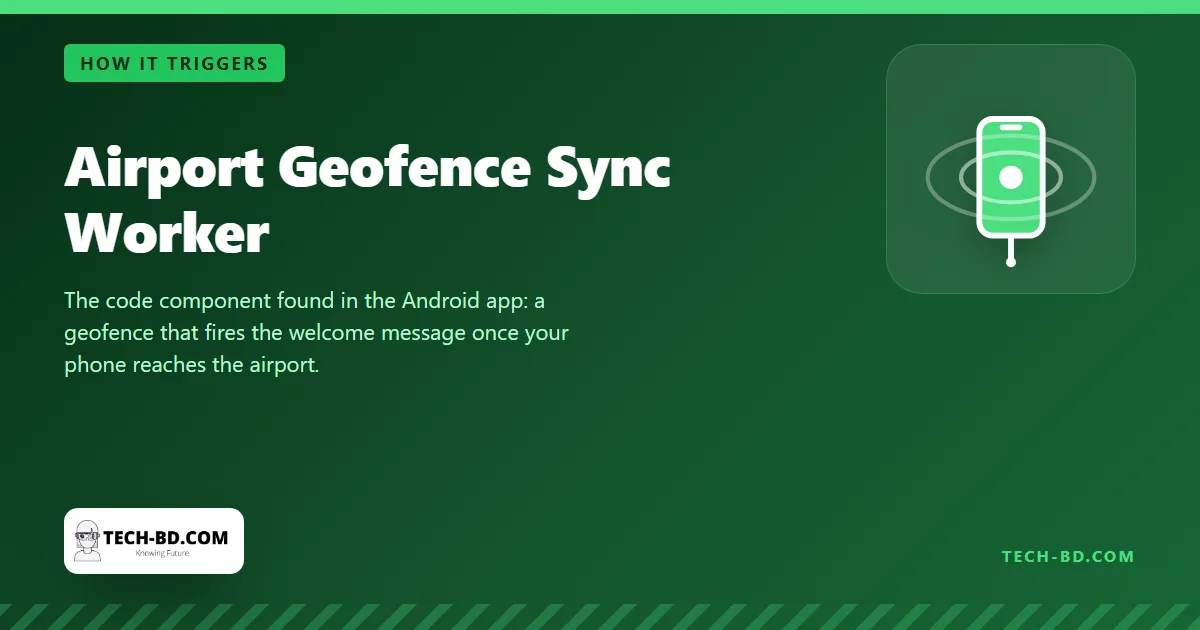
The trigger is a background component found in the code called the Airport Geofence Sync Worker. A geofence detects when a device enters a defined area, so the message would arrive automatically once your phone reaches the airport. Google may use Gemini's Personal Intelligence feature for the launch.
What is actually confirmed
Very little, and it is worth being precise about that.
There is no launch date. There are no launch countries. The code contains location data for more than 90 airports worldwide — London, New York, Dubai, Singapore, Tokyo, Sydney, Delhi, Mumbai and Bengaluru among them — but a geofence existing in a build is not a commitment to launch anywhere.
Features found this way sometimes ship, sometimes ship differently, and sometimes never appear at all. Treat it as a direction rather than an announcement.
The part worth noticing
Set aside whether this particular feature arrives. The mechanism is the interesting bit: your phone crossing a line on a map causes an assistant to start a conversation with you, unprompted.
That is a meaningful shift in how these tools behave. Until now you opened Maps and asked. Here the app decides a moment is significant and speaks first — which is useful when it is right, and an interruption when it is not. The same geofence that knows you have landed also knows you are at a hospital, a court, or an airport you visit every week.
For travellers from here
No South Asian airport outside India appears in the list that has been reported, so Dhaka is not in the first wave on current evidence. But the feature is about where you arrive, not where you live — and Delhi, Mumbai, Dubai and Singapore are exactly where flights from Dhaka land.
If it ships as described, the people who benefit first are Bangladeshi travellers arriving somewhere else, which is a reversal of how most Google features reach this market.
The setting this depends on
A geofence that fires when you land only works if the app is allowed to know where you are in the background. That is a permission you already granted or did not, and it is the one to look at if the idea of being greeted on arrival appeals to you less than it appeals to Google.
On Android it sits under the app's location permission — "Allow all the time" versus "Allow only while using the app". Background location is what makes an arrival prompt possible, and switching it to while-using also switches off a good deal of Maps' usefulness, so it is a genuine trade rather than a free win.
Notifications are the softer lever: the welcome message has to arrive as a notification, and notification categories can usually be turned off individually without touching location at all.