Haier Bangladesh Limited says it wants to turn the country into a regional manufacturing base for South and Southeast Asia, by raising production capacity, deepening local supply chains and cutting its dependence on imports.
Company officials set out the plan at a media briefing in Gulshan, Dhaka, and confirmed it in a press statement.
What it already makes here
Haier began operating in Bangladesh in 2020. At its own factory in Gazipur it currently produces air conditioners, washing machines and televisions. Refrigerators and freezers are made under contract manufacturing arrangements.
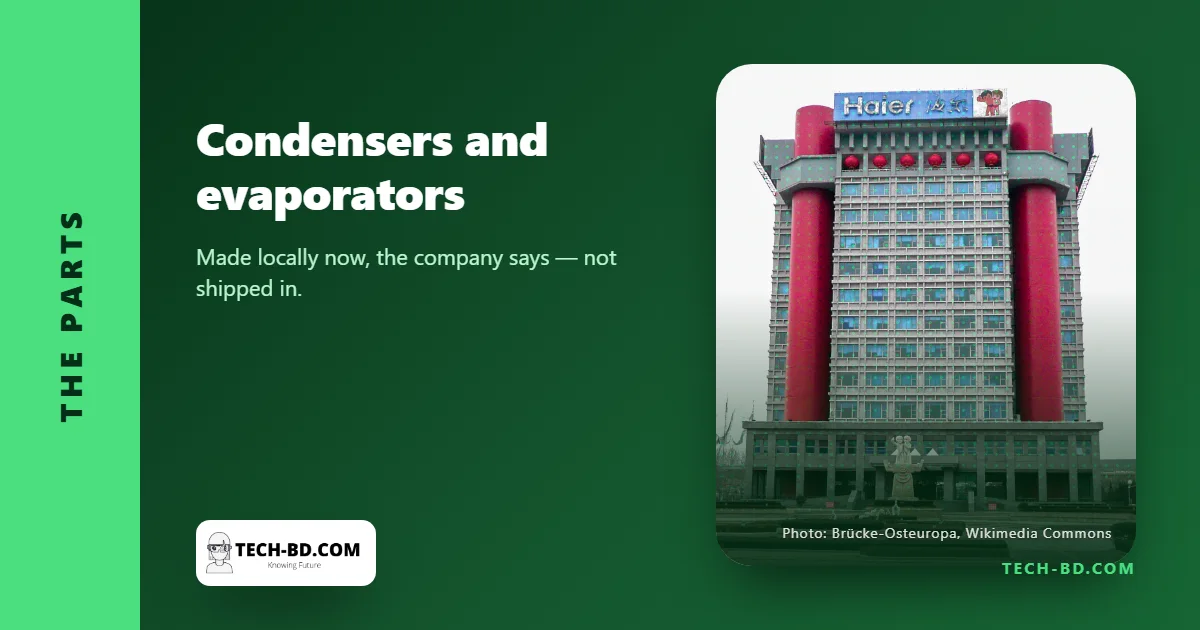
More interesting than the finished goods is the component list. The company says it already makes AC condensers, evaporators, tubing and various structural parts locally — the parts that normally arrive in a container.
What the company said
Chief executive Fan Jing said the aim is to bring world-class innovation and modern technology to every household in the country. "We are working to make daily life easier and more comfortable through advanced home technology and smart solutions," he said.
Sales and marketing director Ashraful Alam said the company does not judge itself only on units sold. "Ultimately we don't measure our success only by how many products were sold," he said. "What matters more to us is how well we can serve customers and how much comfort we add to their daily lives."
Read it for what it is
This is a company announcement made at a press briefing, not an investment that has been signed, costed or scheduled in public. No figure was given for the new investment, no timeline for the expanded capacity, and no export target. Those are the three numbers that would turn an intention into a plan.
That said, the direction is the one that matters for Bangladesh. Assembling imported kits creates jobs in a warehouse; making condensers and evaporators creates an engineering supply chain around the factory, and those suppliers can sell to other manufacturers too. It is also the step that changes the import bill, because components, not finished appliances, are what the sector buys in from abroad.
Why the regional framing is the real claim
Serving the domestic market from Gazipur is already happening. "Regional manufacturing hub for South and Southeast Asia" means something harder: exporting finished appliances to countries that have their own assembly plants, at a landed cost those plants cannot match.
Bangladesh has done exactly that in garments for four decades, and has never managed it in consumer electronics at scale. Whether Haier can is a question about power reliability, component suppliers, port turnaround and tariff treatment in the destination markets — none of which was in the briefing.
The competition it is talking about
Haier is not arriving in an empty field. Walton builds refrigerators, compressors and air conditioners at Chandra in Gazipur and has been exporting for years; Vision, Singer, Minister and Jamuna all assemble domestically. The policy environment has been built around that: locally manufactured appliances have enjoyed substantial VAT and duty concessions, which is precisely why a foreign brand builds here rather than shipping finished units in.
Those concessions have been under review as the government looks for revenue, and they are the single biggest variable in whether any of this expansion happens. A manufacturer deciding where to put a new line reads the next budget more carefully than it reads its own press release.
The statement says the company wants to contribute to local industry through future investment and expanded capacity. Worth returning to in a year with the export figures in hand.