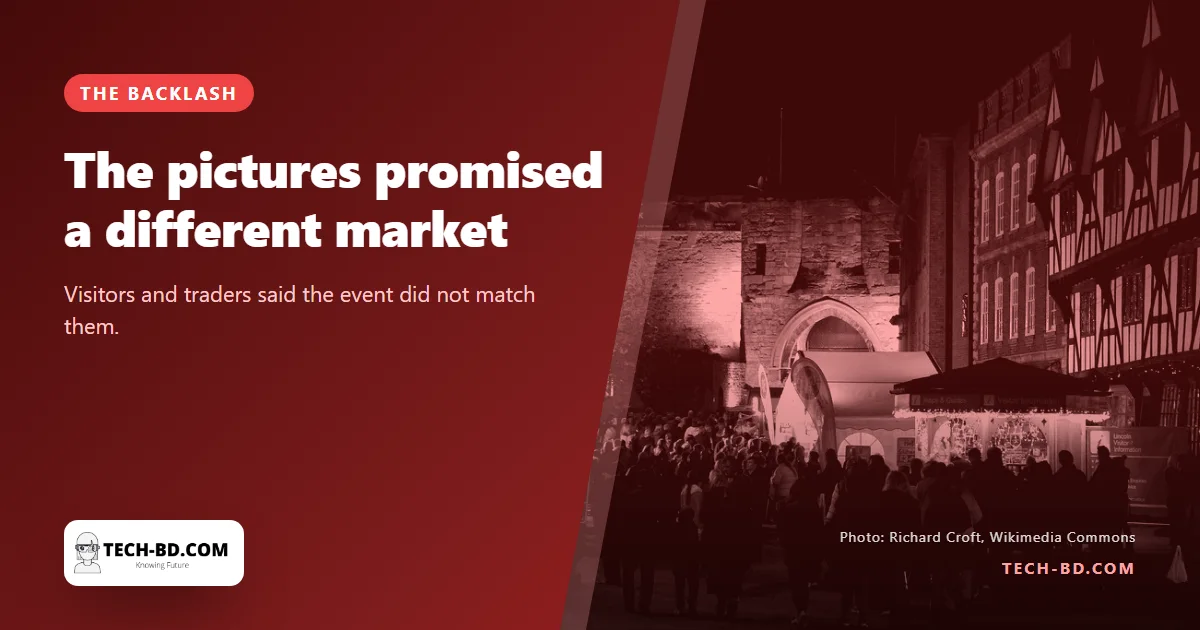
The Kernow Christmas Market in Pool, Cornwall, has been cancelled. The trigger was a backlash over AI-generated promotional images that visitors and traders said did not match the event they turned up to.
It is a small story with a sharp edge, because the images were not a side issue. They were the product the market was sold on.
What the trade body says a market is
David Catterall is chief executive of the National Association of British Market Authorities. Asked what makes a great market, he did not mention promotion at all.
"What makes a great market is that they represent the community that they're serving," he said. Not fairy lights. Not flashy advertising.
Thriving markets, he said, reflect local tastes — in food, in drink, and in the balance between traditional and modern traders. The ones that work become part of the fabric of a place: social hubs and meeting points that also happen to boost the local economy.
Why a generated picture fails this particular test
Set those two things side by side and the problem is obvious. If a market succeeds by representing a specific community, then an image produced by a model that has never been to Pool is advertising the one thing the market cannot deliver: somewhere else.
A generated Christmas market is a composite of every Christmas market the model has seen. It is warmer, bigger and more crowded than a real one in Cornwall in November, and the gap between the picture and the car park is the whole complaint.
This is different from ordinary advertising puffery. A photograph taken at last year's market on its best evening is flattering but true — it happened. A generated image is a promise about an event that has not happened yet, made by something with no knowledge of the event.
The traders carry the cost
The people who lose here are the stallholders. They book a pitch, buy stock, and give up a weekend on the strength of the footfall the organiser's marketing implies. When the advertising is doing the work of a photograph it has not earned, their risk goes up and they are not the ones who chose the pictures.
Alastair Crouchen, who runs Paignton Mushrooms, is among the traders who spoke to the BBC about what a working market looks like from behind a stall.
Cancelling is not a cost-free fix either. Stock bought for a December weekend does not keep, pitch fees take time to come back, and a stallholder who has turned down another booking cannot recover the date. The organiser carries the reputational damage; the traders carry the inventory.
The useful lesson for anyone buying marketing
The cheapness of generated imagery is real and it is tempting, particularly for small organisers with no budget for a photographer. But the economics only work if nobody checks.
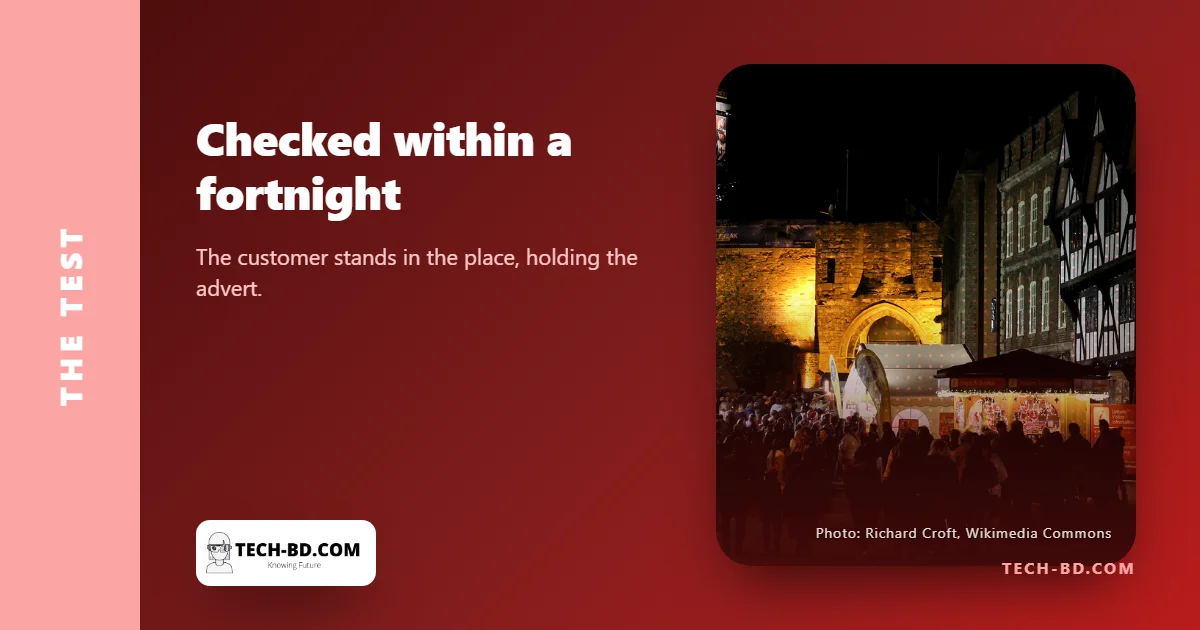
A Christmas market is uniquely checkable: the customer stands in the actual place, on the actual day, holding the advert on their phone. Few products get audited that directly. The lesson is not that AI images are always wrong; it is that they are riskiest exactly where the buyer will compare them to reality within a fortnight — and a local event is the clearest example there is.