Update, October 2026 — The mechanism this 2021 article identifies — motorcycles sold far below cost — turned out to be central to the court cases as well as to the collapse. Why the motorcycle mattered is below the original article.
Investigators find customers who ordered 16-17 bikes each though they themselves do not ride.
Most of the customers who paid Evaly for the bikes in advance are second and third grade government officials, said investigators privy to the interrogation of Evaly CEO Mohammad Rassel.
The scam-tainted e-commerce platform received as many as 2 lakh orders for motorbikes in three years since its inception, while the company could not deliver a big chunk of the order.
"We found many customers who do not ride a motorbike, but had ordered 16-17 bikes each. They ordered those for reselling," a police official who questioned Rassel in a case logged with Dhanmondi Police Station told Thursday.

The investigators said there are around 6 lakh motorbikes across the country registered with the Bangladesh Road Transport Authority (BRTA). The 2 lakh bike orders with the Evaly alone caused a turbulence in the country's motorbike market.
"We had been edging down the discounts gradually. But our market competitors such as Dhamaka and Eorange caused a furore in the market almost overnight, which forced us to stay in the discounts," said the police official quoting Rassel.
Police said they were cross-checking the information they gleaned from Rassel during the remand with the Evaly server.
Dues Tk1,000cr, Rassel skips money laundering queries
The CEO told police that customers had placed Tk6,500 crore orders to Evaly in the last three years, while the company delivered products worth around Tk5,500 crore.
The Tk1,000 gap put a squeeze on the company eventually. The amount includes about Tk700 crore liabilities to customers, Tk250 crore dues to merchants and Tk50 crore dues for advertisements and campaigns.
Rassel, however, claimed to police that he had no assets in and outside Dhaka except some lands in Savar for a warehouse.

He even told police that he lived in a rented apartment in Mohammadpur, and repeatedly skipped questions related to siphoning off money outside the country.
The CEO shifts blame onto media
During the interrogation, Rassel told police that he had to be arrested thanks to negative campaigns carried out by the media.
He also pointed the finger at market newcomers imitating Evaly's business model such as Dhamaka and Eorange.
In a separate development Thursday, a Dhaka court ordered police to interrogate Rassel at the jail gate in the case filed with Dhanmondi police station.
"So far, one case has been logged against Rassel with Gulshan Police Station and two with Dhanmondi Police Station," Abdullah Al Masum, assistant commissioner of Dhaka Metropolitan Police (DMP, Dhanmondi Zone).

The DMP official said a customer also filed a case with a Dhaka court Wednesday.
The second case with Dhanmondi Police Station was filed on 21 September by Abdur Rahman, a disgruntled customer of Evaly. The customer alleged he paid the company in advance for two motorbikes, but he neither received the product nor the refund yet.
After interrogating Rassel in a one day remand, police on Thursday produced the CEO before a Dhaka court seeking a five-day quizzing. Rejecting the remand plea, the court ordered Rassel to be interrogated at the jail gate within the next three working days.
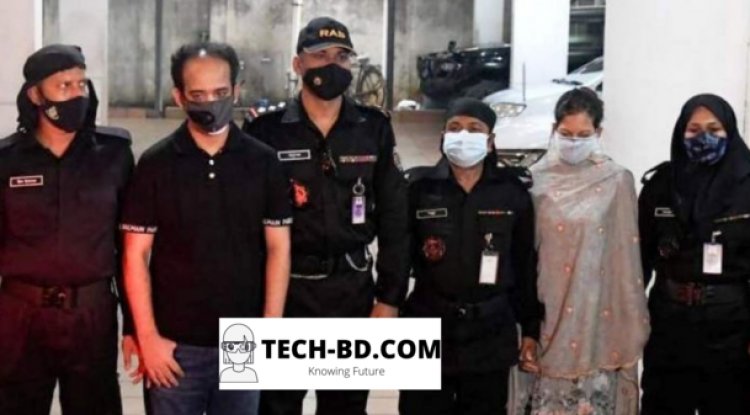
On 16 September, police arrested Rassel and his wife Shamima Nasrin — also the chairman of Evaly — from their Mohammadpur residence following a fraud case filed with Gulshan police station.
Why the motorcycle mattered
Of all the products that could have been discounted, the motorcycle was the one that could break the company fastest, for reasons that are structural rather than coincidental.
A motorcycle is expensive relative to household income, which makes the discount enormous in absolute taka. It is aspirational and liquid — a buyer who does not want one can resell it, so the offer attracts people who are not customers at all but arbitrageurs. And it is indivisible: there is no cheaper configuration to fall back on, so the platform must either deliver the whole thing at a loss or deliver nothing.
Each discounted motorcycle therefore created a large, fixed, non-negotiable liability. Taking a thousand such orders in a week commits the company to a sum it must find from deposits that have not yet arrived.
How it showed up in court
The prosecutions that followed did not rest on complex financial evidence. In one of the prosecutions the complainant had simply paid for a Yamaha R15 and waited. Full payment in February 2021; no delivery by the end of the promised 45 days.
That is the whole offence as a court sees it: money taken, goods not delivered, deadline passed. The pair were convicted across four separate prosecutions, with sentences ranging from one to five years, and are recorded as absconding.
The signal a buyer can actually use
This generalises past Bangladesh and past 2021, and it is the reason the story is worth keeping.
A discount has two possible sources. It can come from margin — the seller buys cheaply, operates efficiently, and takes less profit. That has a floor, and the floor is visible: nobody sells below what the item cost them for long.
Or it can come from float — money from customers whose goods have not shipped. That has no floor at all while deposits are growing, which is why offers funded this way are the ones that look impossible.
So the practical test is not whether a price seems too good. It is whether the seller is holding your money before you hold the goods, and for how long. A 45-day delivery window on a deeply discounted big-ticket item is the combination to be wary of, in any market — and the regulatory response in Bangladesh, which now holds advance payments until delivery, is aimed at exactly that pattern.