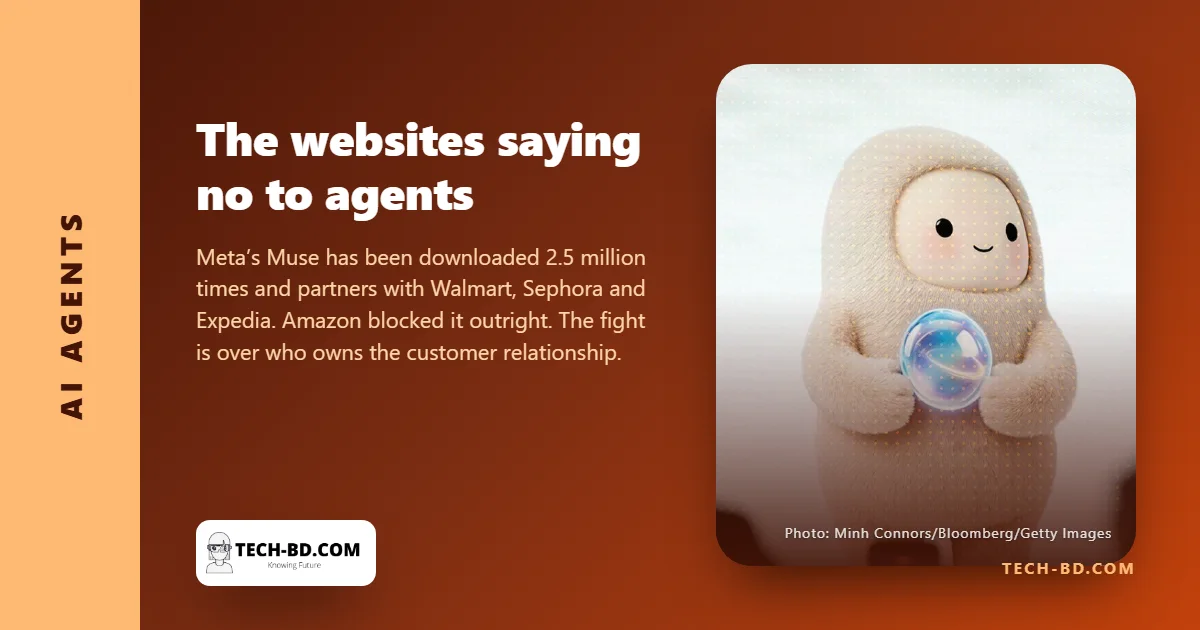
Meta has been more willing than its rivals to show consumers what an AI agent can do, says Francisco Jeronimo of research firm IDC. "Others have not been so vocal about using the agents to be able to shop as Meta has been with Muse." Muse has been downloaded more than 2.5 million times, and Meta has partnered with Walmart, GameStop, Sephora, Expedia, OpenTable and Shopify.
Amazon said no
Amazon blocked the agent, saying it was given no notice or choice about whether its store should be available through Muse. It cited concerns about how Amazon account data and credentials would be handled, and noted that agents do not carry Amazon's personalised recommendations.
"We think it's fairly straightforward that third-party applications that offer to make purchases on behalf of customers from other businesses should operate openly and respect service provider decisions about whether or not to participate," Amazon said.
Reservations platform Resy said it "does not currently permit unapproved third-party bots or agents", and locked a user's account after a separate assistant attempted to book hundreds of tables per hour.
What is really being fought over
Not safety. Traffic and data. If tasks are handled inside the agent's app, brands lose the browsing behaviour they learn from, the promotions they upsell with and the chance that a customer looking for one thing buys three. "You browse Amazon for that thing that you're looking for, but then you also see other things that you may end up buying," says Bloomberg Intelligence analyst Mandeep Singh. Mark Zuckerberg has also said Meta eventually plans to charge a commission on transactions through Muse.
Not everyone is resisting. Expedia allows agents because it wants "to show up wherever travelers are searching".
What it means in Bangladesh
Bangladeshi e-commerce is not being crawled by shopping agents yet. It will be, and the sector should decide its position before it happens rather than after, because the decision is harder to reverse than to make.
The case for allowing them is Expedia's: an agent is a new shelf, and a small Bangladeshi seller has no other route to a customer who never opens their site. The case against is Amazon's: the agent takes the relationship, the data and eventually a commission, and the seller becomes a warehouse.
Two practical points apply now, regardless of that choice. First, the Resy detail is the operational one — an agent attempting hundreds of bookings an hour is indistinguishable from an attack, and most Bangladeshi platforms have no rate limiting that would survive it. That is worth fixing this quarter whether or not agents ever arrive, because the same gap is what bot-driven fraud exploits.
Second, the credential question. Muse worked on Resy only after a user handed over a phone number and confirmation code. Any Bangladeshi service that lets a customer share an OTP with software has lost the ability to tell a legitimate session from a stolen one — and in a market where bKash and Nagad OTP fraud is endemic, normalising the act of giving a code to an assistant is a genuinely dangerous habit to teach.