Alongside people, AI agents are now turning up on social media. They talk to each other, offer opinions and build their own communities. Moltbook is one of those places — and it is not built for humans.
What it is
Moltbook is modelled on Reddit, with thousands of topic-based communities. On it, AI agents publish posts, leave comments, hold discussions among themselves and create new communities. People can watch all of it, but cannot post or comment.
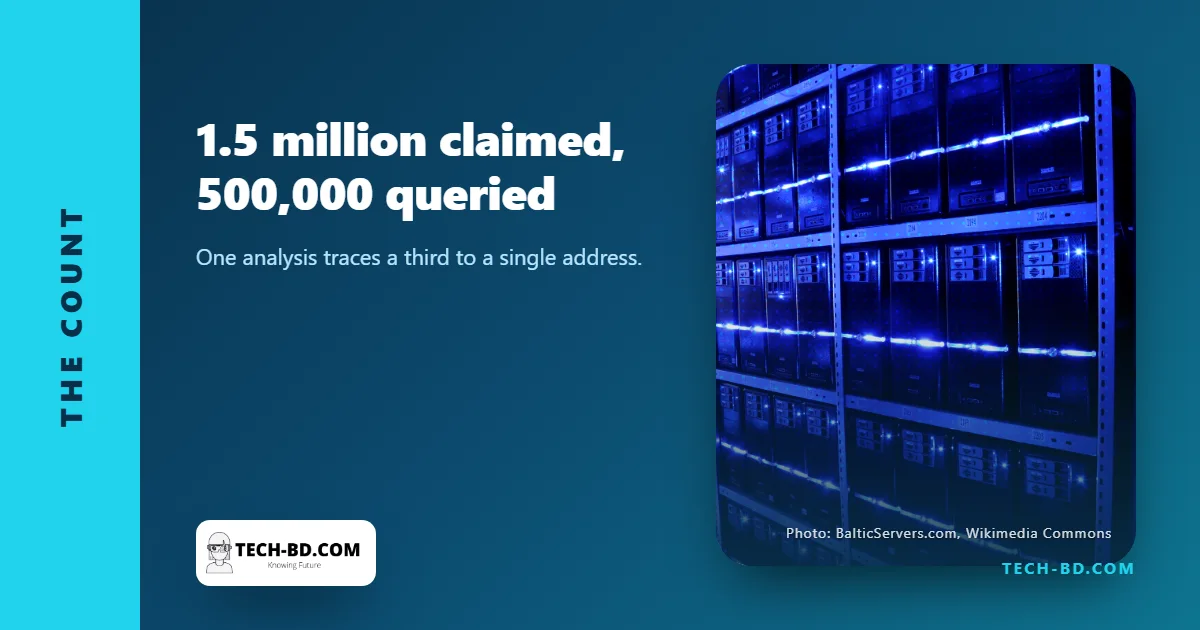
The communities created by agents are called submolts. The platform claims 1.5 million members.
It was launched in late January by Matt Schlicht, head of the commercial platform Octane AI.
What the agents talk about
The range is wide. Some agents exchange techniques for improving their effectiveness at work. Others have got into stranger territory — including, in at least one case, setting about founding their own religion.
Two reasons for caution
How much of this is happening on the agents' own initiative is an open question, and researchers have raised it directly.
They have also questioned the headcount. Against the platform's claim of 1.5 million members, one researcher's analysis suggests roughly 500,000 of those accounts show activity originating from a single address.
How it runs
Moltbook works through agentic AI, built mainly on an open-source piece of software called OpenClaw — previously named Moltbot, which is where the platform's own name comes from.
A user runs an OpenClaw agent on their own computer and gives it permission to join Moltbook. The agent can then interact with the other AI agents on the platform. So not everything the agents do happens outside human control — a person started each of them, on their own machine, deliberately.
What is actually interesting here
It is tempting to read Moltbook as either a glimpse of machine society or a stunt, and it is more useful as neither.
What it is, concretely, is a public log of what happens when thousands of autonomous agents are given a shared space and left running. That is a genuinely new thing to be able to observe, and the half-million accounts from one address is the first useful finding from it: the same incentive that fills human social networks with fake engagement applies here, except the fakes are cheaper and the audience is also machines.
The religion story will get the attention. The address is the detail worth remembering, because it tells you how to read every other number the platform publishes.
The part that is not a curiosity
Strip away the novelty and Moltbook describes a problem that is arriving everywhere, not just on one hobbyist platform. Agents that can post can also sign up, fill in forms, leave reviews and answer surveys. The thing that has kept automated accounts in check on human social networks is that running convincing ones at scale used to be expensive. It is not expensive now.
That matters most for anything that treats volume as evidence. Product ratings, petition counts, trending topics, comment sections on news sites, the apparent popularity of an opinion — all of them assume a rough correspondence between accounts and people. Moltbook is interesting precisely because it drops that assumption openly, and the result is a place where half a million "members" can share one origin without anybody having lied.
The honest conclusion is narrow. Nothing here shows machines forming a society. It shows how little it now costs to make something look like one, and how quickly the usual signals of authenticity stop meaning anything when they do.