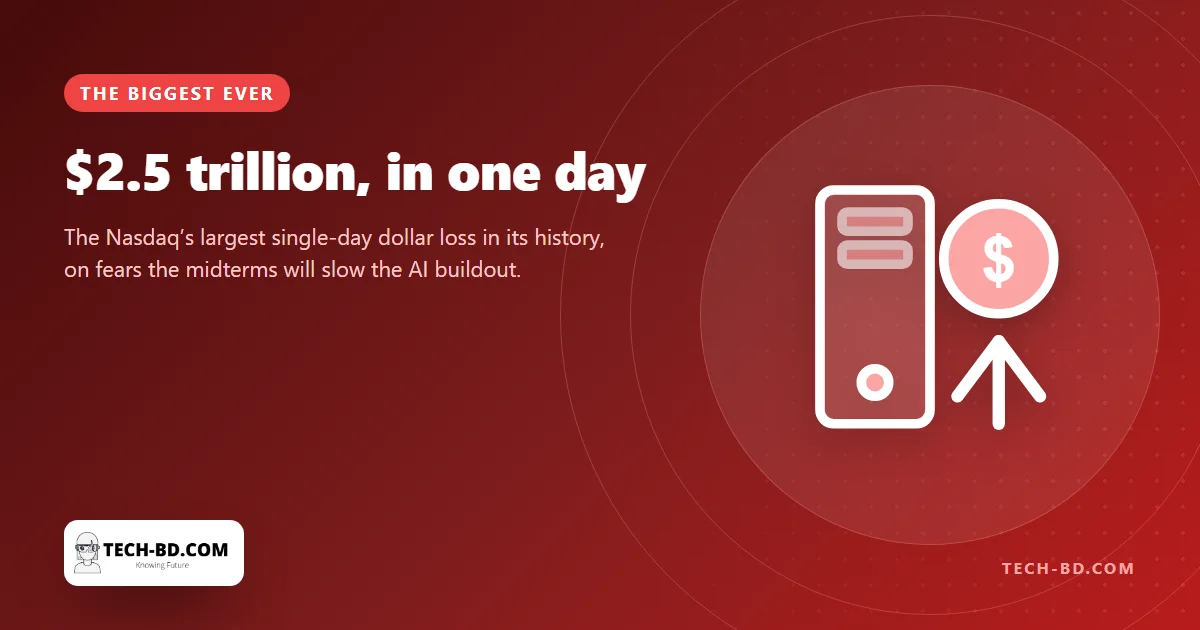
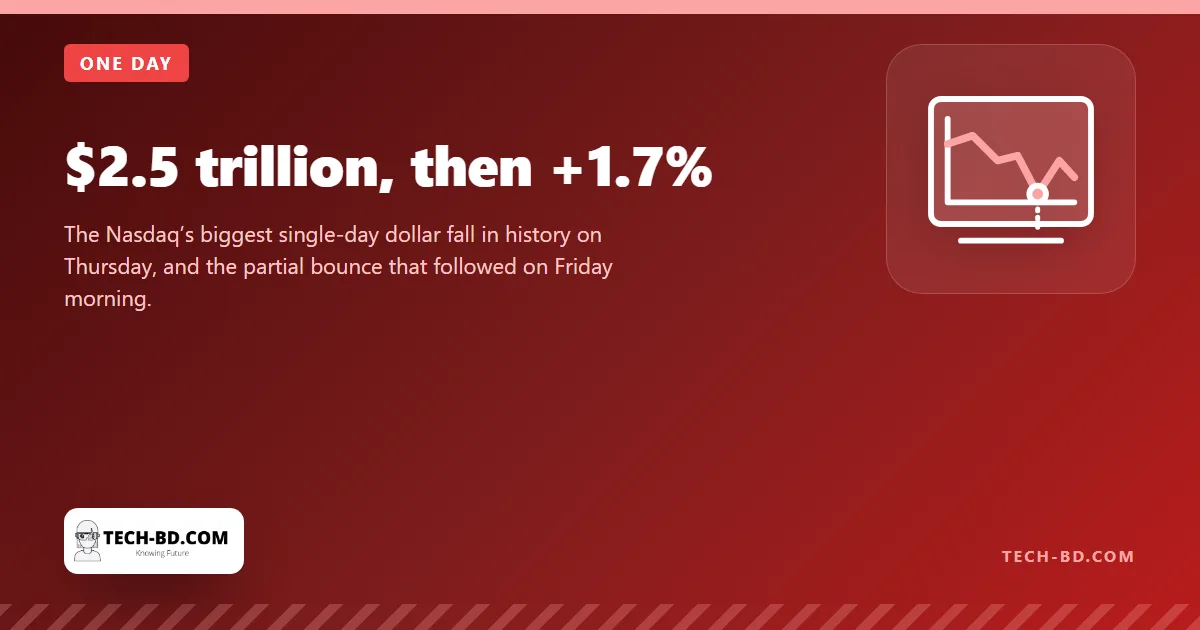
On Thursday the tech-heavy Nasdaq lost $2.5 trillion in value — the biggest single-day dollar-value drop in its history. Chip and semiconductor makers took the worst of it. Asian and European markets followed on Friday.
By Friday lunchtime the index had opened higher and settled around 1.7% up, reversing part of a 5.5% fall. So the panic has not continued. It is still worth understanding, because the mechanism matters more than the number.
The reversal took two days to arrive
The sequence is odd. Futures fell late on Tuesday as the election results came in. Then on Wednesday morning Wall Street rallied, with investors apparently cheering the Democratic gains.
By Thursday that had inverted completely. The fear that took hold was that Democrats would use their new leverage to tighten regulation and slow the AI buildout — the same result that had been welcomed a day earlier.
Why borrowed money made it worse
This is the part that explains the size. A straightforward loss of confidence produces selling. Leverage produces forced selling, which is a different thing.
Hedge funds and other investors who borrow in order to place larger bets have to put up cash when those bets move against them. Meeting that demand means selling — not because they have changed their minds, but because they have no choice. That selling pushes prices down further, which generates more demands for cash, which forces more selling.
A market in which a great many people have borrowed to bet on one theme does not fall gently. It falls in a cascade, and the depth of the fall tells you about the borrowing as much as about the sentiment.
The specific policy investors are pricing
The fear is concrete rather than vague. In Texas, Democratic governor-elect Gina Hinojosa campaigned on temporarily halting new data centre construction and rolling back some of the tax incentives offered to companies building them.
Those are not abstract regulatory worries. They are a named politician with a stated plan in the state where a great deal of the buildout is happening, and investors have repriced accordingly.
The case for calm
Jamie Cox, managing partner at Harris Financial Group, expects the mood to turn: "What will happen is a day or two from now, people will realize that this isn't the end." His argument is that companies will keep spending, but on expanding the capacity of data centres they already have rather than on breaking ground for new ones.
That is a useful distinction. A moratorium on new construction does not stop demand for compute. It redirects the money into denser use of existing sites — which is better for the companies and considerably worse for the communities already hosting them.
One figure cut against the gloom
Friday's US employment numbers showed an unexpectedly strong 165,000 jobs added in September. That complicated the picture rather than resolving it: a strong labour market argues against recession, and also against the rate cuts a falling market tends to hope for.