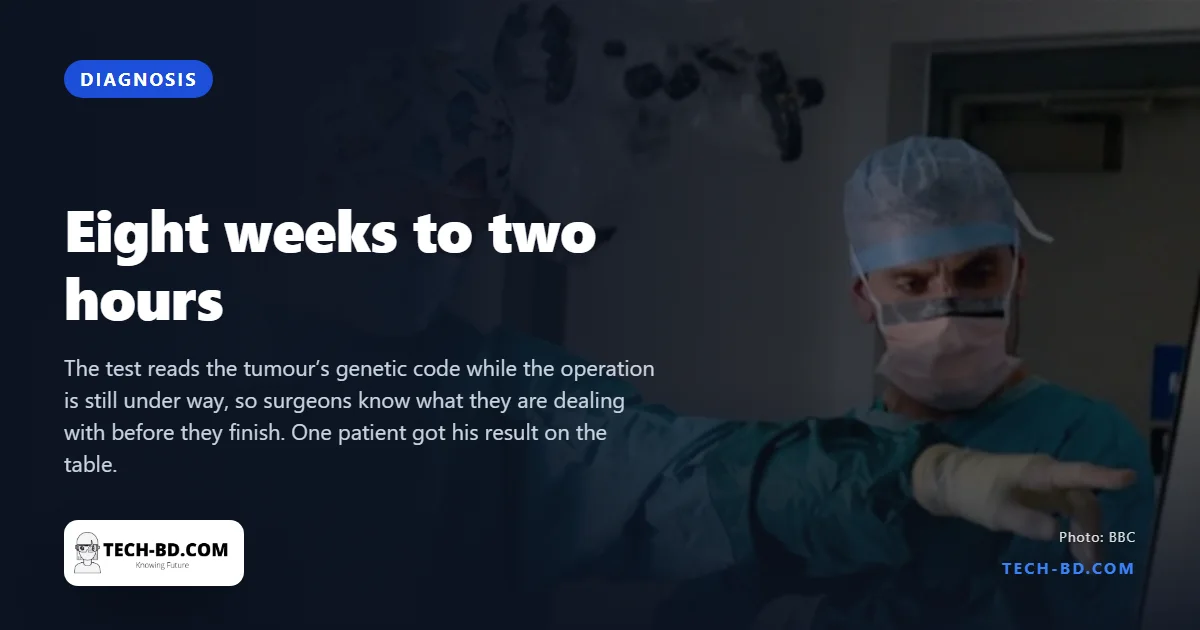
A new test the NHS has started using can cut the time it takes to identify a brain tumour accurately from up to eight weeks to two hours — and in some cases deliver the answer while the patient is still on the operating table.
How it works
The test reads the genetic code of a small sample of the tumour, taken during biopsy or surgery, and uses it to identify which type of tumour it is. There are around 150 different types of brain tumour, ranging from slow-growing to aggressive cancers, and each can respond differently to treatment — so the type determines the whole plan.
NHS England said the genomic test will be piloted in specialist centres. Reporting on the same rollout, Medscape and the University of Birmingham describe the technology in more detail: it was developed at the University of Nottingham and Nottingham University Hospitals, uses portable Oxford Nanopore sequencing with specialist software, and is being deployed across five specialist sites including Birmingham, Great Ormond Street, King's College Hospital and Newcastle. They put the current average wait for a definitive diagnosis at 26 days.
What it changes for a patient
Steve Palmer, 55, from Nottingham, was diagnosed after he collapsed at the gym. The test revealed a grade 4 glioblastoma, and the result reached his surgeons while they were still operating.
"Getting that quick diagnosis removed weeks of anxiety," he told the BBC.
The clinical gain is larger than the emotional one, although the emotional one is real. Knowing the tumour type during the operation helps a surgeon decide how much to remove — how aggressive to be against the cost of damaging healthy brain tissue. That decision cannot be revisited later. Faster diagnosis also means radiotherapy and chemotherapy can start sooner, which for an aggressive tumour is measured in outcomes rather than convenience.
What it means in Bangladesh
The headline is not transferable — no Bangladeshi hospital is about to sequence tumours intraoperatively. But the component that makes this possible is, and it is worth understanding why.
This works because sequencing became portable and cheap. The Oxford Nanopore devices involved are small enough to sit in an operating theatre and cost a fraction of a conventional sequencer. That is the same shift that let Bangladeshi labs sequence SARS-CoV-2 during the pandemic without a national genomics centre.
The realistic ambition here is not the operating theatre but the histopathology backlog. Diagnosis in Bangladesh is slow for a mundane reason: too few pathologists, concentrated in Dhaka and Chattogram, and samples that travel. A district patient can wait weeks for a report that determines their entire treatment — the same eight-week problem the NHS has just solved for one tumour type, arising from a different cause and needing a different fix.
Which makes the useful question here not "when do we get this test" but "where exactly do our weeks go". That is answerable now, by anyone willing to time the path a sample takes from a district hospital to a report, and it is the necessary first step before any technology helps.