Parents are being urged to recognise the signs of online stalking, amid concern that technology has made it easier than ever to monitor and repeatedly contact young people.
Experts say three behaviours are early indicators: persistent unwanted contact, attempts to bypass blocks by creating new accounts, and efforts to track someone's online activity.
Why the second one matters most
A single unwanted message is ambiguous. Being blocked and immediately returning under a new name is not — it is evidence that the person has registered the refusal and decided to override it.
That is the distinction police guidance draws. Stalking is defined as repeated, unwanted behaviour that is fixated or obsessive and affects a person's daily life. The repetition and the fixation are the test, not the content of any one message.
The case behind the warning
The advice follows the case of a Wiltshire teenager who became "obsessed" with a girl after a five-day relationship. Gloucester Crown Court heard the 14-year-old boy monitored her online activity and created fake social media accounts after she blocked him, before later attacking her with a six-inch knife.
He admitted wounding with intent, inflicting grievous bodily harm and possession of a bladed article in a public place, and avoided a custodial sentence.
The victim's mother told the BBC what the family had not seen: "She had no idea that he was logging when she was online, who she was speaking to, what she was saying. There were diaries found in his house. It makes me feel sick."
"This is something you watch happen to other people and you're horrified by it. But now this is my life, and that happened to my child."
The numbers are moving
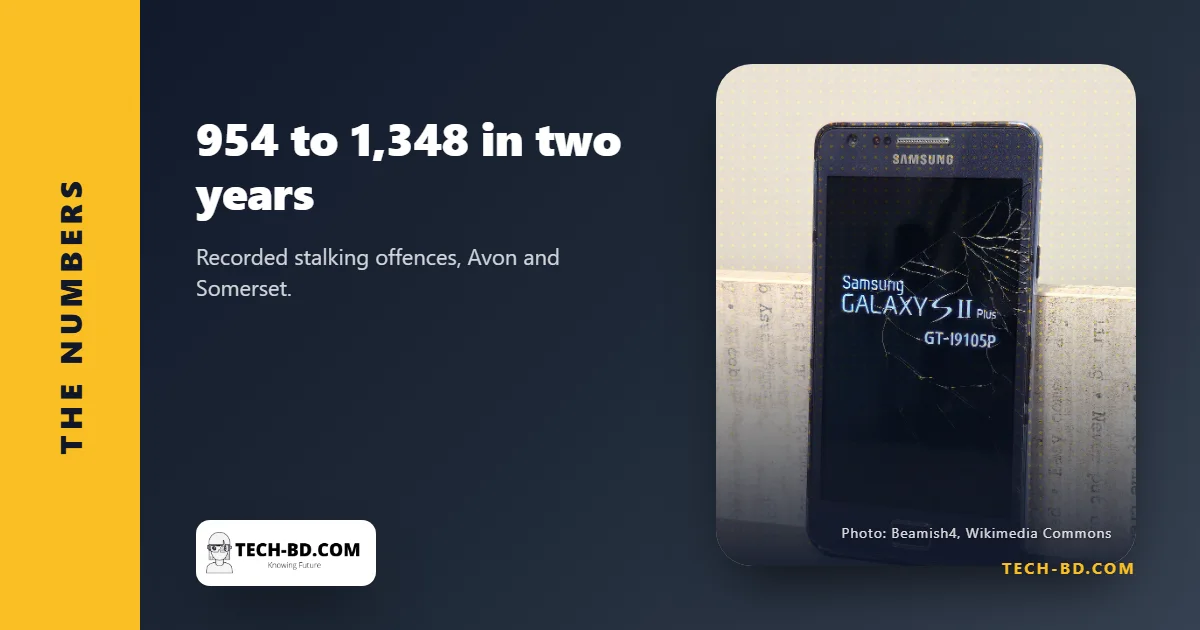
Stalking offences have risen across Avon and Somerset, with police recording 1,348 offences last year, up from 954 two years earlier — a rise of about 41%. Officers are receiving additional training to identify stalking behaviour, patterns of control, and links to other offences.
Researchers have suggested that GPS trackers, social media, home surveillance systems and smartphone apps may all be contributing to a wider rise, by making remote monitoring straightforward.
Why it is easy to miss
Most people picture stalking as being followed in public. Experts say it increasingly happens entirely through social media platforms, messaging apps and gaming services — none of which a parent sees.
The Trowbridge-based stalking charity FearFree says concerns should not be dismissed even when the behaviour looks minor at first. Early behaviour usually does look minor. That is the point.
Reading this from Dhaka
Nothing in the data above is local. The force, the charity and the court are all British, and no comparable count is published here. The platforms, though, are the same ones — and so is the method: the block, the fresh account, the quiet record of who someone talks to.
The practical version for a parent anywhere: the thing worth asking about is not whether your child is getting unpleasant messages. It is whether anyone keeps coming back after being blocked. A teenager will often not report the first account, because reporting it feels like an overreaction. By the fourth account it no longer does, and by then the pattern has been running for weeks.