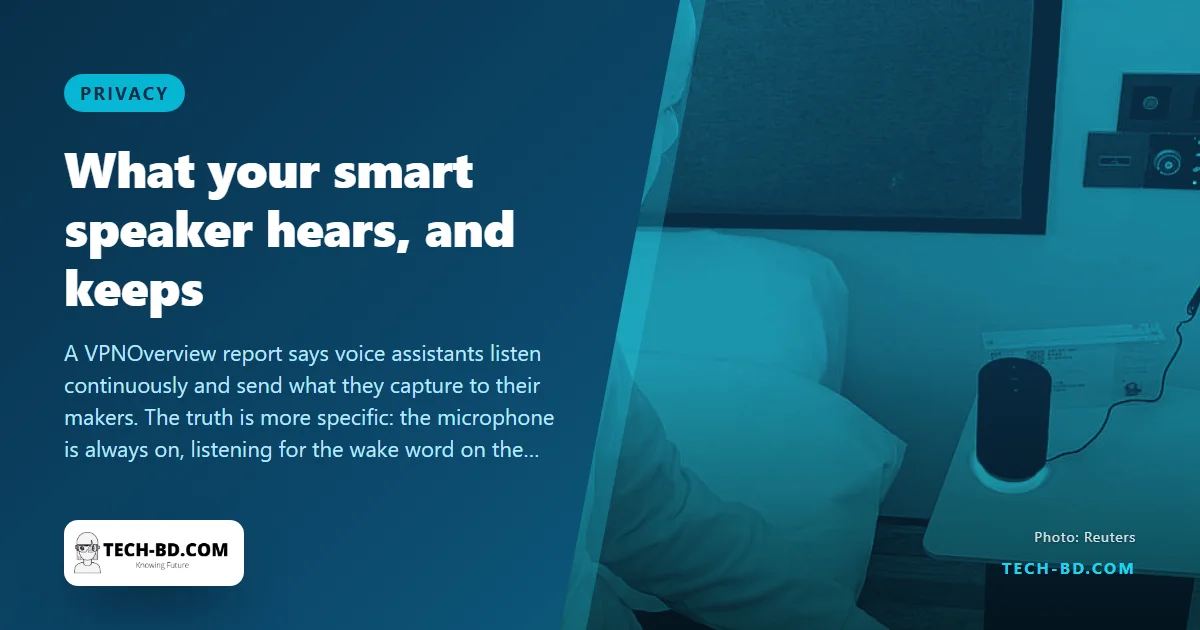
A study by the security firm VPNOverview, reported this week, makes a claim that sounds alarming and is, technically, true: smart speakers listen all the time, whether you need them or not, and send what they gather to the companies that made them. Whether that should worry you depends on what “listen” means, and the answer is different for each brand.
How the microphone actually works
An Echo, a Nest or a HomePod has its microphone open continuously — that is how it hears “Alexa” or “Hey Google”. But the wake-word detection runs on the device, on a small chip, and nothing leaves the speaker until the word is heard. When it is, the recording of what follows is sent to the cloud, transcribed, answered, and — this is the part that differs — stored or not. The failure mode is the false wake: a word on the television that sounds like the trigger, after which the speaker records a few seconds of your conversation and sends it. Studies have found this happens several times a day in a typical home.
What each company keeps
Amazon stores Echo recordings and transcripts in your account indefinitely unless you change the setting; you can review and delete them (Alexa app → Settings → Alexa Privacy) or tell it “Alexa, delete everything I said today”. Amazon has admitted that human reviewers listen to a sample. Google says Nest audio is not saved by default; the transcripts are, under your Google account’s Web & App Activity, where you can auto-delete after three months. Apple ties HomePod requests to a random identifier rather than your Apple ID and keeps the minimum data for six months.
The real risks
The report’s sharper point is about third parties. Alexa “skills” and Google “actions” — the apps you enable for recipes, prayer times, games — are written by outside developers, and researchers have shown that some collect more than they declare. And voice shopping: an Echo linked to an Amazon account will buy what it is told to, which is why VPNOverview recommends a voice PIN or two-factor confirmation on purchases.
In Bangladesh
Smart speakers are rare here — none of the three understands Bangla, and Alexa still cannot be set to a Bangladeshi address — but the same assistants live in every Android phone and every iPhone as Google Assistant and Siri, with the same always-on microphone and the same settings. The habits transfer: review the activity page, set auto-delete, mute the microphone when it is not needed, and treat any app that asks for microphone access the way you would treat a stranger asking to sit in the room.
Source: TechRadar, via Prothom Alo.