The method is crude and effective. Thieves lifted two separate concrete telecoms covers, cut the cables at either end, then winched them out with machinery.
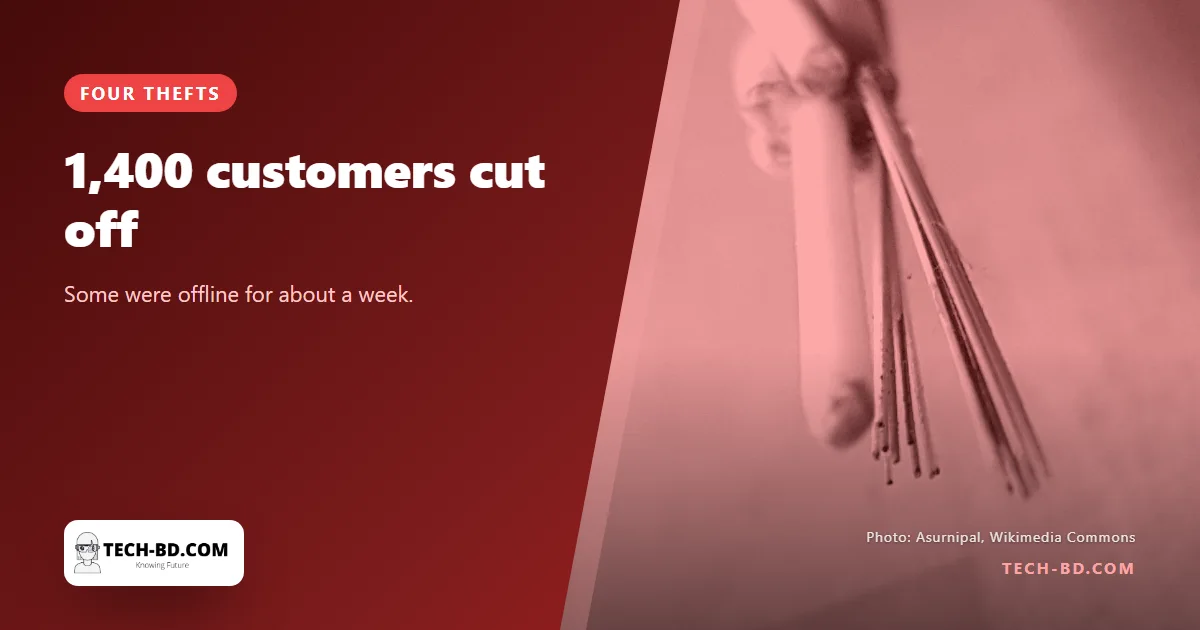
That theft, at Wilstead in Bedfordshire, immediately cut off about 1,400 customers. Internet and phone services went down, and some people were disconnected for about a week.
Four incidents in a matter of weeks
It was not isolated. Similar thefts happened near Luton the day before, and a week earlier on 5 November. While the BBC was reporting the story, it learned of a fourth at Steppingley, near Flitwick, early on Wednesday.
Police are investigating all four.
The first theft, at Luton Road near Toddington, damaged the broadband network and left some customers without internet and phone for several days. It also stopped overhead gantry signs working between junctions 12 and 13 of the M1.
Luton Road was still closed while engineers replaced those cables when thieves struck again on the same road on 11 November.
Why motorway signs keep appearing in this story
The detail that makes cable theft different from most property crime is how far the damage travels from the thing stolen.
A length of copper has a scrap value. The same length carries broadband for a village and the signalling for a motorway gantry, and those two systems have nothing to do with each other except the trench they share.
National Highways said cable theft affects the UK's critical national infrastructure and diverts resources away from other important work. Repairs were still under way on overhead gantries on the M1 and the A14 in Cambridgeshire.
Openreach, which builds and maintains much of the UK's broadband and telephone network, said engineers were working to reconnect everyone as quickly as possible.
The real cost is not the copper
Network Rail says it spends millions of pounds every year because of cable theft — but that the total cost to the economy is higher still, once you count freight delays to power stations and supermarkets, and passengers held up.
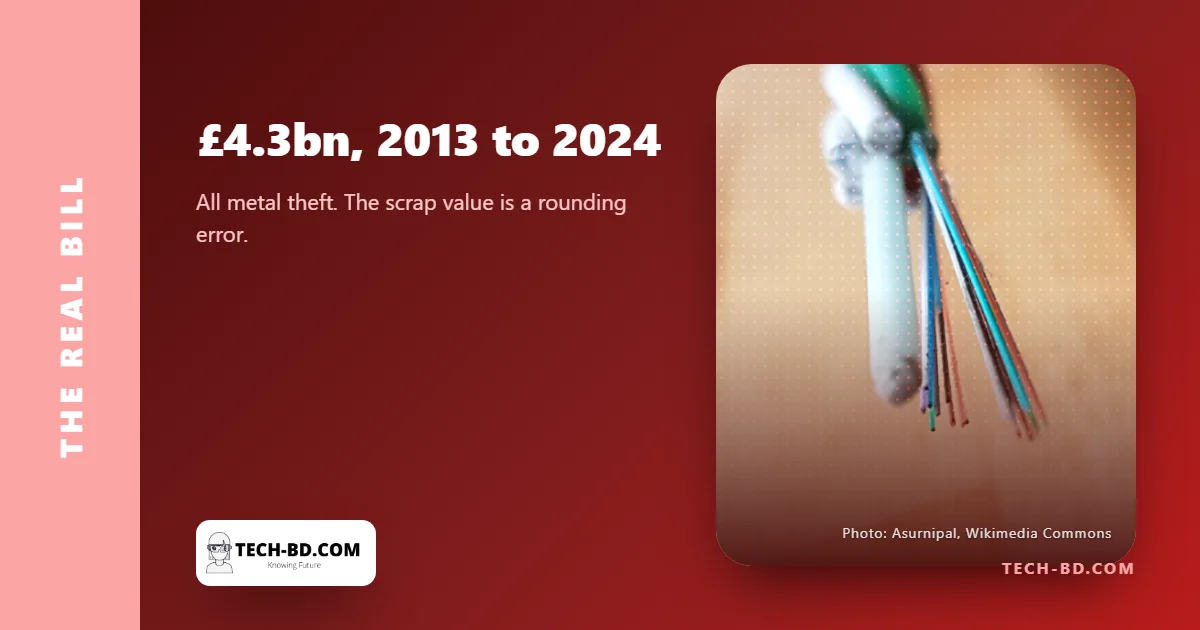
Between 2013 and 2024, all metal theft including cables cost the UK £4.3bn, according to a report by the All-Party Parliamentary Group on metal theft.
Set that against what a thief earns from a night's work and the imbalance is the entire problem. The gain is small, the damage is enormous, and the two are almost unrelated.
Why this is worth reading here
Bangladesh has no equivalent published figure, but the exposure is structurally the same, and in places greater.
Fibre and copper runs here are frequently overhead and reachable from the street rather than buried under concrete covers. The thing that limits theft is not inaccessibility, it is whether there is a buyer for the metal — which is a market question rather than an engineering one.
The useful lesson from the UK figures is that protecting these runs is not really a telecoms budget item. The internet outage is the visible part; the signalling, the freight and the week-long disconnections are where the money actually goes.