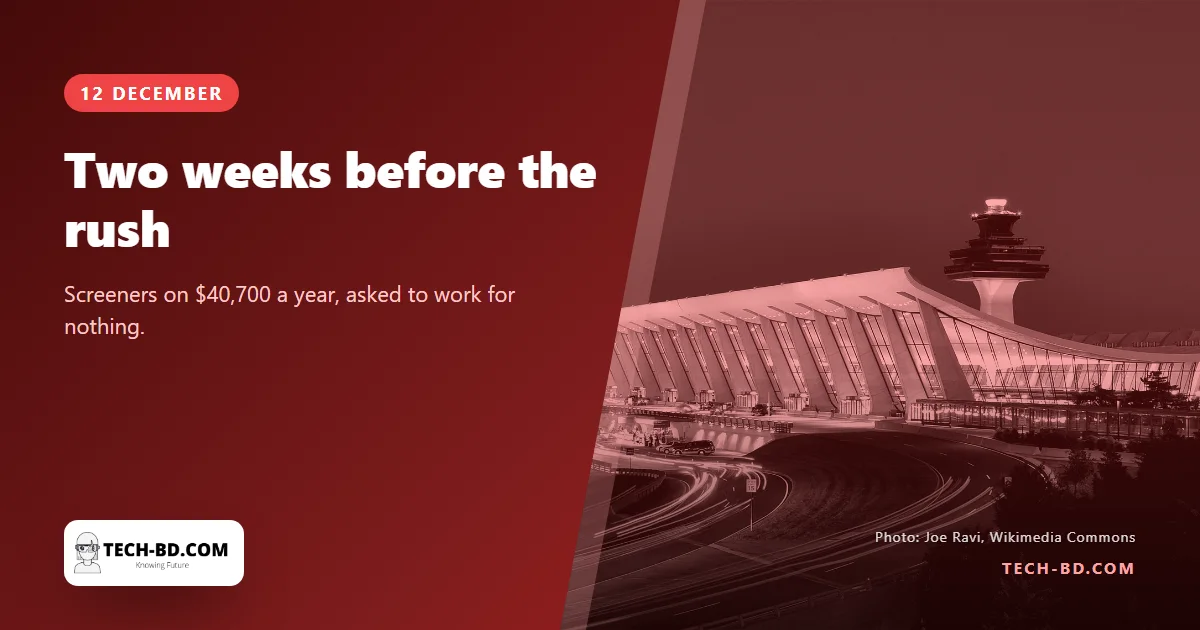
Funding for the US federal government, including the Transportation Security Administration and the Federal Aviation Administration, expires on 12 December.
That is two weeks before the holiday travel rush. If nothing is agreed, security screeners and air traffic controllers could be expected to turn up for work without pay — which is what happened in previous shutdowns, and which produced hours-long queues at TSA checkpoints and flights cancelled for lack of controllers.
Why this is a technology story
Because the last month has trained everyone to expect the opposite. There has been a run of outages — a ground stop, failures traced to telecoms upgrade work, a cyber-security chief removed — and the natural assumption now is that the next disruption will be a system failing.
"The next travel nightmare could have nothing to do with technology outages and everything to do with political gridlock," is how CNN put it. That is the point worth holding on to. A shortage of paid humans takes an airport down exactly as effectively as a broken computer, and the recovery is slower.
What December already looks like
Bad weather alone can wreck a fully staffed holiday period — the Southwest meltdown a few years ago is the reference everyone uses. Stack an unstaffed one on top and experts say it could be the worst travel period on record.
"December holidays are a melting pot for everything that could go wrong. You have snow, you have airlines over-scheduling to the max. There's no room for anything to go wrong," said Zach Griff, author of the airline newsletter From the Tray Table. "Could you imagine if TSA and FAA are not staffed? It would be a disaster."
Last year, between the Saturday before Christmas and the Sunday after New Year, the TSA screened 140,000 more passengers per day than average. Airlines schedule the maximum number of flights to meet that demand — but high fuel costs have forced carriers to trim less profitable routes. So if flights are cancelled, there are fewer spare seats to rebook into.
Nobody wants it, which is not the same as avoiding it
Both parties are eager to avoid a shutdown, particularly amid nationwide anxiety about technology outages, and the Trump administration hopes to avert one too, sources told CNN. The preferred outcome among leaders is another stopgap funding bill.
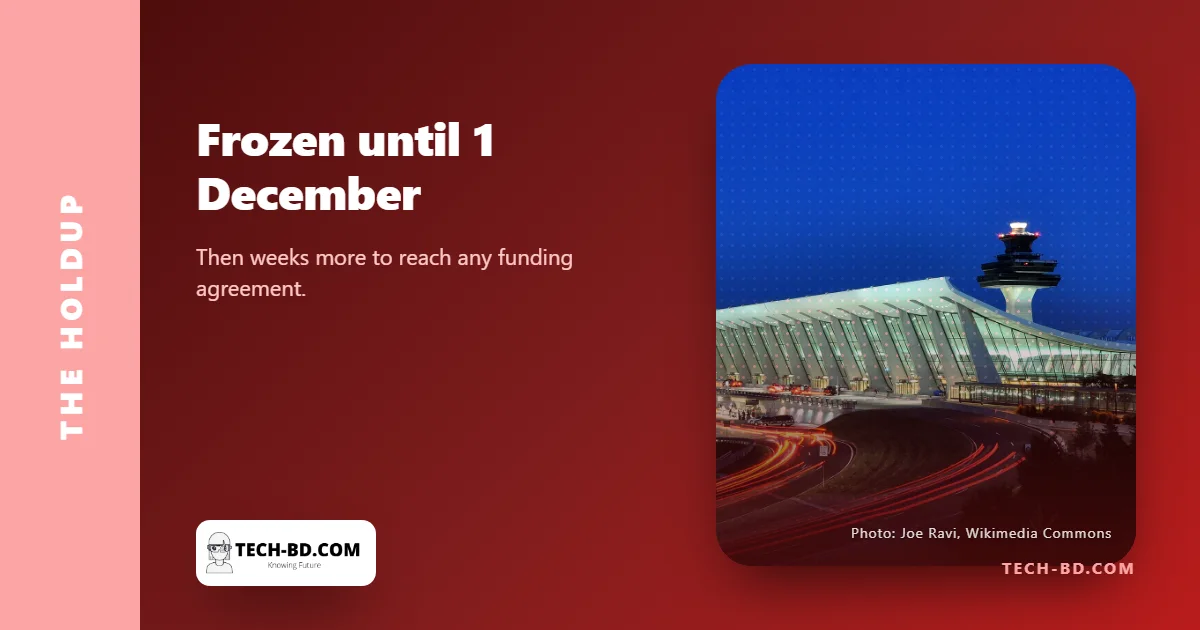
But the funding fight is effectively frozen until the Senate Democrats' internal leadership election on 1 December, lawmakers and senior aides in both parties said — and an agreement will likely take weeks after that.
The people who would work unpaid
Union leaders are the ones sounding the alarm, and their argument is about what happened last time rather than what might happen.
"We take the flying public very seriously. We want them to get to their loved ones during the holidays," said Hydrick Thomas of the American Federation of Government Employees, the TSA union. "When you shut us down and not pay us, that's saying you don't even care about the American people." The AFGE has been in conflict with the administration since an executive order last year stopped recognising the union or its contract.
Nick Daniels, president of the National Air Traffic Controllers Association, says the control system is already severely understaffed and the equipment is ageing. "Controllers are again facing having to go to work and not getting paid. Let us do our jobs, quit holding our paychecks ransom."
Those who stayed home in past shutdowns were not making a point. TSA screeners can be paid as little as $40,700 a year. "There are people who are still recuperating from the last two, people who lost their cars," said LaShanda Palmer of the Philadelphia AFGE.
Neither the TSA nor the FAA answered CNN's questions about contingency plans.