An industrial nightmare was brewing south of Los Angeles. In late May, a chemical storage tank holding more than 7,000 gallons of toxic material began heating up — fast.
What nearly happened
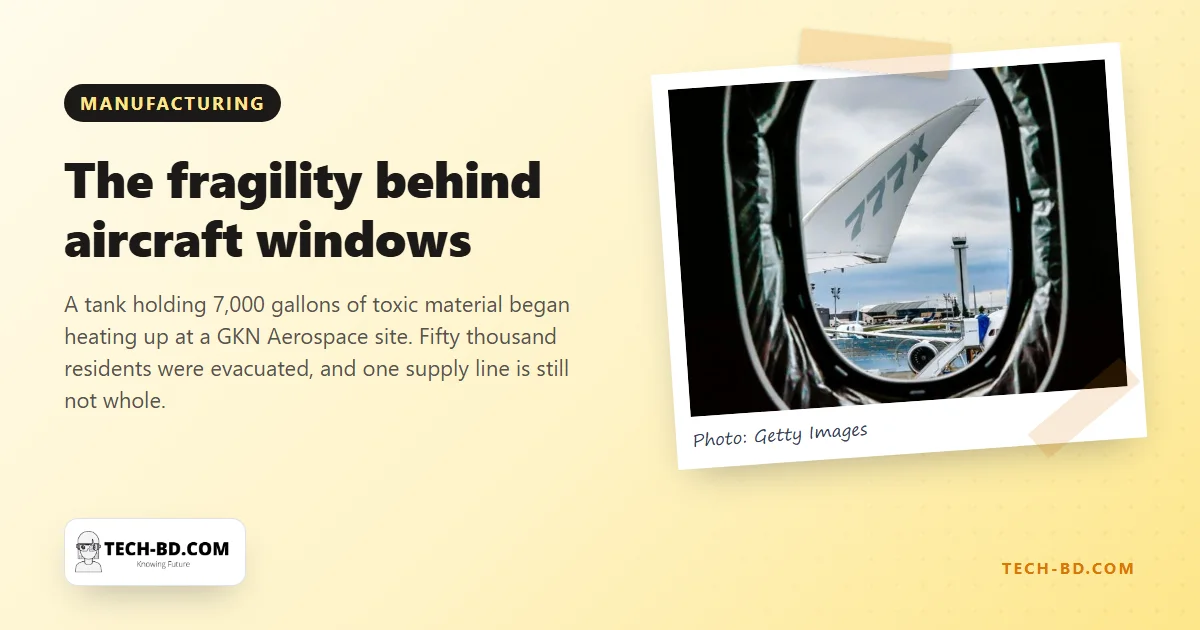
The tank belonged to GKN Aerospace, which supplies parts to the aviation industry, including aircraft windows. As the temperature rose, workers realised the tank was at risk of exploding and showering nearby neighbourhoods with methyl methacrylate, a skin and lung irritant used in plastics production.
The temperature reached 100F (38C) — possibly higher, since 100F was simply the maximum the internal gauge could read. More than 50,000 residents of Garden Grove were evacuated and fire crews hosed down the tank to cool it. At one point the vessel, according to the local fire chief, "actually bulged".
There was no explosion. In August, GKN and local authorities announced a $100m (£74m) programme to compensate evacuated residents. But production of aircraft windows at the site, halted since, is still not fully restored.
What it means in Bangladesh
The striking thing is not the chemistry. It is that one incident at one site in California can interrupt the supply of a part that every airliner needs — because there are very few places in the world that make it.
That is the shape of modern manufacturing, and Bangladesh sits inside the same pattern from the other direction. The country's export economy is built on being one of very few places that does a particular thing at scale — in this case assembling garments. The vulnerability runs both ways: buyers are exposed to a disruption in Bangladesh, and Bangladesh is exposed to anything that makes buyers want a second source.
Two practical readings follow. The first is about concentration risk inside the country. Bangladesh's garment industry is itself concentrated — geographically around Dhaka and Chattogram, and operationally on a handful of ports, one major airport and a single container terminal doing most of the volume. A fire, a flood or a prolonged closure at any of those does to Bangladeshi exports what Garden Grove did to aircraft windows.
The second is about what buyers now pay for. Since the pandemic, large importers have been willing to pay a premium for supply certainty rather than the lowest unit price — dual sourcing, held inventory, documented contingency plans. For a Bangladeshi supplier, being able to show a credible answer to "what happens if your plant stops" is now a commercial asset, not a compliance chore.
And the safety lesson needs no adaptation at all. The tank in California had a gauge that could not read the temperature it reached. A great many chemical stores, dye houses and boiler rooms in Bangladesh are instrumented no better.