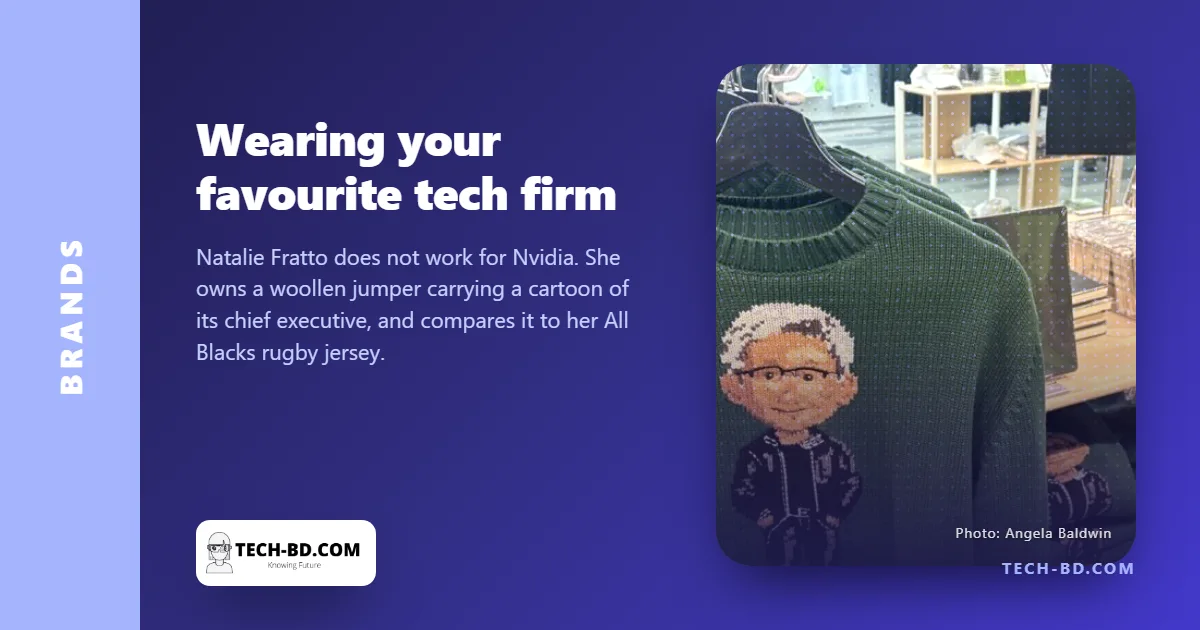
For Natalie Fratto, putting on her dark green jumper from the US microchip giant Nvidia is like wearing the kit of a favourite sports team. On the front of the $178 (£132) woollen garment is a cartoonish image of the company's boss, Jensen Huang.
She does not work there
Fratto is not an employee. She is a fan. "I have a New Zealand All Blacks rugby jersey, and I think of my Jensen sweater in kind of the same way," says the New York-based start-up founder. It represents a team and an ethos "that I am impressed by and root for", and she wears it in videos she posts on social media.
Nvidia does play in the top league. Under Huang, it has capitalised on the AI boom to become one of the world's most valuable companies — which is precisely what makes the merchandise work. Fan clothing requires a story about winning.
What it means in Bangladesh
There is a direct commercial fact underneath this story that rarely gets said out loud: somebody makes these garments, and it is quite likely to be a factory in Bangladesh, Vietnam or Cambodia.
That is where the interesting number is. A $178 branded jumper does not contain $178 of wool and labour. The bulk of that price is the brand, and the share captured by the manufacturer is in the low single-digit percentages. Bangladesh has spent forty years becoming outstanding at the part of the value chain that captures the least of it.
The lesson is not "Bangladesh should build global brands", which is easy to say and hard to do. It is narrower and already happening in places. The escape routes from pure assembly are design capability, fabric and backward linkage, and own-brand retail at home — and the third one is the most underrated, because the domestic market is now large enough to support real brands. Aarong, Yellow, Sailor and others exist precisely because Bangladeshi consumers will pay for a brand made here.
There is also a straightforward opportunity in the phenomenon itself. Merchandise as fandom — companies, universities, cricket teams, YouTubers — is a category Bangladeshi manufacturers can serve directly, in small runs, at speed, without a foreign buying house in the middle. The technical barrier is low. The barrier is e-commerce fulfilment and international payments, which is a solvable problem and a different one from sewing.
And for anyone building a brand here, Fratto's comparison is the instructive part. She did not buy a garment. She bought membership of something that is winning. Nobody buys a jumper to support a company that is merely adequate.