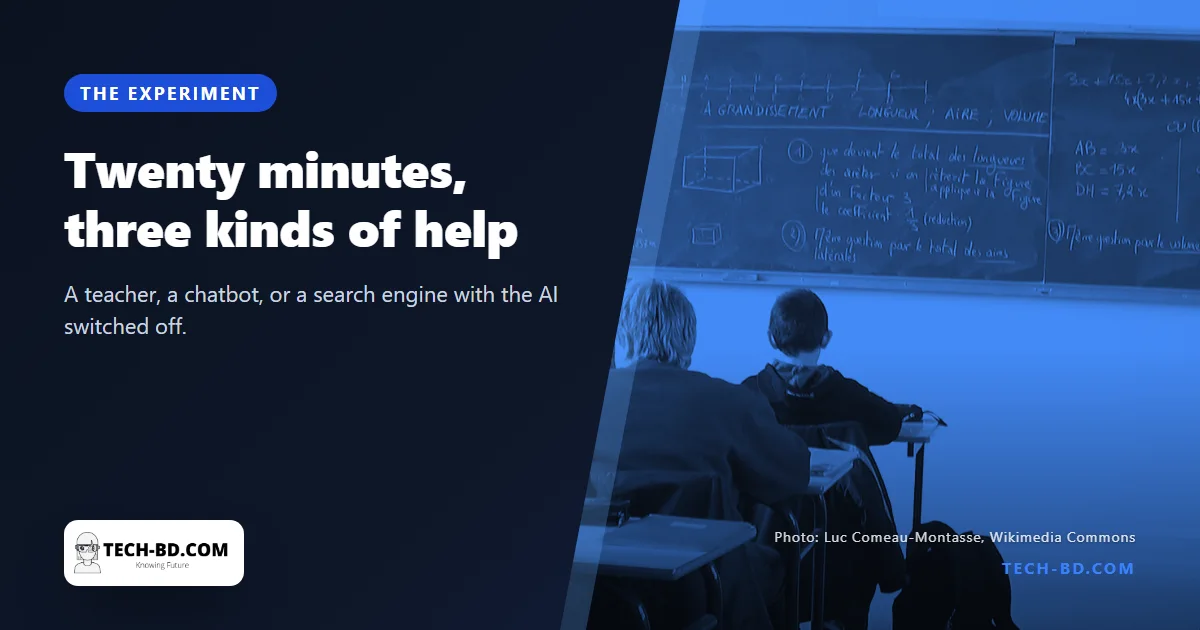
A human teacher is better than an artificial intelligence tutor at helping students through difficult maths, according to research from the University of Cambridge — and the gap did not show up where you would expect it.
Researchers studied how 149 sixth form students handled maths problems with three different kinds of support: a human teacher, an AI chatbot, or an internet search engine with its AI features disabled.
How the study was built
The students were aged between 16 and 18 and were recruited from a large sixth form college in England. They were put through 20-minute rounds of problems deliberately set above A-level standard — hard enough that nobody was going to breeze through.
Each student was randomly assigned to one of the three groups. The AI tutor was Khanmigo Lite, a specialist education chatbot. Both the human and the AI were given the same instruction: do not hand over answers, guide the student to work it out.
That design matters. It is not a test of whether a chatbot can solve maths — it plainly can. It is a test of whether a chatbot can help a person learn to.
What came back
The chatbot group reported putting in significantly more effort than the group working with a teacher. On a crude reading that sounds like a win: the AI kept teenagers grinding away at problems they could have abandoned.
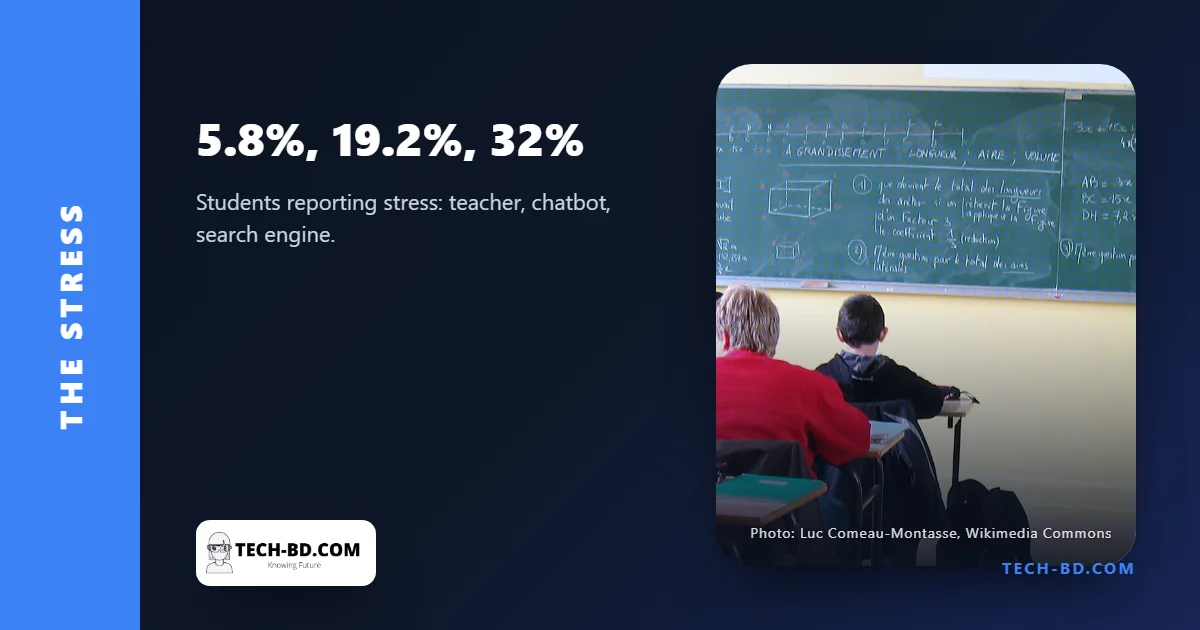
The stress figures tell a different story. At the end of the experiment 5.8% of the human-tutored group reported feeling stressed, against 19.2% of the AI group and 32% of those left with a search engine. The search group also attempted fewer problems.
So the chatbot bought persistence and paid for it in strain.
The reading the researchers give
Megan Ennion, a doctoral researcher at the university's Faculty of Education who led the study, put the difference down to what a tutor notices rather than what it knows.
"A chatbot is not as good as a teacher at reading how a student is responding to a challenge, or at picking up on emotions like confusion, frustration and disengagement," she said. "That probably explains why, while the chatbot appeared to help students persevere with these maths problems, it also made the experience feel more effortful."
The study describes the chatbot as behaving like a relentless digital coach: it keeps you going without ever easing the struggle. Teachers, by contrast, were good at what the paper calls scaffolding — leaning in while a student flounders, then quietly withdrawing as confidence returns.
That withdrawal is the hard part. Knowing when to stop helping requires reading a face.
What it does not say
Ennion's wider point is about the yardstick. "We need to start judging AI based on how far it supports the whole learning process, not just where students end up," she said. "Education is also about developing independent, critical thinkers, so it is important to understand how AI facilitates students' engagement with difficult tasks."
Her co-author, Prof Ros McLellan, left the door open rather than shut it: "There might be a complementary role for AI tutors, but it is difficult to see how they will ever surpass teachers in helping students work through academic challenges."
The paper was published in The British Journal of Educational Technology. It arrives into a live argument — the UK government has begun a consultation on the safety of AI tools in classrooms, and the Conservatives have pledged to cut coursework in England to limit pupils' use of AI if they return to power.
None of which settles the question for a student sitting at a desk at eleven at night with a problem they cannot crack. On this evidence the chatbot will keep them there longer. Whether that is help depends on what you think the evening was for.