Warning: this story contains distressing details.
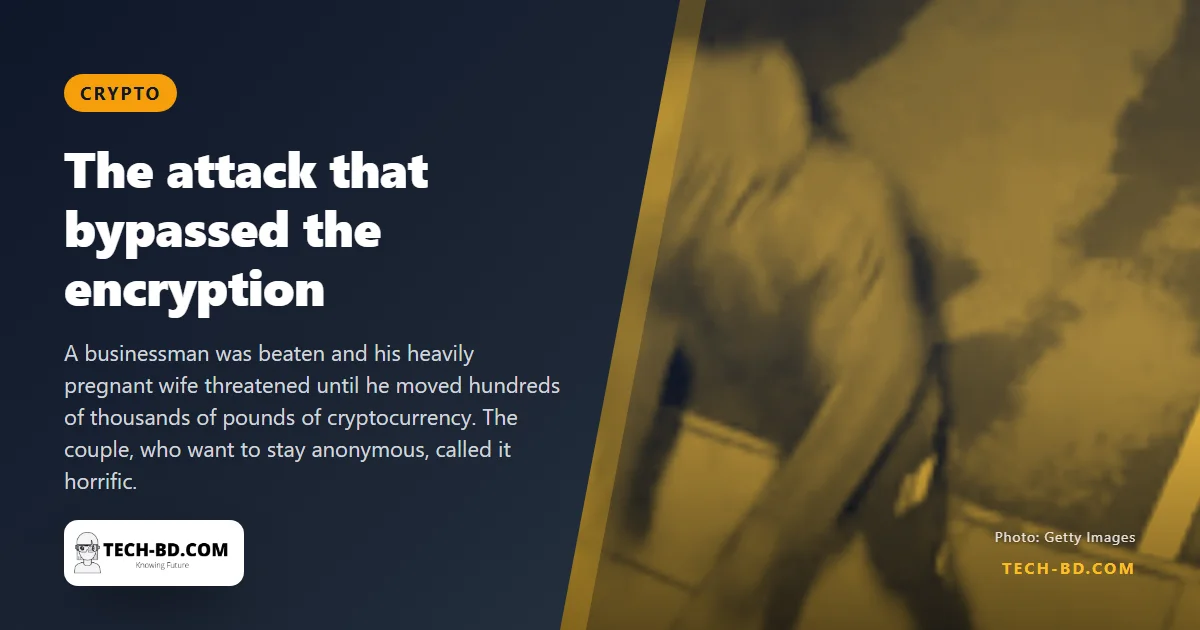
A businessman was beaten with hammers by masked men who broke into his home and threatened to kill his heavily pregnant wife unless he transferred hundreds of thousands of pounds of cryptocurrency.
What happened
Speaking to the BBC, the couple — who want to remain anonymous — described the attack as "horrific" and said they feared for their unborn baby's life. The attackers left in a car driven by a getaway driver after the man transferred his crypto savings.
This category of crime has a name in the security literature: the wrench attack, from an old cartoon pointing out that no amount of encryption helps if someone is willing to hit you until you unlock it yourself.
What it means in Bangladesh
Cryptocurrency trading is not legal in Bangladesh. Bangladesh Bank has said so repeatedly, and the law has not changed. That is the first and most important fact for any Bangladeshi reader, and it is precisely why this story needs covering rather than ignoring.
Illegality has not stopped it. There is a substantial, entirely unregulated Bangladeshi crypto market operating through peer-to-peer trades, foreign exchanges accessed with workarounds, and Telegram groups. Participation is widespread among young men in particular, and it is growing.
The security consequence of illegality is the point. A Bangladeshi who is robbed of cryptocurrency cannot go to the police without disclosing an illegal holding. There is no insurance, no exchange to freeze an account, no regulator to appeal to, and no civil remedy. The structure that makes this crime attractive in Britain — irreversible transfers, no central authority — is identical here, with the victim's recourse removed entirely.
It is worth being blunt about who gets hurt. The people most exposed are not sophisticated traders; they are young men who heard about returns, hold their keys on a phone, and have told friends. The attack vector is almost never cryptographic. It is somebody knowing you have it.
So the useful advice, for anyone holding regardless of the law: do not discuss holdings, online or off; do not post gains; understand that a phone wallet is a wallet in your pocket that everyone who follows you knows about. And recognise that in Bangladesh the thing protecting you is not the encryption. It is that nobody has decided you are worth the visit.