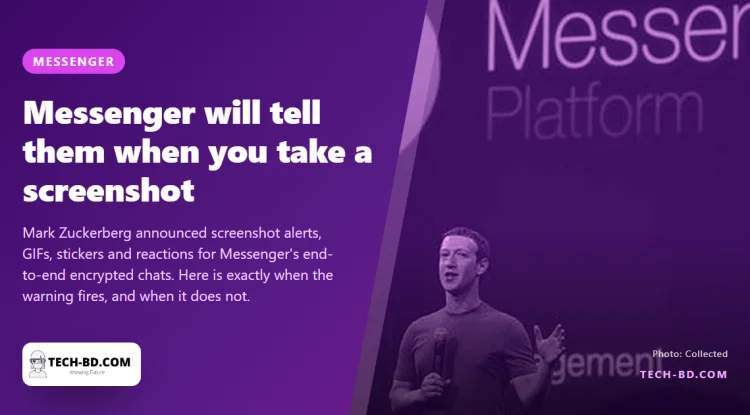
Messenger has offered end-to-end encryption since 2016, as an option called “secret conversations” that you had to switch on for each chat, that did not work on the web, and that almost nobody used. On Wednesday Meta said it is switching it on for everyone: all personal one-to-one messages and calls on Messenger and Facebook will be end-to-end encrypted by default, with the change reaching the app’s billion-plus users over the next few months as they update.
What end-to-end means
A message is scrambled on the sender’s phone with a key that only the recipient’s phone holds, and unscrambled there. In between — on Meta’s servers, on the network, in a government request — it is unreadable. Until now Messenger has encrypted messages in transit but stored them on Meta’s servers in a form Meta could read; that is why Facebook could hand a Nebraska mother’s messages about an abortion to police in 2022, a case that pushed the company to finish this work. WhatsApp, which Meta also owns, has been end-to-end encrypted since 2016; Messenger is now catching up with its sibling.
What changes on your phone
Mostly nothing you will see. Chats will show a small lock and a note that they are encrypted; features Meta has spent three years rebuilding to work under encryption — themes, reactions, read receipts, link previews, replies, the desktop app — continue to work. The one new step is backup: because Meta can no longer store your history readably, it offers to keep an encrypted copy protected by a PIN you set, or a 40-character key. Lose both and switch phones, and the history is gone; this is the price of the feature, and the setting worth doing carefully.
What stays visible
Metadata: who you message, when, how often. Group chats are not yet default-encrypted, and Instagram DMs are still in the old opt-in model. Reports still work — if you report a message, the reported content is sent to Meta by your app — and so do requests to your phone itself. Encryption protects the message on the wire, not the person who can pick up your handset.
Why it matters here
Messenger, not WhatsApp, is the primary chat app for most of Bangladesh’s 50 million Facebook users, and it is also the one whose contents have most often ended up in police hands: Meta’s transparency reports show Bangladesh among the countries that request user data most frequently, and message content has surfaced in cases under the Digital Security Act. From this update, Meta will not have that content to give. That is a real change in the balance between the state and the citizen’s private conversation — and it is the reason governments, including Britain’s, have argued against it. Meta has chosen to ship it anyway. Update the app; set the PIN.