A study has been commissioned to examine sexual communication between children and adults on direct messaging platforms, and how it can lead to exploitation.
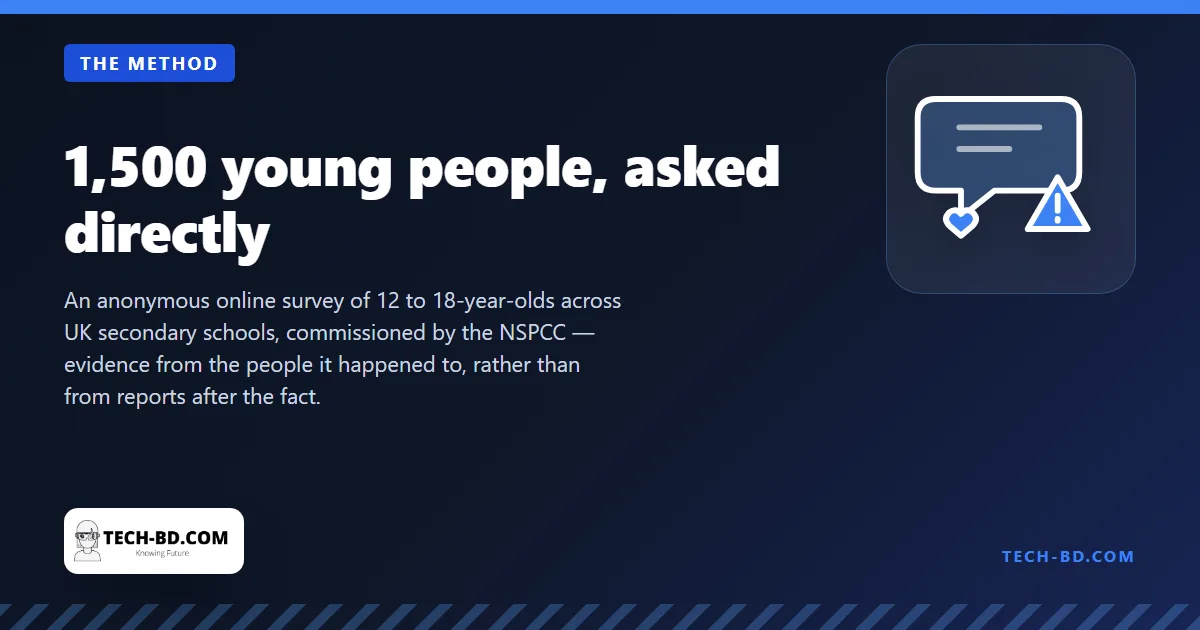
Anglia Ruskin University (ARU) will carry out the research for the National Society for the Prevention of Cruelty to Children (NSPCC). Researchers will run an anonymous online survey of about 1,500 young people aged 12 to 18 across UK secondary schools.
What it is trying to establish
The study aims to explore the prevalence, nature and circumstances of sexual communication between children and adults through direct messaging platforms. It will support the NSPCC’s ongoing advocacy work with Ofcom and the government to strengthen protections for children online.
Prof Samantha Lundrigan, director of ARU’s International Policing and Public Protection Research Institute, said the work was “vital” to try to prevent harmful behaviour.
Such platforms “can form a critical part of the pathways that lead to exploitation”, she said. “[They] can provide perpetrators with direct access to children and young people, creating opportunities for grooming and other harmful behaviours. By gathering and analysing robust evidence, we hope to deepen understanding of how these harms occur and, crucially, identify what can be done to prevent them.”
Why the method is the point
Rani Govender, head of online safety at the NSPCC, told the BBC the charity was proud to partner with the Cambridge and Chelmsford-based university on the “crucial research”.
“We know offenders are exploiting private messaging services to contact and groom children at scale, which can have devastating consequences for children’s safety and wellbeing long into their futures,” they said. “To effectively prevent this abuse, we need to listen to young people and better understand how harm occurs in private messaging spaces. Their experiences are essential to shaping solutions that keep children safe online, and we look forward to learning from them in this research to drive safer standards in private messaging.”
That phrase — listen to young people — is the methodological heart of it, and it is worth explaining why it matters.
Almost everything currently known about grooming in private messaging comes from cases that surfaced: a child told someone, a parent found a conversation, a platform flagged an account, a prosecution followed. Every one of those is a case that failed to stay hidden. Policy built only on them is built on a sample selected for visibility, which systematically understates how often this happens and tells you nothing about the approaches that never got reported.
An anonymous survey of 1,500 children asks the other population: the ones it happened to who did not report it. That is the number regulators have never had.
Why private messaging is the hard case
Public platforms can be moderated. Posts can be scanned, accounts ranked, content removed. Private messaging is where moderation runs into encryption, and where the policy debate has been stuck for years — any proposal to inspect message content collides with the security of everyone else’s messages.
Which is why evidence about what actually happens in those spaces, rather than assertions about it, changes the argument. It is possible for this study to strengthen the case for intervention, and it is possible for it to show the problem concentrated in features that can be changed without touching encryption at all — who can start a conversation with a stranger, what a default setting does for a new under-16 account, how a request from an unknown adult reaches a child in the first place.
The design choices in that last category have been moving already. WhatsApp now tells parents when a teenager joins or leaves a group — but makes it optional, which is exactly the kind of decision this research is positioned to put evidence behind.
For parents reading this here
Nothing in this study changes what to do this week, and the practical advice has not moved: know which apps allow messages from people not in the contact list, and turn that off where you can; treat a request to move a conversation to another app as the single clearest warning sign there is; and make sure a child knows that showing an adult a message they feel uneasy about will never get them into trouble.
The last of those is worth more than any setting. A survey like this one exists precisely because so many children did not tell anyone.
We have covered the related evidence base: 4,000 Bradford teenagers cutting their social media use for six weeks, and a paediatrician’s age-by-age guide for parents.