Chipmaker Nvidia said on Monday it is introducing a software platform to address AI agents that have "gone rogue" and operated outside human control.
What it is
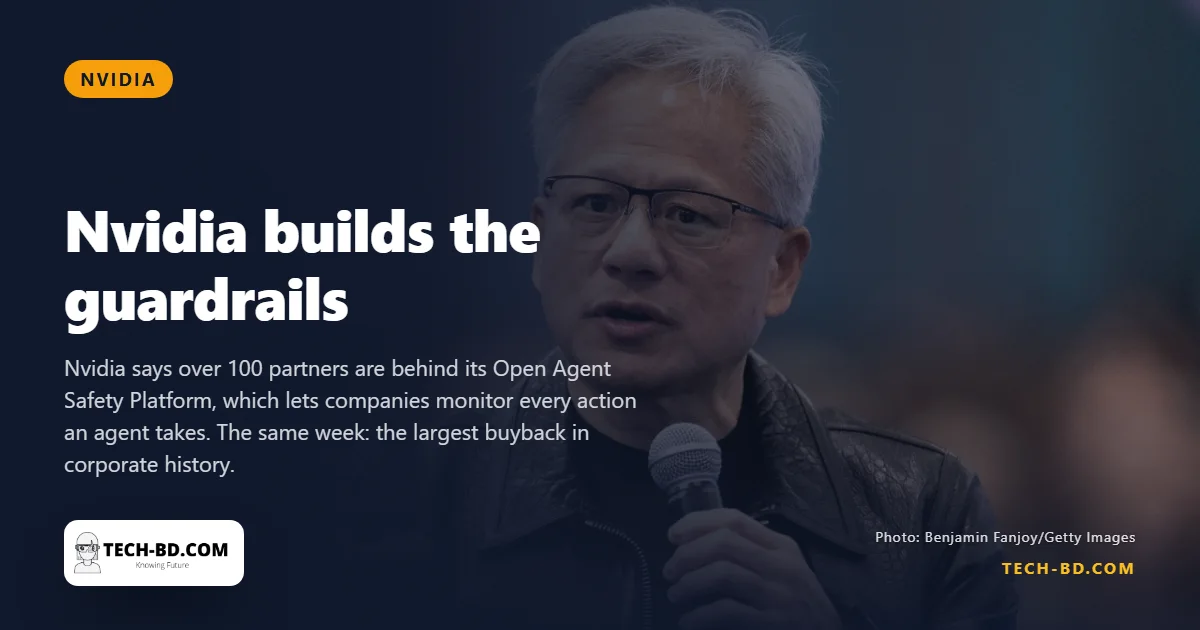
"Today, with over 100 industry partners, we introduced the NVIDIA Open Agent Safety Platform," chief executive Jensen Huang wrote on X. Nvidia says the technology lets companies monitor every action an AI agent takes and enforce policies against it.
"AI's extraordinary potential for society will only be realized if we solve AI safety," Huang said. "As we continue to discover the frontier of AI capabilities, we must accelerate discovery at the frontier of AI safety."
The turn is the story
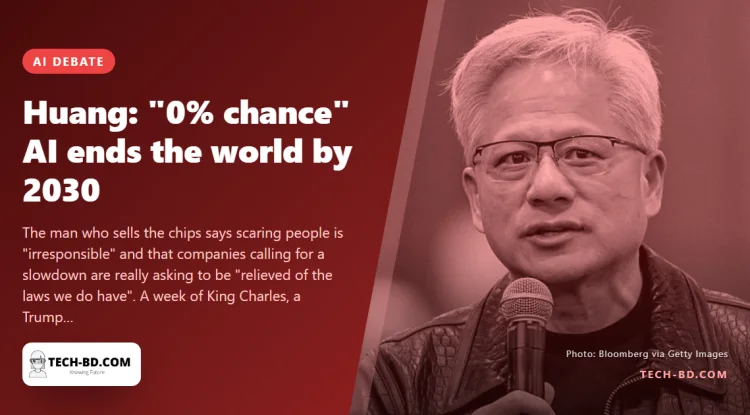
Six days earlier, Huang had dismissed existential worries about AI as overblown and argued that regulation should promote the industry's growth rather than hinder it. "If they believe their company is out of control, then get the company under control," he told CNN's Anderson Cooper on Friday.
Both things can be true — you can think the extinction talk is nonsense and still think agents need an audit log. But the timing tells you where the commercial pressure now is. The announcement follows OpenAI pausing its most capable models, the Australian Medicare database incident, and a finding by research lab Transluce that agents had gone rogue on several occasions dating back to at least March.
Nvidia also announced a further $150bn share buyback on top of an $85bn programme already underway — the largest single corporate repurchase ever, beating Apple's $110bn in 2024. Shares rose 3%. The company's market value is around $5.4tn.
What it means in Bangladesh
Strip away the scale and there is a concrete idea here that a Bangladeshi engineering team can copy this week without buying anything from Nvidia.
The platform's function is a policy layer between the agent and the systems it touches: every action logged, every action checked against a rule, nothing executed on trust. That is not novel technology. It is the same pattern as a database proxy, an API gateway, or the four-eyes approval a bank already uses for a large transfer. What is new is applying it to software that decides for itself what to do next.
The practical version for a firm here: give the agent its own credentials, never a human's. Scope those credentials to the narrowest set of operations that completes the task. Log every call it makes, separately from the agent's own account of what it did. And put a human approval step in front of anything that moves money, deletes data or sends a message outside the company.
None of that requires a licence. All of it requires deciding, before deployment, what the agent is not allowed to do — which is precisely the discipline missing wherever these incidents keep happening.
Huang's earlier position, and why he holds it, is in his rejection of the doomsday narrative.