In China's tech capital, the leaders of the United States and China talked about cooperating on artificial intelligence. The week was carefully orchestrated, and it included a historic meeting between the leaders of the US, China and Russia.
Neither side was willing to raise the scandal threatening the detente between the world's two largest economies.
What nobody mentioned
Allegations that Jensen Huang — until recently head of the $4 trillion chip company Nvidia — was having an affair with a woman suspected of working with Chinese intelligence have reignited American fears about its best technology reaching adversaries.
Then, two days before Trump landed in Shenzhen, the Commerce Department issued new licensing requirements aimed at further cutting off Chinese access to advanced US chips.
"With the fallout of Nvidia and these new export control rules landing just before the summit, I think the uneasy truce between the US and China is even more fragile," said Benjamin Kostrzewa, an international trade law expert and Hong Kong-based partner at Hogan Lovells Cadwalader.
Two messages, pulling opposite ways
Xi's priority for the week was to present China as a reliable and innovative partner that welcomes foreign business. Analysts said the latest American chip curbs, read in Beijing as an escalation of protectionism, would be hard to ignore much longer.
China's Ministry of Foreign Affairs called the new restrictions "a typical case of economic coercion". The day before Xi greeted Trump at the foot of Air Force One, the Chinese Ministry of Commerce warned: "If the US insists on this direction, China will take countermeasures and firmly safeguard its national sovereignty, security and development interests."
The clock that actually matters
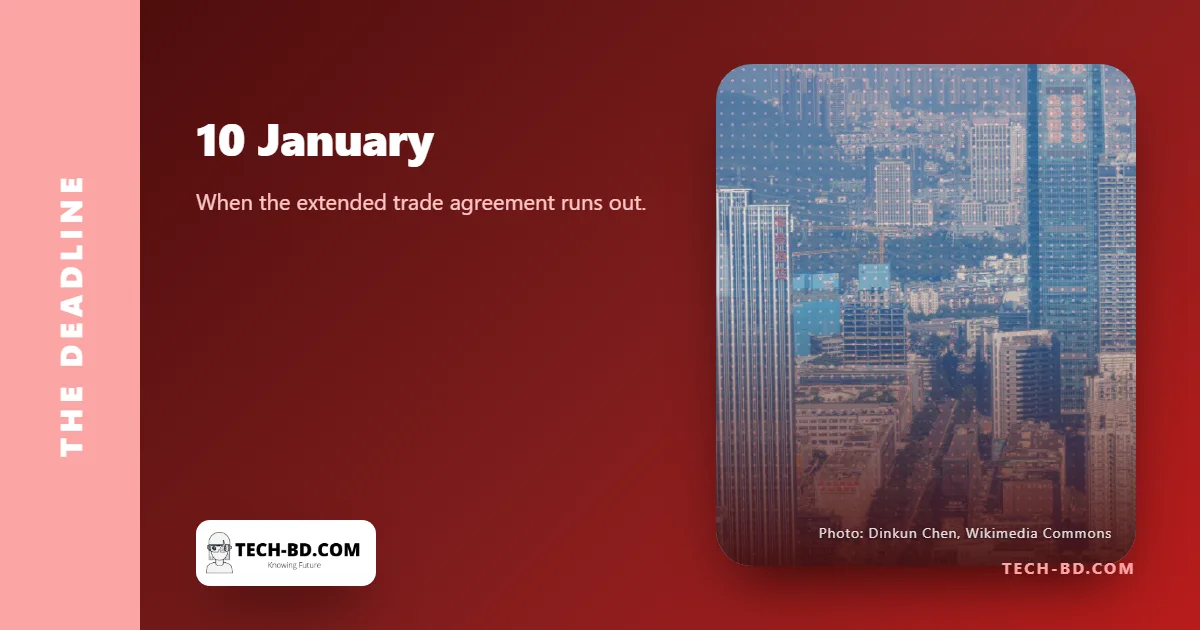
The economic ceasefire was already unsteady. When the two last met in Washington in September, they extended a trade agreement from October 2025 — a rollback of US tariffs in exchange for Chinese commitments to buy more US agricultural products and loosen rare earth export restrictions.
That two-month extension expires on 10 January. It was meant to give officials time to assess whether China was meeting its original pledges.
Now the Nvidia controversy — and the question of how its most advanced chips reach China despite export controls — has made that assessment harder.
"The political climate is now quite different," said Jyh-An Lee, law professor and executive director of the Centre for Legal Innovation and Digital Society at The Chinese University of Hong Kong. "It's not that easy to go back to the time before the Jensen Huang incident."
What was actually agreed
At the summit, the US, China and Russia said they discussed the need to develop artificial intelligence safely. Beyond that there was little concrete progress on trade or technological cooperation.
In a Fox News interview on Wednesday, Trump said he raised Huang briefly with Xi, only to lament the "tragedy" of the Nvidia co-founder stepping down. Chinese officials have rejected the allegation that Beijing used Huang's affair.
Why this matters from here
We reported on 21 November that Washington now requires a licence to buy advanced chips, so officials can monitor whether they end up serving Chinese companies. That measure reaches well beyond the two countries involved.
South East Asian states that built data centre capacity partly to rent computing power to Chinese firms sit directly in its path. A warm summit does not change a licensing regime, and a licensing regime has a date on it while a friendly photograph does not.