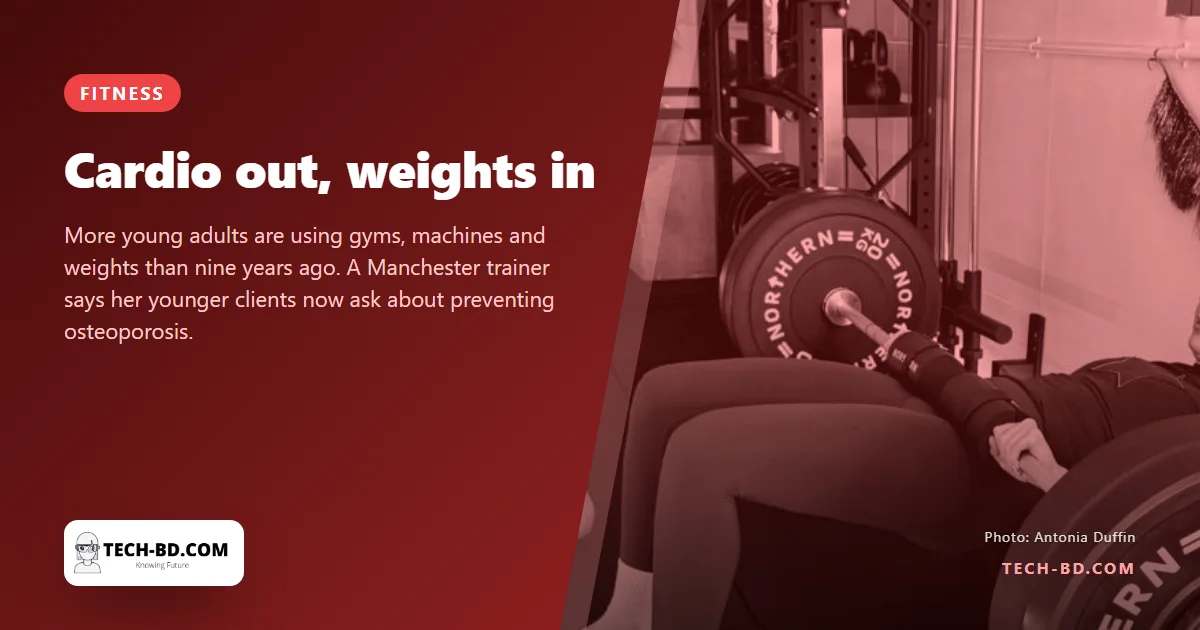
When Antonia Duffin, 34, started going to the gym, she wanted to lose weight and tone up. It became such a large part of her life that she trained as a personal trainer alongside a supermarket operations job, and now runs her own women's gym in Manchester.
What she is seeing
"Some of my clients want to feel stronger, some want to get in shape for a baby and some are struggling with other conditions like endometriosis and want to feel better," she says.
Hybrid training — events like Hyrox, which are sociable and competitive — appears to have taken over from running on a treadmill or general cardio on a bike, she explains. She also notes an appetite for strength work among younger clients: "I think people are now realising the importance of it — we're preventing osteoporosis and things like that."
The numbers agree. According to Sport England, more young adults are going to the gym and using exercise machines and weights to keep fit than they were nine years ago.
Why the shift makes physiological sense
"Gyms offer broader types of exercise, like resistance training, which can improve body composition and shape more quickly than aerobic exercise training," explains Dr Andrew Scott, an exercise expert at the University of Portsmouth.
He says social media is part of it too: "Lots of people are largely learning from influencers, suggesting 'I can do it, this is what I did and so can you'."
That last observation cuts both ways, and it is the thing to watch. The same platforms driving a genuinely useful shift towards resistance training are also the source of bad technique, unrealistic timelines and an unregulated supplement trade.
What it means in Bangladesh
The same shift is visible in urban Bangladesh, driven by the same platforms — gyms have multiplied across Dhaka and Chattogram, and the weights section is no longer the empty corner it was a decade ago. The underlying reasons to welcome it are stronger here than in Britain.
Bangladesh has a high and rising burden of type 2 diabetes, and resistance training improves insulin sensitivity independently of weight loss. Osteoporosis is widely underdiagnosed, and loading the skeleton is one of the few things that slows it. Both arguments apply most to the people least likely to be lifting: women, and adults over forty.
Two practical cautions are worth more than the enthusiasm. The first is technique — most Bangladeshi gyms are cheap precisely because they have no qualified coaching, and a young man learning the deadlift from a phone in a basement gym with no supervision is the standard route to a back injury. Paying for a handful of properly coached sessions at the start is the best value in the whole activity.
The second is supplements. The protein and pre-workout market in Bangladesh is largely unregulated, much of the stock is imported informally, and counterfeit products are common. Nobody starting out needs any of it; ordinary Bangladeshi food — dal, eggs, fish, chicken, milk — covers the requirement at a fraction of the cost, and the money is far better spent on coaching.
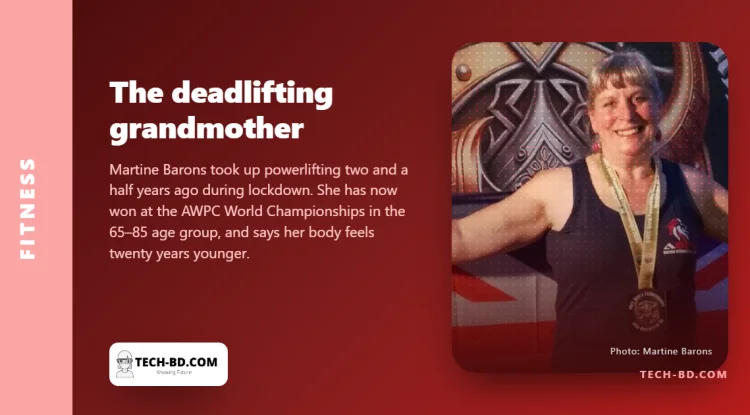
The version of this story that answers the "am I too old" question is the grandmother who started at 62.