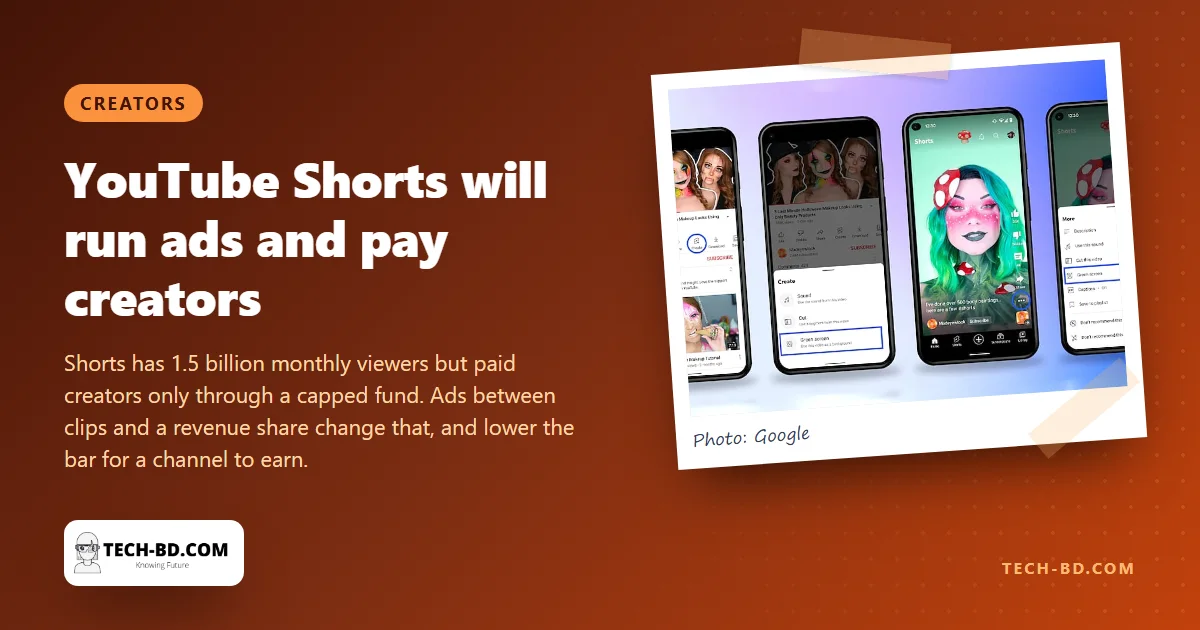
YouTube Shorts, the vertical-video feed YouTube built to stop TikTok, has 1.5 billion monthly viewers and, until now, almost no way for the people making the clips to earn. That is about to change. Reports on 18 September 2022 said YouTube would begin showing advertisements between Shorts and sharing the money with creators, as it has done for long videos since 2007. Two days later, at its Made on YouTube event, the company confirmed the plan.
How Shorts creators were paid until now
Shorts do not qualify for the YouTube Partner Program, the system that pays a channel a share of the ads shown on its videos and requires 1,000 subscribers and 4,000 hours of watch time in a year. Instead YouTube set up a Shorts Fund of $100 million, paying popular creators between $100 and $10,000 a month at its discretion. The fund was not available in every country, and a viral Short earned nothing from the advertising YouTube did not sell against it.
The new model
- Ads between Shorts. Short ads, up to about six seconds, appear as you swipe through the feed.
- Revenue share. Money from those ads goes into a pool; after paying music licensing, YouTube gives creators 45 per cent of their share of the pool, based on their views. Long-form creators get 55 per cent; the lower Shorts share reflects the music costs.
- A lower entry bar. A Shorts-only channel can join the Partner Program with 1,000 subscribers and 10 million Shorts views in 90 days, instead of 4,000 watch hours. The change takes effect in early 2023.
Why it matters in Bangladesh
Bangladesh is a vertical-video country. TikTok is the second most used social app after Facebook, Facebook Reels launched here in February, and Shorts is where a large share of the country's YouTube watch time now goes. But the Shorts Fund never paid Bangladeshi creators, and TikTok's own creator fund is not available here either. Ad revenue sharing is the first time a short-form platform will pay a creator in Bogura the same way it pays one in Boston, through AdSense to a local bank account. The 10-million-views threshold sounds high, but a single viral Short in Bangla can do that in a week.
Two practical notes: revenue per view on Shorts is far below long-form, so the money is a supplement, not a living; and YouTube's rules on reused content apply, so re-uploaded TikToks and clipped television will not qualify. The creators who benefit will be the ones making something of their own.