It is nine in the evening. Tanim — not his real name — has just been paid his first bonus and asks an AI assistant where to put Tk 50,000 so it earns the most. The answer arrives neatly organised and completely confident.
That scene is now common enough to have been measured.
What the surveys found
In a Vanguard survey carried out in June, of 6,686 investors who had used AI for financial guidance, 37% received wrong or misleading information.
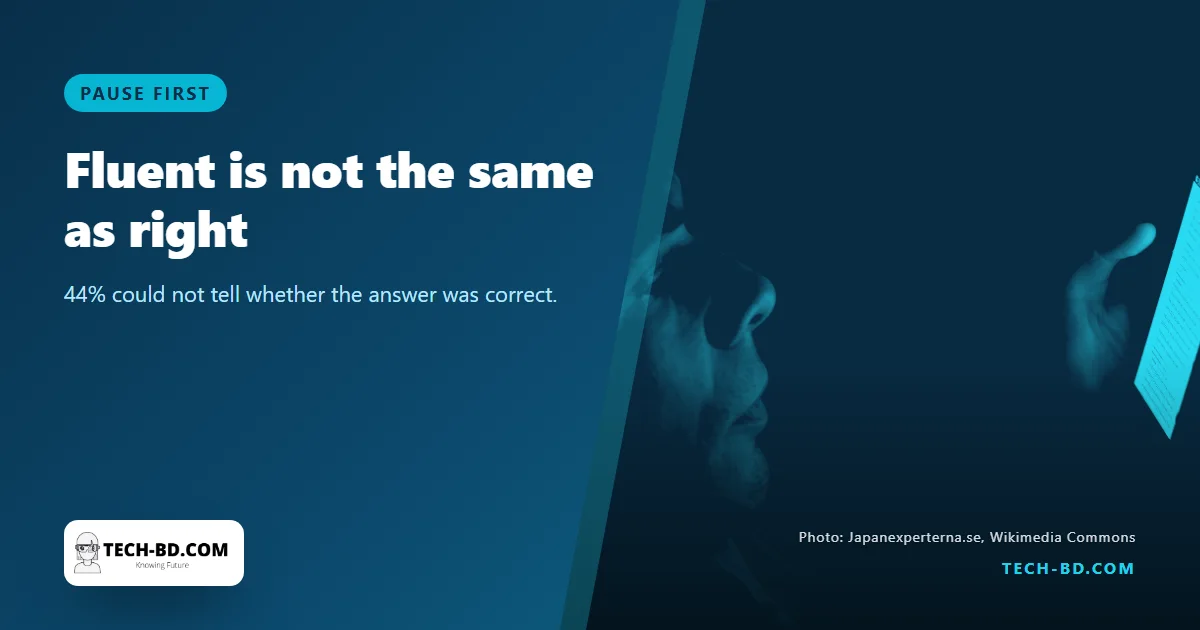
The more uncomfortable number is the next one. A further 44% could not tell whether the information they had been given was right or wrong.

Two more tests
A 2026 study from King's Business School found that most AI systems recommend excessively safe portfolios. In a hypothetical scenario, largely aimed at wealthier investors, that caution could cost up to £42,000 less income per £100,000 over twenty years.
A separate test by a firm called Saturn ran 17 models against complex tax questions. The rate of correct answers fell to 12%.
The two findings point in opposite directions — too cautious in one case, plain wrong in the other — and that is the point. There is no single direction of error to correct for.
Why fluency is the trap
The writing may sound excellent without being accurate. That is the whole difficulty: in most domains, a confident, well-organised, well-structured answer is weak evidence of competence, and people reasonably treat it as a signal. In financial advice the signal is detached from the substance.
And money is unusually unforgiving. A wrong answer about a recipe costs a dinner. A wrong answer about where savings sit can take years to undo, if it can be undone at all.
The three rules the report ends on
Prothom Alo's tutorial closes with three, and they are worth repeating exactly as given.
1. Use AI to understand a concept, not to make the decision. Asking what a fixed deposit is, or how a tax slab works, is a reasonable use. Asking where your money should go is not.
2. Check tax, interest and rules against official sources. Government and bank sources are authoritative; a model's recollection of them is not, and rules change faster than training data.
3. Be wary the moment you see a promise of guaranteed profit. That applies to any source, machine or human.
One test you can run yourself
Ask the same money question twice, in two separate conversations, worded slightly differently. If the two answers disagree on a number, you have learned something useful about how much the first one was worth. It costs nothing, takes a minute, and it is the fastest way to see the 44% problem in your own hands.
None of this means the tools are useless here. Explaining what an expense ratio is, turning a bank's fee schedule into plain language, or working out what a stated interest rate means over three years — these are tasks where the answer can be checked against a document in front of you, and checking is cheap. The failures cluster where verification is hard: rules that changed recently, situations with several interacting conditions, and anything where the model has to pick on your behalf rather than explain.
This article reports published research and is not financial advice. For decisions about your own money, consult a qualified adviser and your bank.