Anthropic says it will commit 5 per cent of its shares to a fund that will make donations for the “public good”, with another 2 per cent possible at the board’s discretion. The announcement came on Sunday, as the company lays the ground for a stock market listing that could value it at more than $1tn.
What the fund is, and is not
It receives shares, not money. Anthropic says the fund could support nonprofit organisations and work addressing AI’s effect on the jobs market, and that none of the shares it holds will be used for lobbying or political donations, in the United States or anywhere else.
That last restriction is the most concrete thing in the announcement. A large block of stock in a politically exposed company is exactly the kind of asset that gets deployed in Washington; ruling that out in advance is a real constraint rather than a sentiment.
The rest is harder to value, because a share of a private company is worth whatever the next buyer will pay. Five per cent of a company valued above a trillion dollars is a very large number. Five per cent of a listing that prices below expectations is a different number, and the fund cannot know which it holds until the market says so.
The timing
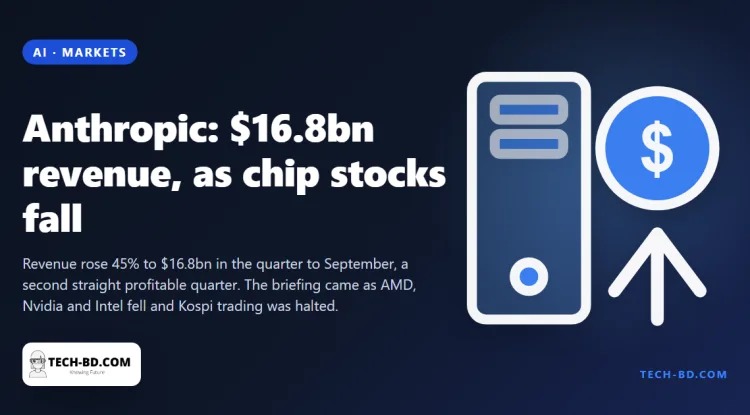
The company briefed prospective investors last week on a quarter in which it took $16.8bn, up 45 per cent year on year. A pledge of this kind, made days later and days before a listing, is also a positioning exercise — an industry under scrutiny over safety and over its effect on employment, announcing that it has set something aside.
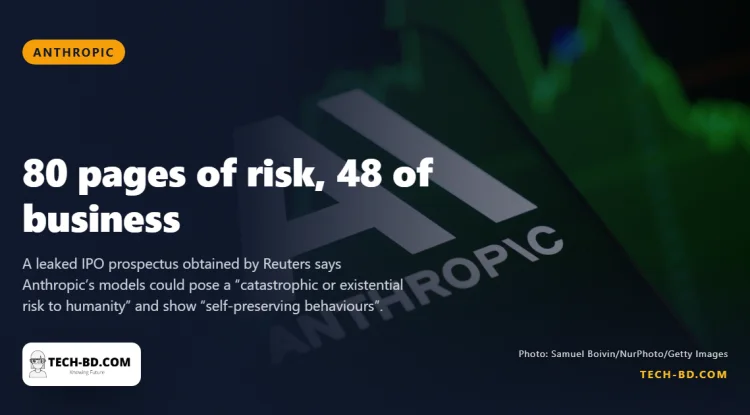
It also arrives on top of the prospectus this site read in September, in which the risk section ran longer than the description of the business — a document that is unusually frank about what the company thinks its own models might do.
Elon Musk responded on social media: “I recommend giving the shares directly to the public.” He added, “This is what I will be doing.”
The jobs question underneath it
The fund’s stated interest in AI’s labour-market impact rests on a real number. IMF research published in 2024 suggested almost 40 per cent of jobs worldwide will be affected by AI, rising to around 60 per cent in advanced economies. Companies around the world have cut thousands of roles while citing efficiencies from adopting the technology.
Why the lower figure matters more here
The 60 per cent headline belongs to advanced economies, and the reflex is to read the lower global figure as good news for a country like Bangladesh. It is not that simple. Lower exposure reflects an economy with more manual and agricultural work — but the parts of Bangladesh’s economy that have grown fastest are precisely the exposed ones: business process outsourcing, data entry, freelance design and writing, back-office work for foreign clients, customer support.
So the risk here is concentrated rather than reduced. It sits on the few hundred thousand people whose work is done in English, on a computer, for someone abroad — the same group the country has spent a decade training.
And a fund of this kind, however large, will almost certainly spend where its grantees are, which is not Dhaka. Treating it as a safety net for anyone here would be a mistake. The useful response is the one that was always available: move up the value chain fast enough that the work being automated is not the work being sold.
Related: Anthropic’s $16.8bn quarter, and the prospectus that spent 80 pages on what could go wrong.