Arion Kurtaj, from Oxford, has been released from custody after being sentenced for the Rockstar Games hack — on the same day, with the judge telling him: "Don't let this happen again."
We reported his guilty plea last Monday. This is what the court did with it.
Why he walked out
Now 21, Kurtaj pleaded guilty at Woolwich Crown Court to the Rockstar hack and several others, carried out when he was 16 and 17 with the hacking group Lapsus$.
He had originally been sentenced to an indefinite stay in a secure hospital because of the severity of his autism. In an unusual move he was later deemed fit to stand trial and moved to an ordinary prison in January. The judge considered the hospital stay and the time on remand long enough, so sentencing and release happened together.
He leaves under a Serious Crime Prevention Order lasting five years, which restricts what he may do online — including a bar on using Telegram and Discord.

What the order actually restricts
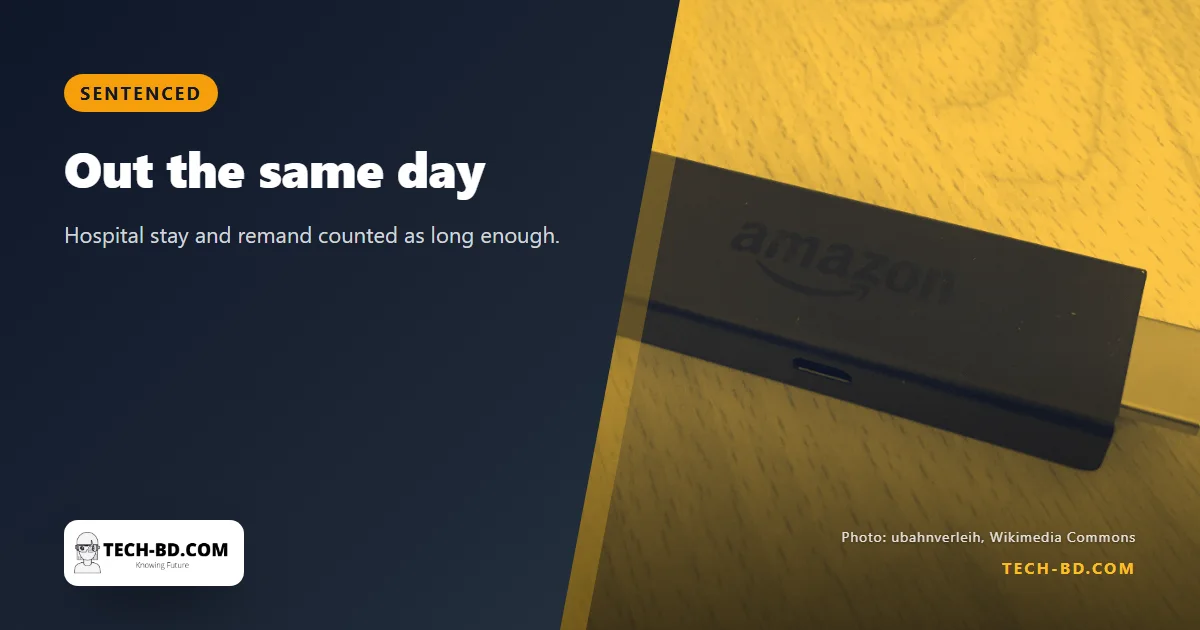
The background is in our report of the guilty plea last Monday: the Travelodge, the confiscated computer, the Fire Stick plugged into a hotel television, the 90 clips, the $5m Rockstar said it cost to recover. None of that is new today. The sentence is.
A Serious Crime Prevention Order is a civil order made by a criminal court, and breaching one is itself an offence. This one runs for five years and restricts what he may do online, naming Telegram and Discord specifically — the two platforms Lapsus$ used to coordinate and to publish.
Whether naming platforms works is an open question. The restriction binds only if someone checks, and the named services are not the only ones that exist. What an order of this kind reliably does is give police a straightforward charge if he returns to the same behaviour, without having to prove a fresh intrusion first.
The unusual part of the case
The route to sentencing was not normal, and it explains why he walked out on the day.
He was originally given an indefinite stay in a secure hospital because of the severity of his autism. He was later deemed fit to stand trial — a reversal that is rare — and moved to an ordinary prison in January. By the time sentence was passed, the hospital stay plus the months on remand already exceeded what the judge considered proportionate.
So this was not leniency arriving at the end. It was a court recognising that the time had been served while the question of whether he could be tried at all was still being settled.
The part the court kept returning to
Kurtaj stood and smiled when sentenced. He had short hair and an unkempt beard, and wore a suit and buttoned-up white shirt without a tie. He blinked frequently through the hearing.
Mr Justice Turner told him: "You are a very talented young man."
His defence said he found the online world a more comfortable way of interacting with people. City of London Police said the case "highlights the dangers that young people can end up being drawn to online".
What this means here
Two things travel. The first is that a confiscated computer is not a technical control: a television, a streaming stick and a Bluetooth keyboard were enough. Any organisation that treats device removal as the end of an incident should read that sentence twice.
The second is the harder one. A teenager with real ability and a diagnosis that made the internet feel safer than a room full of people ended up costing a studio $5m and himself four years. Bangladesh has a large population of self-taught young developers and very few formal routes from that talent into paid, legal work. The route matters as much as the warning.