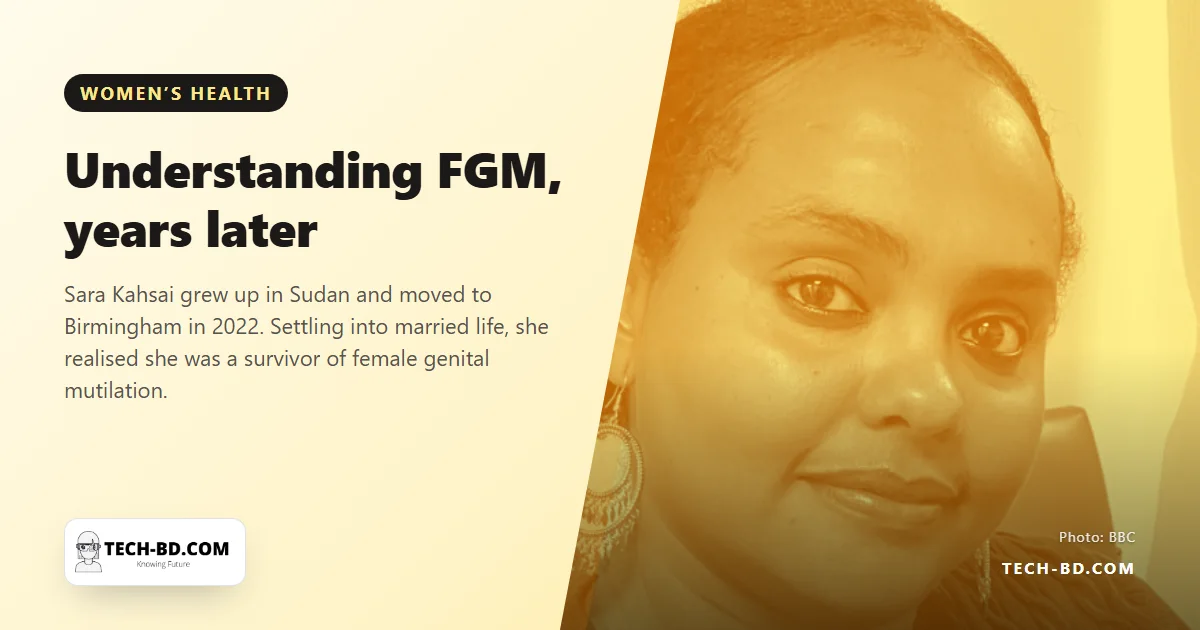
Sara Kahsai grew up in Sudan and moved to Birmingham in 2022 after marrying a bus driver from the city. As she settled into married life and a new home, she was coming to terms with something she had not previously named.
Sara realised she was a victim-survivor of female genital mutilation — a procedure she had undergone as a young girl.
She was floored by the revelation, and by beginning to fully understand the pain she had been living with.
"It made it difficult with my physical relationship with my husband — but he was very kind and very patient with me," she said.
Why recognition so often comes late
The detail that matters in Sara's account, and that recurs across survivors' testimony, is that she did not know. FGM is usually carried out in early childhood, often before memory forms clearly, and in communities where it is not described as harm. A girl grows up understanding her body as normal, because nobody has told her otherwise and she has nothing to compare it with.
Recognition therefore tends to arrive later and indirectly — through marriage, through childbirth, through a medical examination, or through moving to a country where it is discussed openly. That is a second difficulty layered on the first: a person has to absorb both what happened and the fact that it was done to them.
FGM has no health benefits and can cause lasting harm — pain, infection, complications in childbirth, and psychological effects that often go unaddressed. Specialist NHS clinics exist to support survivors, including surgical options such as deinfibulation, and the consistent message from those services is that help is available long after the event.
What it means in Bangladesh
FGM is not a widespread practice in Bangladesh, and it would be wrong to imply otherwise. But this story carries two things worth taking seriously here.
The first is clinical. Bangladesh's health system encounters women from communities where the practice does occur — among some migrant and diaspora populations, and among Bangladeshi women who have lived in regions where it is prevalent. A doctor who has never been taught to recognise it will not recognise it, and a woman presenting with chronic pain, recurrent infection or difficulty in childbirth may go years without the cause being identified. This belongs in medical and midwifery training as a matter of competence, not of prevalence.
The second is the pattern rather than the practice. Sara's experience — growing up believing something harmful was ordinary because it was never named, and only understanding it as an adult — describes a great deal more than FGM. It describes how child marriage, corporal punishment and sexual abuse are absorbed as normal by children who have no other frame of reference. The mechanism that kept Sara from knowing is not exotic, and it operates here.
The practical point is the one her account ends on: her husband's patience mattered. For anyone supporting a survivor of any of these things, the useful response is not urgency or investigation. It is patience, and knowing that specialist help exists and can be sought whenever the person is ready.