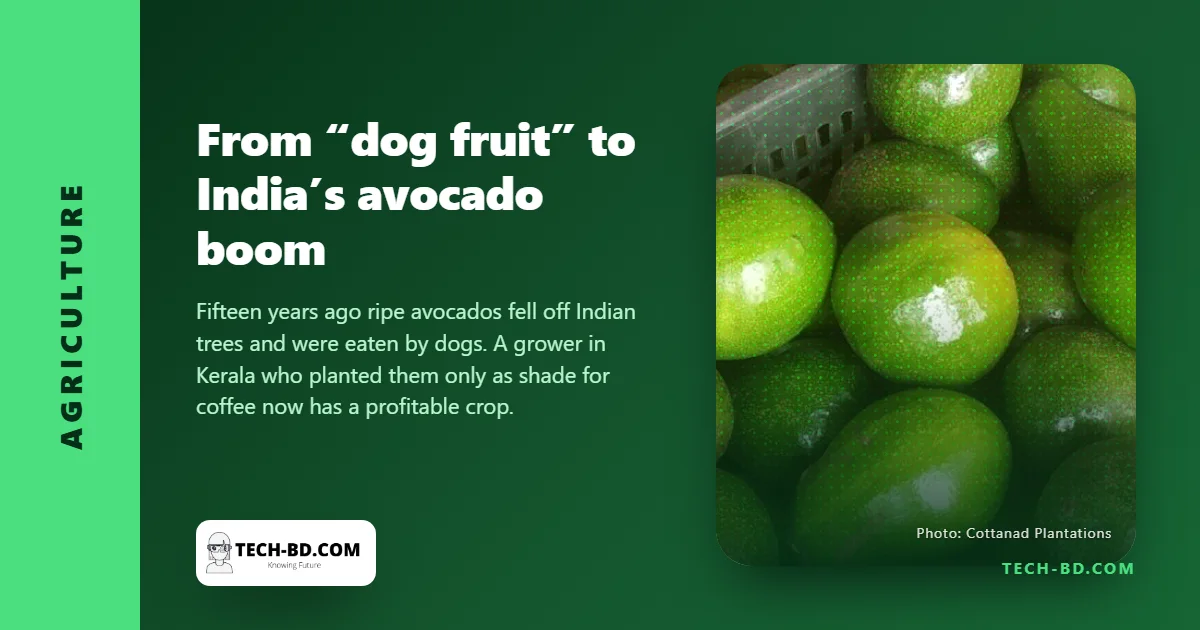
Fifteen years ago there was almost no market for avocados in India, remembers Madhu Bopaiah. Ripe fruit would fall off the trees and be eaten by dogs, earning avocados the unappetising name dog fruit.
An accident that became a business
Bopaiah has worked in India's plantation industry for 26 years and is group manager at Cottanad Plantations, which grows cocoa, rubber, coffee, spices and fruit — including avocado — in the hills of Wayanad, in Kerala.
"We never planted avocado as our main crop," he says. "We introduced it as a shade tree for coffee plantations, and only later realised it could become a profitable business."
He puts the turning point at around 2011, when the Bollywood star Shilpa Shetty said she used avocado for skincare. "Overnight, prices doubled and then kept rising," he says.
What it means in Bangladesh
There are two separate lessons here and it is worth not confusing them.
The first is the one that will be over-read. It is tempting to conclude that Bangladesh should plant avocados. Some are already grown in the hill districts, and the fruit does tolerate the climate. But the Indian boom rested on a large domestic urban middle class willing to pay premium prices, a cold chain to move soft fruit, and more than a decade of trees maturing before the money arrived. Avocado takes three to five years to fruit. Anyone selling saplings on the promise of quick returns is selling the wrong part of this story.
The second lesson is the durable one, and it is about what Cottanad actually did: they made money from a tree they had planted for another purpose. That is intercropping, and it is the most under-used idea in Bangladeshi agriculture. Shade trees in tea gardens, boundary planting on rice plots, fruit trees between rubber in the hill tracts — land already committed to one crop can carry a second with no extra land and little extra labour.
The third point is the one growers here already know in a painful form. Bangladesh has run this cycle repeatedly — with dragon fruit, with malta, with capsicum, with mushrooms. A crop gets attention, everyone plants it at once, the harvest arrives together, the price collapses, and the farmers who borrowed to switch are the ones who lose. Wayanad's avocado worked partly because nobody planted it as a bet.
The useful question is therefore not "what should we plant instead?" but the narrower one: what is already growing on your land for some other reason, and does anyone want it?