Conveying what is said in one language in another is not simply a matter of swapping words. The same word can mean different things depending on the context of the sentence, the culture, or the situation.
That is exactly why AI translation has both real successes and real limits.
A student, a message, and a question
Sadia (not her real name) is a university student in Dhaka. To understand an English message from a friend abroad, she used a translation app. The Bangla translation arrived in seconds.
But did it capture the joke and the feeling in what her friend said?
Modern AI translation does not just match word to word. It analyses the context of the sentence and the relationships between words to try to work out the meaning.
Journalists are using the technology for transcription and translation too — a 2025 study by the Center for News, Technology and Innovation documented exactly that use.
Why Bangla carries more risk than French
The caution in the research is specific: errors are more likely in Bangla and other languages with less digital material available.
This is worth understanding properly, because it is not a judgement about the language. It is arithmetic about the training data.
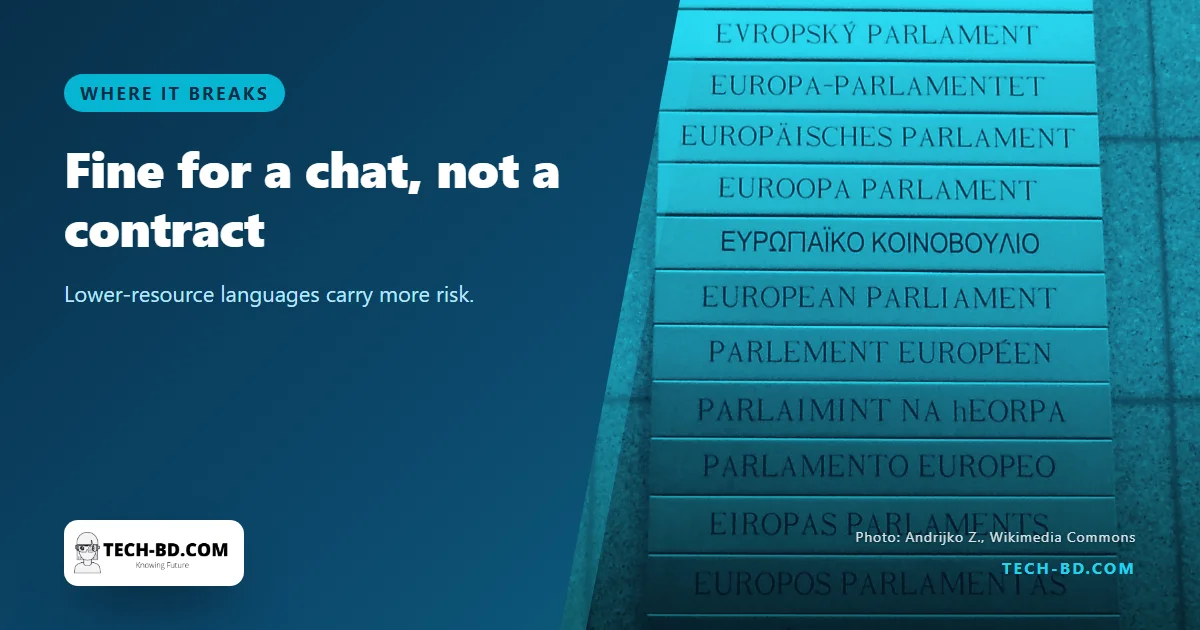
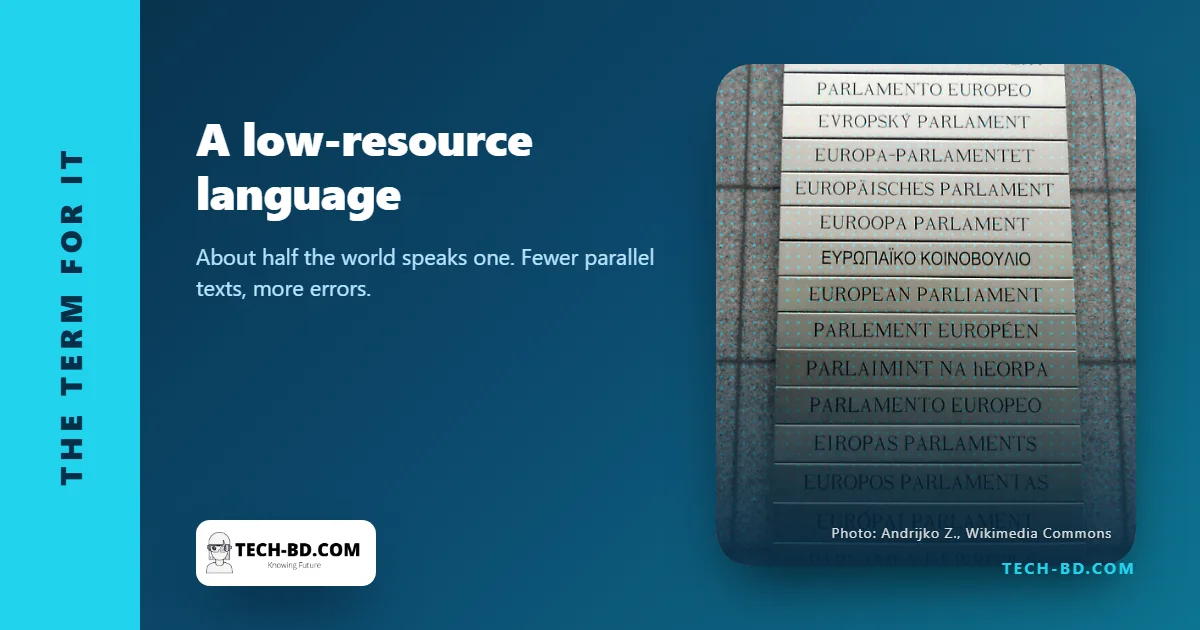
A translation model learns by reading enormous quantities of text, and it learns a language pair best when it has seen millions of examples of the same thing said in both. For English and French, or English and Spanish, decades of parallel documents exist — court records, treaties, manuals, subtitles, and the entire output of the European Union's translation services.
For English and Bangla, that pool is far smaller. The model has seen fewer examples, so it has had fewer chances to learn the places where a literal rendering goes wrong: idiom, honorifics, the difference between formal and informal address, the way a sentence can be polite in one language and curt in the other.
The term for this in the field is a low-resource language, and roughly half the world speaks one.
Where a small error becomes a large problem
The research is blunt about the two areas that matter most: in legal and medical translation, even a small mistake can create a serious problem.
The reason is that both domains depend on precision in exactly the words a translator is most likely to smooth over. "May" and "must" are one letter apart in effect and worlds apart in a contract. A dosage instruction that reads naturally but inverts a frequency is worse than one that reads awkwardly and is correct.
And machine translation fails in a particular way that makes it harder to catch: the output is fluent. A human translator who is unsure produces something hesitant that signals doubt. A model produces a confident, well-formed sentence whether or not it has understood, so there is nothing on the surface to warn the reader.
What to actually do
The advice in the piece is short, and it is the right advice.
Use translation apps for ordinary conversation. For everyday messages the technology is genuinely good, and the cost of an occasional misread joke is low.
Have important documents checked by a specialist. Contracts, prescriptions, immigration paperwork, anything with a legal or medical consequence.
Sadia understood her friend's message. But before sending a reply, she read the translation through herself. That last step is free, and it is the one most people skip.