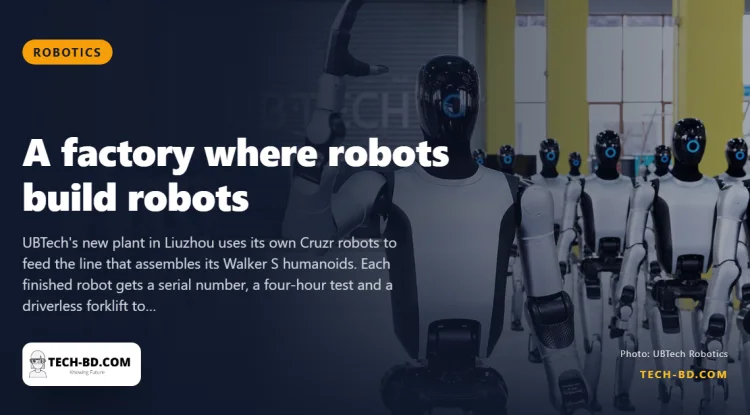
Picture it: six in the evening, you are home from work, and you tell the robot standing in the corner to make a cup of tea. It walks towards the kitchen. Somewhere else, is a person wearing a VR headset looking at your kitchen?
The scene is imagined. The technology is not.
What is actually on sale
In October 2025 the US company 1X opened pre-orders for NEO, a humanoid robot for housework. The price is $20,000 outright, or $499 a month to rent. The company's plan is to ship in the United States during 2026, and in Europe and Asia in 2027.
That makes this the first household humanoid with a published price and a delivery schedule, rather than a demonstration video.
Where the risk sits
The robot cannot yet do every task by itself. To teach it — and to get a job finished when it gets stuck — a remote operator can take control, seeing inside your home through the robot's cameras.
The company says this will not happen without the owner's permission, and that owners can define "no-go" areas the robot may not enter. Both are real controls, and both depend entirely on being implemented and honoured by the company that wrote them.
The question that remains is simple to ask and hard to answer: when a machine with eyes walks into your house, who is seeing what?
Why teleoperation is so common right now
This is not unique to one company. Robots are being sold at the point where they are good enough to be useful under supervision but not good enough to be trusted alone, and the gap is filled with people. We saw a constructive version of the same arrangement in the Tokyo café where disabled pilots operate service robots from home — there, the remote human is the entire point, and everyone in the room knows it.
The difference is consent and visibility. A customer in a café knows a person is on the other end. A household does not necessarily know when the operator is watching, or who they are, or where they are sitting.
What to ask before one of these arrives
If a household humanoid ever reaches homes here, the questions worth asking are not about how well it folds laundry:
- Can the owner see, in real time, when a remote operator has control?
- Is camera footage stored, and where?
- Who audits the no-go zones — the company, or anyone else?
- What happens to the recordings if the company is sold or goes bankrupt?
The last one is the one nobody asks, and it is the one that has caught people out before: data outlives the company that collected it.
Why the price tells you something
$20,000 outright against $499 a month is not a neutral choice of payment terms. At that rent, the machine pays for itself in about three and a half years — so the subscription is not about affordability, it is about keeping the robot attached to a service.
That matters for the privacy question, because a device on a monthly plan is one the company keeps a live relationship with: software updates, remote diagnostics, and a connection that stays open. A humanoid that worked entirely offline would be far easier to reason about, and nobody is selling one. The teleoperation problem and the subscription model are the same problem wearing different clothes.