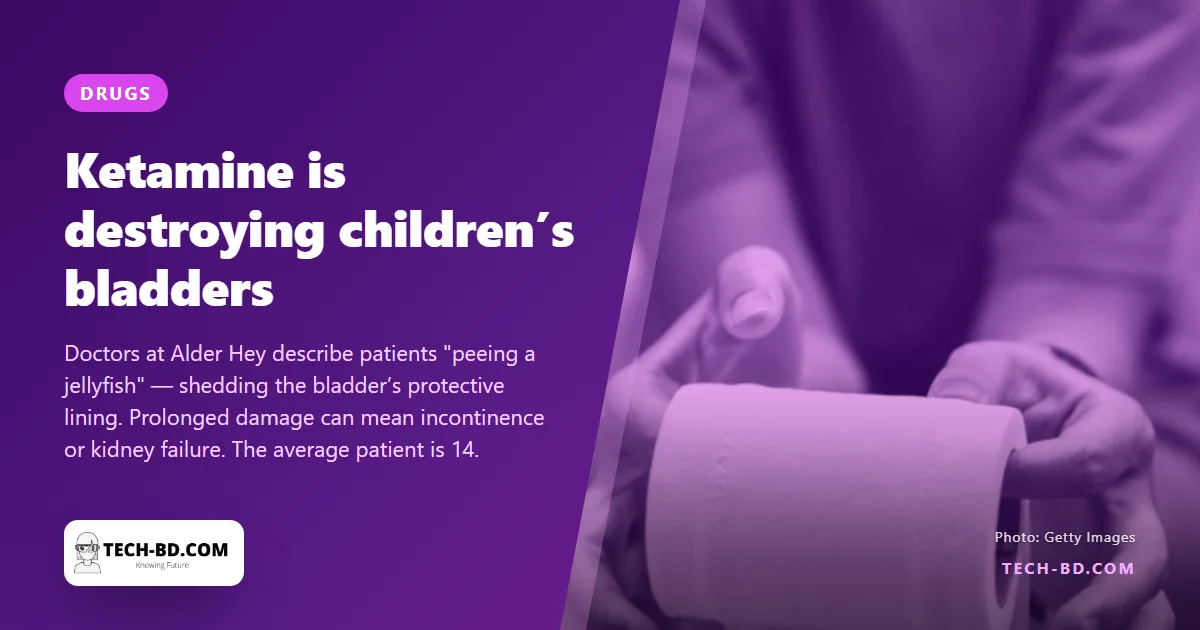
Doctors running the first NHS clinic for ketamine bladder damage say they are treating children as young as 13. The clinic, at Alder Hey Children's Hospital in Liverpool, has received more than 100 referrals since it opened.
What the drug does to the bladder
The clinical name is ketamine-induced uropathy. What it means in practice is that the bladder's protective lining is destroyed and shed. Medics at the clinic told the BBC that some patients describe "peeing a jellyfish" — passing pieces of that lining.
Prolonged damage can lead to incontinence, and in severe cases kidney failure. ITV News and the BMJ, reporting the same clinic's data, describe symptoms including frequent urination, loss of bladder control and blood in the urine, and note the damage extends to the urinary tubes and kidneys.
Many children arriving at the clinic had been taking ketamine for a year or more — meaning some started at 12 or younger. Analysis of the first 60 patients found an average age of 14, and that the majority were girls and from deprived areas.
Why they are taking it
This is the part that matters for anyone trying to respond. Some of these children describe emotional trauma, and say ketamine helps "shush" or quieten their brain. The drug is a general anaesthetic: it blunts sensation in the body, and that is exactly what is being sought.
It is also sold, in the BBC's phrase, for pocket money prices. A drug that is cheap, that numbs distress, and whose damage takes a year to show up is close to the worst possible combination for a teenager.
What it means in Bangladesh
Ketamine is not a headline drug in Bangladesh, where the conversation is dominated by yaba and, increasingly, cannabis and prescription opioids. But three things make this worth reading here rather than filing as a British problem.
First, ketamine is a hospital anaesthetic, widely stocked, and diversion from medical supply is how it reaches young people in most countries where this has emerged. Bangladesh's pharmacy controls are weak enough that this route is open.
Second, the presenting symptom is urinary, not psychiatric. A 15-year-old brought to a doctor in Dhaka with frequent urination, incontinence or blood in the urine will be worked up for infection or stones, and a drug history is unlikely to be taken. The damage is reversible early and permanent late, so the question simply has to be asked.
Third, the reason these children give — that it quietens the brain — describes self-medication for untreated distress, and Bangladesh has a severe shortage of adolescent mental health services. Wherever a cheap sedative meets a teenager with nowhere to take their distress, this pattern follows. That is the part worth pre-empting, and it does not need a drug problem to exist first.