
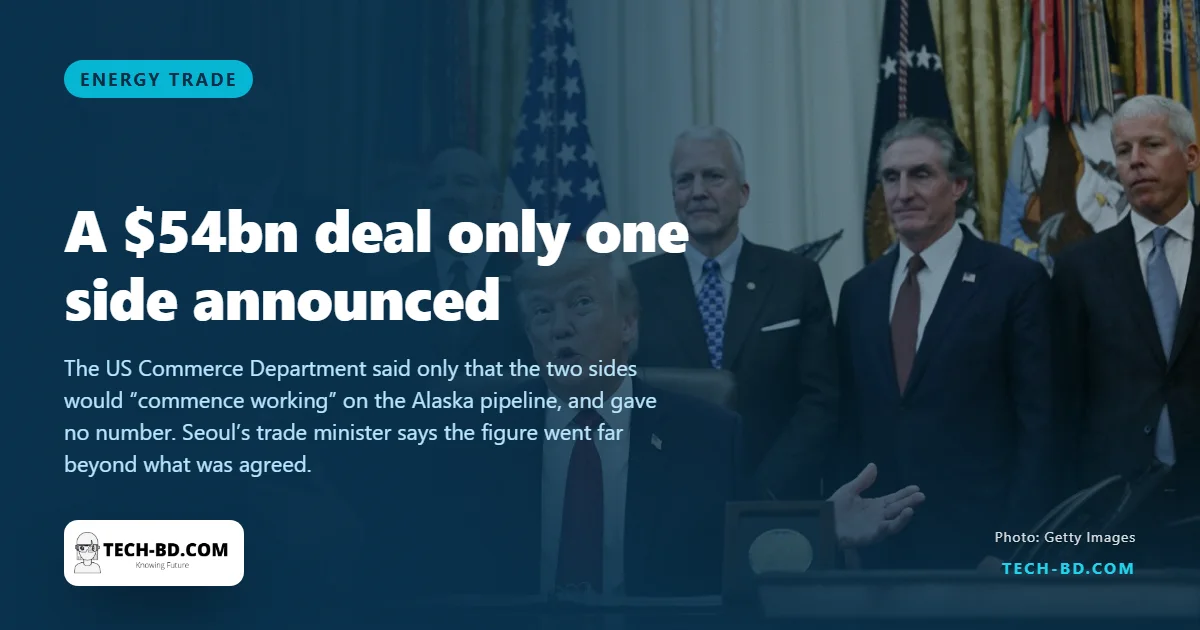
South Korea has pushed back against a $54bn investment announced by the Trump administration, turning a struggling project to export natural gas from Alaska into another sticking point in long-running trade negotiations between the two allies.
Two accounts of the same meeting
Trump presented the figure as part of a broader agreement for Seoul to invest $200bn in US energy in exchange for lower tariffs on South Korean goods.
Seoul's account is different. "Putting figures or using definitive language goes far beyond what was agreed," trade minister Kim Jung-kwan said, according to the news agency Yonhap.
The US Commerce Department's own statement says only that the two countries agreed to "commence working" on the Alaska project, "subject to commercial reasonableness". It gave no figure at all.
The pipeline — 807 miles of it, plus an export terminal, costed at $45bn to $55bn — has been under development for more than a decade and repeatedly stalled for lack of financing and buyers. It has also become an issue in a close Senate race in Alaska.
South Korea is the world's third-largest importer of liquefied natural gas, and has been buying more American cargoes since the war in Iran disrupted Middle East supply.
What it means in Bangladesh
Read the two statements side by side and the mechanism is visible. One government announced a number; the other confirmed a process. Both are telling the truth about different things, and the gap between them is where a smaller buyer gets squeezed.
Bangladesh is in that squeeze now. Petrobangla's LNG purchasing has moved steadily from the spot market towards long-term contracts, because spot cargoes during a supply shock cost whatever the market says they cost. Long contracts are the sensible answer — and this story is a warning about how they get negotiated.
South Korea is a $1.8-trillion economy, the third-largest LNG buyer on earth, with a trade ministry that will publicly contradict the President of the United States. It still ended up with its name attached to a number it says it did not agree to. Bangladesh, buying a fraction of the volume with none of that leverage, should assume it has less room, not more.
The practical lesson is narrow and useful: in an energy announcement, read the procurement document, not the press release. The phrase that mattered here was "subject to commercial reasonableness" — six words that convert a headline commitment into an option. Bangladeshi energy agreements contain similar clauses, and they are where the real terms live.
The supply shock driving all of this is the one in the Hormuz shipping dispute.